Chronicle Editor
Sifelani Tsiko, [email protected]
MR Kudakwashe Kamuchikunda of Kanongo Village in the Madzomba area of Mbire District, on the northern border with Mozambique, now values the simple act of giving as a tool of empowering and changing someone’s life.
“When you give goats to a farmer, it provides a jump-start for that person to escape poverty and improve their lives. Giving is an important act to help others survive,” he said.
“Greed won’t take us anywhere. Under the Spotlight Initiative, we were given eight goats per group. When we started they were only five groups and now we have expanded this by passing the goats to other seven groups. We now have 12 groups made up of 15 members each.”
Mr Kamuchikunda remembers how four years ago they received support under the initiative that sought to address problems related to gender-based violence, early child marriages and child sexual abuses in Hurungwe, Guruve, Mbire and Muzarabani.
As a gender champion, he was trained by the Katswe Sistahood, which is part of a consortia comprising Caritas, the Lower Guruve Development Association (LGDA) and other community-based organisations (CBOs) to raise awareness on the impact of GBV on women and girls.
They were supported with funding to start sewing projects for masks. From earnings made from masks, they expanded their projects to start livestock rearing — covering goats, sheep, chickens and pigs.
“Livestock rearing projects have been important for us. Poverty is a major contributor to domestic violence and when people are empowered to work on their own projects, it’s easy to reduce gender based violence,” he said.
“We have passed on livestock to other less privileged members of the community. Step by step, we hope they will also pass it on to others,” Mr Kamuchikuda said.
The Tamuka Group of Guvheya 1 Village in Mbire has also used proceeds from their own livestock projects to start a sewing project for 25 girls at a school in Madzomba.
The girls are sewing clothes and reusable sanitary pads, helping them gain life skills and their own income.
“Young girls had nothing to do and many ended up engaging in prostitution. Prostitution is dangerous for the girls and to keep them occupied we started a project for them,” said Mr Aron Karomo (39) of Guvheya 1 Village.
“The girls are taught about the bad effects of GBV and prostitution. We have encouraged the girls to also undergo HIV testing and to report any cases of sexual abuse. The Spotlight Initiative has many benefits for us.”
Ms Liznet Chininga and Mr Steven Tembo, both of Katurura Village, said they have managed to pass on small livestock to other farmers affected by wildlife encroachment.
The Madzomba area is close to a national park and wild animals often destroy crops and kill livestock.
“As our goat herd grew, we gave others who lost their goats to wild animals as part of a pass-on scheme to help others with problems,” said Ms Chininga.
“Our area is also known for cotton and sesame growing. Domestic violence often picks up during the marketing season. Men abuse women when they get money from the crops. Having a pass on scheme to affected women helps to empower them to look after themselves and feed their families.
“We have the Sungawirirano Group and we have expanded our work to cover sewing pads, uniforms and clothes and soap making. From the earnings we get, we have also expanded to do fencing and livestock rearing projects.”
Ms Beatrice Leornard, 44, of Shangwe C Village, said her group started with six pigs and had since passed on six pigs to other people.
Empowering communities with small livestock such as goats, pigs and chickens improves the diet at household level.
The programmes running under the Spotlight Initiative supported through a partnership between the European Union and UN Women are aimed at ending violence against women and girls and harmful practices.
Zimbabwe is among 20 countries in Africa, Latin America, Asia-Pacific and the Caribbean which are participating in the four-year programme which started in 2019 and ends this year.
The country was supported by the EU to the tune of US$30 million for the first phase to help Zimbabwe meet some of its Sustainable Development Goals (SDG 3 and 5) on empowering women and girls to realise their full potential in a violent free, gender-responsive and inclusive environment.
Katswe Sistahood trained a number of villagers to become gender champions in Mbire and Muzarabani.
The champions have assisted greatly in raising awareness and supporting local communities to report child abuse cases and to follow-up cases with the police.
First line beneficiaries of the Spotlight Initiative have managed to pass on the benefits to the second or third line of beneficiaries.
Pass on schemes, initiated by communities in Guruve and Mbire are a hallmark of the Spotlight Initative’s approach which has empowered local communities.
This has multiplied the project’s impact and strengthened community-wide resilience.
Apart from this, passing on the livestock offspring, locals benefit from widening training and practical skills on their projects.
The practice helps to empower community members, transforming them from the position of beneficiaries to donors as they pass on key inputs to other community members in need.
In Guruve, the Eager Hands Poultry Group is one of the most successful projects under the Spotlight Initiative.
The six-member group started in 2019 and during the Covid-19 pandemic sewed masks worth more than US$700.
The earnings were used to start a chicken project.
“The Spotlight Initiative has many spin-offs. We were first supported with funding to help fight GBV in our area. Without projects to empower women to fight GBV, we cannot win the battle against domestic violence,” said Ms Portia Moffat, the chairperson of the group.
“When we sold our masks, we bought 600 broilers and 64 bags of feed. However, we were unfortunate, we lost the chickens to the new castle and coryza diseases. We were left with nothing. It was painful.”
In 2022, they received US$500 from LGDA under the Spotlight Initiative which they used to restart the project.
The group diversified its base to include turkeys, rabbits and broilers as a way of spreading risk.
“We are using turkeys to hatch chickens because we have no electricity to heat our day-old chicks. We now have 60 turkeys, 18 rabbits and more than 123 chickens,” said Ms Moffat.
“We have passed on some livestock to widows, orphans and other groups. It’s important to empower others since we were also empowered under the Spotlight initiative.
“When we are running our projects, we also teach people about GBV issues.”
Ms Fransisca Chakona, another member, said their group now ran an Internal Savings and Lending Schemes (ISALS) which they use to buy household goods and boost their poultry projects.
“Diversifying our projects is a good thing to prevent risks. We use money from our ISALs to buy plates, blankets and other wares. We also use the money to support individual income-generating projects such as buying and selling of fish and kapenta fish,” she said.
“Our group is also supporting the Catch Them Young programme at Muzika Primary School. We buy pens, uniforms and food for pupils here. All this is part of the benefits that came from the Spotlight Initiative.”
Ms Beauty Ndaza, another member, said the group was now saving to buy an incubator to boost poultry production.
“We want to beat poverty and pass on small livestock to other groups. This project is like a switch that can help thrash poverty,” said Ms Chakona.
“Water is a problem here and if we get water we can even do better.”
The group has also supported a gender champion to start a football team at the school to help fight GBV and drug abuse among the youth.
In addition, this group regularly conducts awareness campaigns targeting schools, commercial sex workers, villages and other social gatherings.
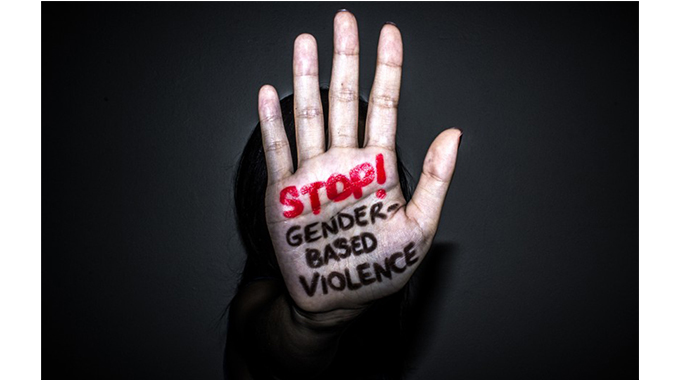
Messages are usually on the dangers of drug abuse, GBV issues, the risks of early child marriages and the importance of doing income generating projects to improve livelihoods.
Pass on schemes help shape beneficiaries to be technical resources, as they help to disseminate improved practices and knowledge that they have gained from the project throughout their communities.
It also multiplies project impact by reaching new beneficiaries who may not have been originally targeted by the project.
Examples of how farming families have implemented this in Guruve and Mbire, demonstrates the immense imagination and generosity of the local communities
In the end, this is a pathway to strengthening the capacity of local communities to get adequate and reliable supplies of healthy and nutritious food, create employment opportunities, empower rural women and young people and strengthen households’ financial, physical and social assets.
This practice, at a minimum, doubles the impact of the original gift.



 Online Reporter