Chronicle Editor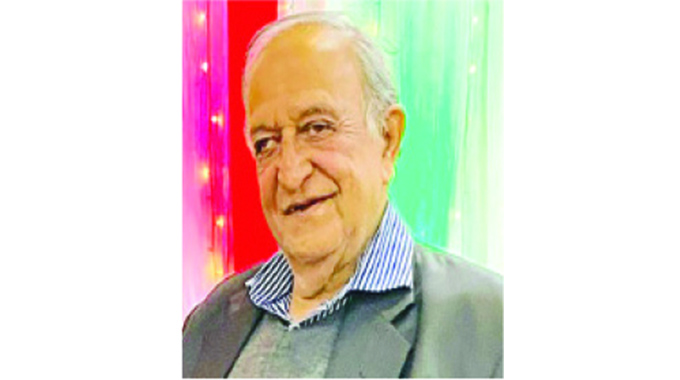
Nqobile Bhebhe, Senior Business Reporter
IMAGINE Bulawayo’s retail space without Esats Stores, one of the prominent names in the city’s business circles for over a century.
A majority of people have over the years either purchased school uniforms or household appliances from the retail outlet, which has sitting facilities for clients or passersby on its pavement.
However, the unthinkable almost happened a decade ago due to economic pressures, which forced several entities to close shop in droves in the city and elsewhere.
The closure of companies saw many people losing jobs resulting in reduced income and spending money.
But, deep passion passed from generations of serving the Bulawayo community and surrounding areas, saved the giant business from collapse.
The director of one of Bulawayo’s oldest clothing retailing shops, Mr Mohamed Esat, told Business Chronicle in a recent interview that their business survival was tied to the passion for the City of Kings and the reciprocal support from the local market, in particular.
“There was a time when business was really bad, hanging on a shoe-string and we seriously thought of closing down like any other enterprise in the city,” said Mr Esat, a winner of the recent Zimbabwe National Chamber of Commerce (ZNCC) Life Achievement Award.
“We lost money on the stock market, money markets and unit trusts. Many business people left the country for Australia, the United Kingdom, South Africa and Botswana.”
Esats clothing mainly deals in school wear, kitchenware, linen, ladies’ hair and luggage accessories, among others.
The passion for serving Bulawayo and hopes of an economic turnaround led the business to continue trading and offering customers a local option, said the businessman.
However, the retail outlet footprint has been reduced in the city and the business is now focused on expanding its footprint again with fresh investments.
“We once had 10 branches in the city but we now have two. This is due to economic pressures and it became difficult to run chain stores,” said Mr Esat.
“We had passion for the city and hoped for the best. l am glad that Esats stores have become a household name in the city and country.”
Recently, the business invested about $250 000 in setting up its new mini-shopping complex at the corner 10th Avenue and Joshua Mqabuko Nkomo Street, that will accommodate at least seven other shops.
The whole project was set to create more space for the local community to conduct business.
“In my view, the economy is slowly coming up,” said Mr Esat, noting the economic reforms being championed under the Second Republic led by President Mnangagwa.
Despite his high profile, Mr Esats now operates from a cabin shop, about one and a half metres long, which is plastered with newspaper cuttings, his wedding clippings and the couple’s image with the late nationalist, former Vice President, Dr Joshua Nkomo.
About not having a spacious office to work from, the businessman briefly said: “the cabin has no door as I believe in having an open-door policy.”
The family empire was started by his father from a pushcart in 1914.
“My father started the business in 1914 as a vendor pushing a cart and was later joined by my brothers.
“He (my father) came to Zimbabwe in 1914 and in 1974 I was roped into the business as sort of an apprentice,” said Mr Esat.
“We have served the Bulawayo community for a long time and I am glad that the Zimbabwe National Chamber of Commerce recognised our services and recently gave us an award.”
On company relocation and closures related to water shortages in the city during his tenure as a councillor, Mr Esat said it was a difficult phase for the city.
He said he was happy that the Lake Gwayi-Shangani construction project, which is part of the National Matabeleland Zambezi Water Project (NMZWP), was recording milestones under the Second Republic, which is a major boost for the city.
“I’m glad that it has taken off, we need to turn the whole area into a green belt. Local people are farmers so they will benefit.
“As I said, most firms closed and some relocated from the city citing water challenges, but with the project now on, that is good news for the city,” said Mr Esat.
With most clothing factories having closed in the past, the businessman said they were now forced to import their stock.
“Previously, 80 percent of our stock was locally produced but now that has changed, 80 percent is imported and only 20 percent locally produced,” he said.
“The foreign currency we are spending importing should be spent here. Imports are of no benefit to Zimbabwe and our people.
“I would say most African countries are consumers rather than producers. Until we get to the production sector coming right, then only would the ratio of stocks change.”
Mr Esat applauded customers for standing with the family business during the hyperinflationary era and when certain products were not available.
He appealed for a substantial financial injection to the clothing manufacturing sector to save few existing clothing retail outlets.
“Capital is needed to revive the clothing sector. If people are vetted and given money to start operating little factories that would go a long way in getting the sector up and running,” he said. – @nqobilebhebhe



 Online Reporter