


 peter
peter
Judith Phiri, Business Reporter
THE Government has developed different pasture programmes for livestock farmers that will aid beef and dairy production growth, while alleviating hunger-induced cattle deaths in different agro-ecological zones in the country.
These are all based on dryland or irrigated grass, grass legume or legume forage species, while levels of production have been highly variable, dependent on level of management, climatic conditions, inputs and potential of animals to perform.
Ministry of Lands, Agriculture, Fisheries, Water and Rural Development Director for the Livestock Research Department, Mr Andrew Chamisa said planted pastures play varying roles.

Ministry of Lands, Agriculture, Fisheries, Water and Rural Development Director for the Livestock Research Department, Mr Andrew Chamisa said planted pastures play varying roles.
“They increase farm carrying capacity through an increased production of pasturage per unit area, while they also allow increased rest of the veld in summer and in situations where we need to restore vigour to the veld.
“Among other key things planted pastures allow us to remove animals from parts of the veld at specific times of the year such as wet vleis in summer. To farmers these also provide a cheap alternative to the increasing cost of concentrate and grain feeding used in dairy, beef, mutton and lamb fattening systems,” said Mr Chamisa.
He said other features were providing dry season feed of good quality, thus reducing cost of winter supplementation, while also controlling root-knot nematode, land reclamation and improving soil fertility.
Mr Chamisa said some of the dryland summer pastures that could be irrigated or grass nitrogen-fertilised included star grass, rhodes grass, smut’s finger grass, love grass and star grass with silverleaf desmodium among others.
He added: “The role of grass-legume pastures is that they have the ability to fix nitrogen, they are deep rooted, have high nutritive value or are high yielding. These are also productive over an extended season.”
Mr Chamisa said for farmers that are using legumes greater production per head in terms of increased beef or milk production, calving rates, weaning weights, live mass gains and reduced mortality rates have been witnessed.
Commenting on vleis that are wetland areas which are seasonally water logged, he said these are characterised by unpalatable grasses and sedges, hence to make them more productive there was a need to either reinforce or replace them with improved grass legume species.
In terms of irrigated pastures, Mr Chamisa added: “The most common are star grass and kikuyu. Kikuyu is more cold tolerant than star grass and has a longer growing season under irrigation. Star grass under irrigation in warmer areas is too vigorous to be grown with any other species, while kikuyu can be grown with either Kenya white clover successfully under irrigation.”
Looking at pasture utilisation, he said beef animals were normally kept on irrigated pastures for summer and are then moved to fattening pens in winter before sale or slaughter or onto crop residues.
While, dairy animals are kept all year round on pastures, on irrigated summer pastures in summer, then moved onto silage for winter or onto winter irrigated rye before being moved back to summer irrigated pastures again.
The Government through the Livestock Growth Plan, which was approved by Cabinet in August 2020, seeks to grow the livestock sector to a US$1,9 billion economy by 2025.

Key strategies of the Livestock Growth Plan entail the following components: improvement in animal nutrition; genetics improvement; improvement in animal health; climate change adaptation and small stock production; development of markets and trade infrastructure and resource mobilisation.
Livestock production in Zimbabwe is an important source of income and a safety net for millions of people, particularly rural women and youths and as such is a significant contributor to the agricultural sector.
The country’s national beef herd recorded a marginal growth of 0,6 percent from 5 478 648 cattle in 2020 to 5 509 983 in 2021 while the cattle mortality rate declined from 11,1 percent in 2020 to 8,86 percent in 2021.
Lands, Agriculture, Fisheries, Water and Rural Development Minister Dr Anxious Masuka is on record stating that the decline in mortality rate follows interventions by the Government through the $500 million Presidential Tick Grease Blitz programme, which was launched by President Mnangagwa in November 2020.
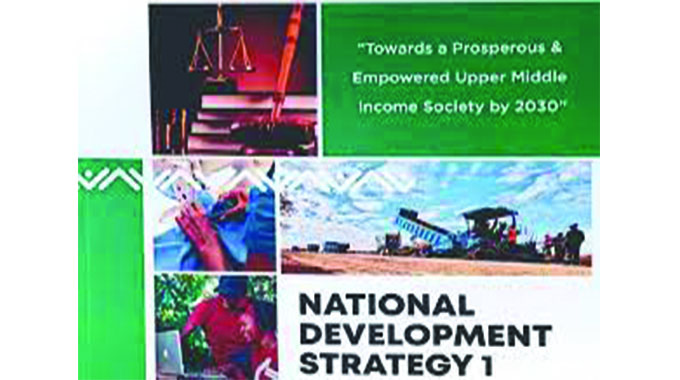
The tick grease programme is in line with the National Development Strategy 1 (NDS1), which prioritises animal health and production through strengthening farmer knowledge and skills in livestock production.
Livestock diseases are the major cause of beef cattle, sheep and goats deaths and Government is already upgrading the Presidential Tick Grease Programme and intensifying the Dip Tank Rehabilitation Programme.
Dr Masuka said there was a great improvement in the livestock sector, attributing the decline of cattle deaths to the Presidential tick grease programme.
“In the livestock sector, through the Presidential Blitz Tick Grease Scheme, we have reduced disease-induced cattle deaths by 50 percent paving the way for national herd rebuilding.”
To cushion the sector, recently Dr Masuka said there will be 4 000 veterinary and livestock development field schools.
“There will be one (school) at each dip tank. We no longer have these places being solely for disease control but also a place where best practices are taught including the application of tick grease and manufacture of household feeds,” he said.

In August, the country witnessed the re-opening of the giant beef processing factory in Bulawayo, the revamped Cold Storage Company (CSC)-Boustead Beef factory, which resumed operations after 22 years of closure.
The Second Republic has increased focus on resuscitating agro-processing industries in line with the broader growth trajectory under the agricultural sector, which is the mainstay of the country’s economy.
The massive beef processing plant is being revamped under a US$400 million joint venture farming concession agreement with Boustead Beef Zimbabwe, a United Kingdom-based investor.
Officials say the CSC will never be allowed to collapse again as its re-opening is anchored on renewed business modelling that connects more livestock farmers and downstream industries with prospects for higher job opportunities.
In terms of assisting dairy farmers, Government has lined up a number of programmes such as the Presidential Silage Input Scheme basically for small-scale dairy farmers, the National Enhanced Agriculture Productivity Silage Scheme for medium and large scale, mechanisation, irrigation infrastructure development and investment in modern day technologies like artificial insemination.
Apart from technical support, the Government has also paved a way for farmers to access loans to invest in the milk production value chain.
Government’s thrust is to capacitate small-scale farmers to achieve full capacity utilisation and transform home economies for improved livelihoods.
The livestock sub-sector contributes to household and national food nutritional security, foreign currency earnings and is a source of livelihood for 67 percent of the country’s rural households, with approximately 30 000 workers employed within the dairy value chain.
Last month, at Den Farm pasture and mechanisation field day in Kwekwe, Deputy Minister of Lands, Agriculture, Fisheries, Water and Rural Development, Vangelis Haritatos said Government has come up with strategic and innovative measures to bolster milk production in the country to fill the gap between supply and demand which is being compensated through imports from neighbouring countries.
The milk production capacity is just below 80 million litres per year which is against the annual demand of 120 million litres leaving a deficit of 40 million litres.
He said this year about 2 000 small-scale farmers were set to benefit from the Presidential Input Scheme.
“This year 2 000 small-scale dairy farmers are set to benefit from the aforementioned scheme with the Midlands Province expected to have more than 300 beneficiaries. This action is aimed at addressing the under-performance of the dairy value chain in Zimbabwe by strengthening the linkages in-between production, processing and financing.
“Annual milk production in 2021 was 75 million litres against an annual demand for milk of 120 million litres, hence new initiatives are expected to significantly bolster national milk supply and reduce the import bill on milk.”
Deputy Minister Haritatos said access to affordable agricultural financing was being facilitated through various strategies including the Agricultural Finance Corporation (AFC), as well as reviewing the contract farming and agricultural marketing frameworks to cover all crops and livestock.

He highlighted that Zimbabwe has got the potential of being milk self-sufficient while reflecting to yesteryear milk production capacity.
Zimbabwe had a dairy herd of 123 000 cows in 1990 and at one point produced more than 260 million litres of milk annually, but production declined over the years, with an estimated 38 000 dairy cows left.
There has been a slow growth generally in both dairy animal numbers and milk production from both the large-scale commercial and smallholder sectors in the last decade, this was associated with loss of valuable genetic material.



 Bongani Ndlovu
 Online Reporter