Online Reporter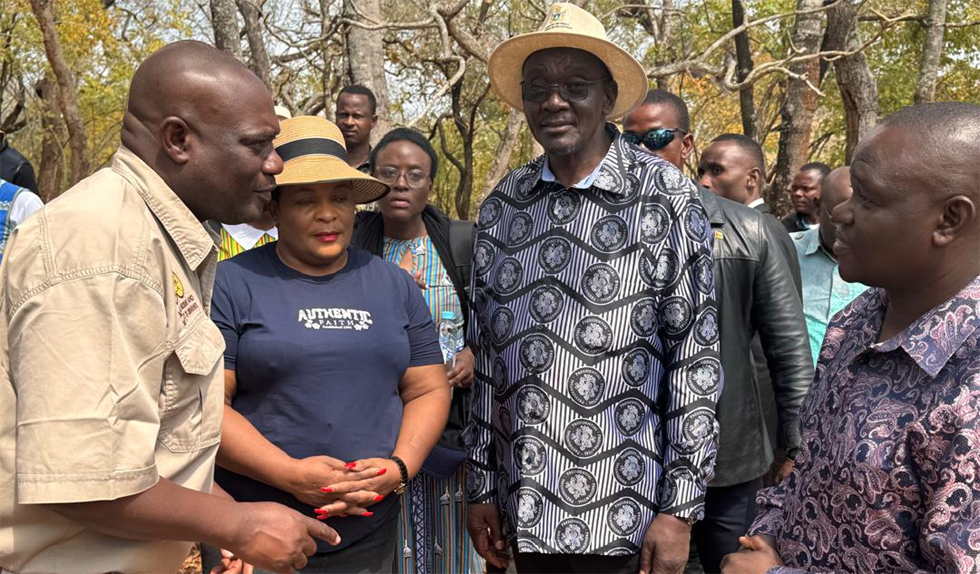
Ray Bande in CHIMOIO, Mozambique
MOZAMBIQUE is home to 17 liberation war shrines, where the remains of thousands of Zimbabweans lie, some in unmarked and shallow graves, and Vice President Kembo Mohadi’s recent tour of the sites, as well as those in Angola, Tanzania, and Zambia, is a poignant reminder for citizens to visit these historic locations.
By patronising these liberation war shrines, citizens can gain a deeper understanding and appreciation of the arduous experiences and selfless sacrifices made by generations who fought for the country’s independence, making them valuable political tourism products.
VP Mohadi recently embarked on a two-week tour to assess the state of Zimbabwe’s liberation war shrines in neighbouring countries.
Following visits to Angola and Zambia, VP Mohadi concluded his tour in Mozambique, where he inspected the Nyadzonia, Doreoi, Chimoio, Masinga, and Josiah Magama Tongogara Accident Site shrines.
The initiative highlights the significance of political tourism products, which encompass tourism offerings shaped by political factors. These include Government-promoted destinations based on political values, tours of politically significant sites, and even tourist actions that express political views, such as boycotts or ethical travel choices.
VP Mohadi said liberation war shrines in Angola, Zambia, Tanzania and Mozambique are political tourism products that generations born after the country’s independence must familiarise with for them to have pride, deep understanding and appreciation of the arduous experiences that delivered the nation’s political freedom.
A veteran of the liberation struggle himself, VP Mohadi was visibly emotional as he revisited sites where he and his comrades fought.
VP Mohadi’s visit to the liberation war shrines was a passionate throwback to the places where ZANLA and ZIPRA armed forces were in the trenches, paying the supreme sacrifice to dismantle the Ian Smith-led inhuman colonial regime.
During an interview after touring Nyadzonia Camp, VP Mohadi stressed the need for younger generations to understand the history of the liberation struggle, including the mass annihilation that occurred at the at this far-flung jungle.
“These sites hold profound significance, as they witnessed the immense struggles and sacrifices of our liberation war. It is essential that all Zimbabweans, particularly those born after independence, appreciate the gravity of our history. I urge them to visit these sites periodically and grasp the brutal reality of colonial rule.
“By understanding the atrocities committed during that era, they will be better equipped to make informed decisions when faced with political choices. They need to hear how people were brutally killed, the grueling experiences they lived in these camps and the undignified manner in which they were buried. After you have listened to the tales of all that happened here, it will be difficult for you to sell out, and abandon the principles we fought for,” said VP Mohadi.
After his tour of Doreoi Camp on Tuesday, VP Mohadi underscored the need to document and preserve the chronology of events that occurred at the refugee camp for Zimbabweans to fully appreciate that the country’s independence did not come on a silver platter.
VP Mohadi said: “This is a sad reminder of how some of our colleagues died during the war. Imagine having to die of hunger and outbreak of diseases in numbers. Imagine watching a colleague dying while you have nothing to do to help. This site bears witness to the immense pain and suffering we endured under colonial rule. As a nation, it is imperative that we thoroughly and accurately document this chapter of our history.
“Furthermore, the numerous shallow graves scattered throughout the country, holding the remains of our fallen comrades, must be exhumed and reinterred in a single, dignified location like this one. This will enable us to create a fitting memorial, allowing our comrades to finally rest in peace,” said VP Mohadi.
As VP Mohadi concluded his tour of liberation war sites in Manica Province at the Chimoio Shrine, before proceeding to Masinga and Josiah Magama Tongogara Accident Site shrines in Inhambane Province, he said: “This shrine, the largest in the Frontline States, has undergone some humane decoration, befitting a site where many of our departed comrades lie. However, more needs to be done.
“An interpretive centre, outlining the events that transpired here and related information, is essential. The existing museum requires refurbishment, but its original character must be preserved to avoid distorting history. Across all our shrines, basic amenities such as water sources, ablution facilities, rolls of honour, and shaded areas for visitors are necessary. Enhancing these sites will elevate our political tourism products, allowing visitors to reflect meaningfully on the liberation struggle.”