Online Reporter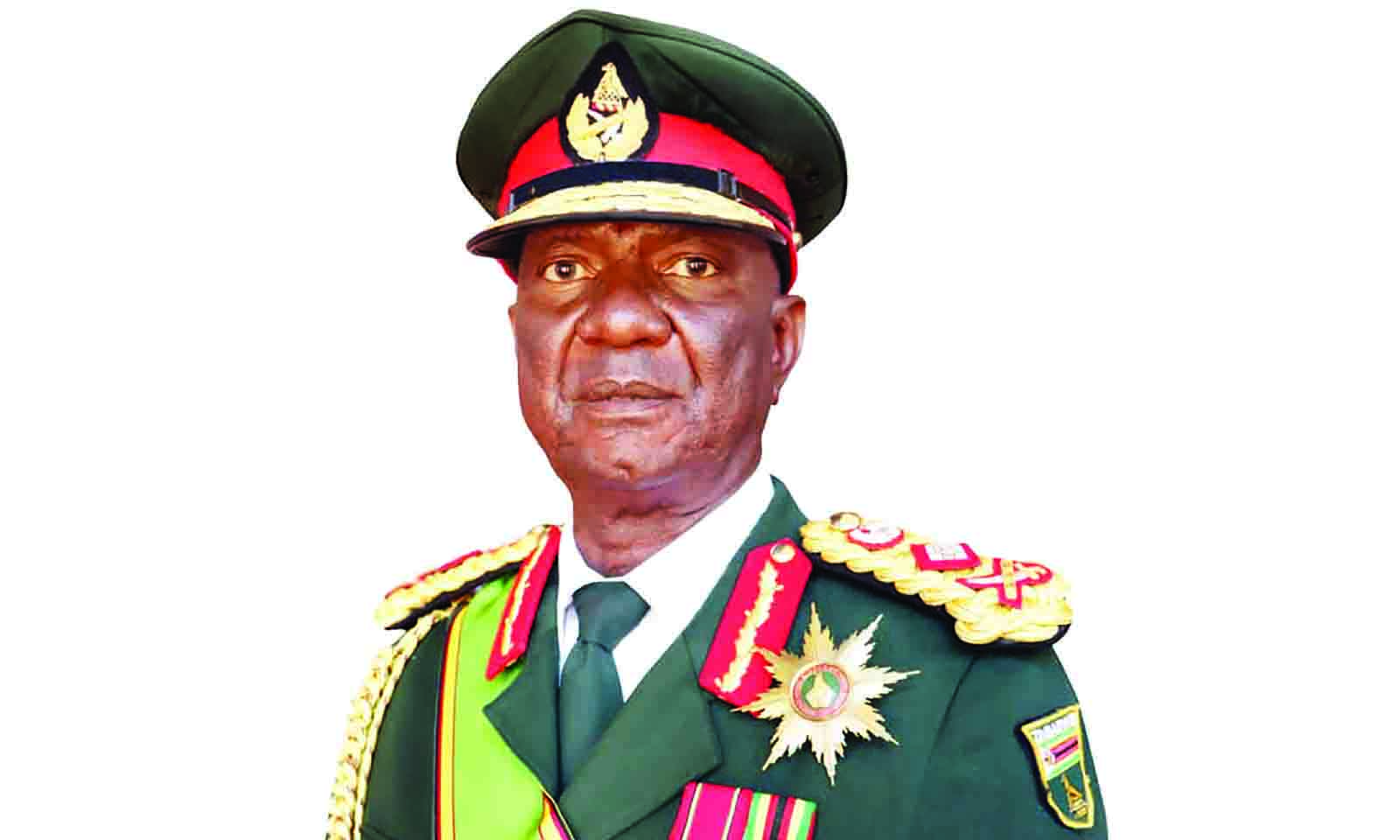
THE INTERVIEW WITH COLUMBUS MABIKA
ZIMBABWE next week commemorates the 45th anniversary of the founding of the Zimbabwe Defence Forces. Ahead of the commemorations, our reporter, Columbus Mabika (CM), yesterday interviewed Commander Zimbabwe National Army (ZNA), Lieutenant-General Emmanuel Matatu (EM) who outlined his vision for the national army, among other issues.
CM: Having been appointed Commander ZNA in March, may you shed light on your vision going forward?
EM: Thank you very much. Firstly, I would like to thank his Excellency, the President for promoting me and appointing me Commander of the Zimbabwe National Army. It is an honour for me to serve, and I will do my best.
It is my vision that the Zimbabwe National Army has to study the environment, has to be able to adapt to new technologies and to be able to deliver and survive on the modern setbacks.
Well, I want an organisation, an army, that is ready to fulfil its mandate. I will have failed the people of Zimbabwe if the army, when called upon to perform, fails to perform. To be able to perform, the army has to be, one, professional. We have to be well-trained; we have to be professional in everything we do.
We have to know what to do, under what situations. We have to be disciplined, listen to orders and do exactly as we are told. We have to be experts at using our arms of trade. Every soldier has to know what role he has to play, in whatever situation that we are tasked to do. And basically, that calls for good loyalty, good teamwork and professionalism on the part of the army.
CM: How will that enhance operations?
EM: Of course, we are talking about embracing technology and embracing Artificial Intelligence. Due to technological advancement, the art of war is changing, the nature of warfare is changing. We need to understand these technologies, embrace them, and be able to use them to our advantage in defence of the nation, be able to defend against them. Our enemies might take these technologies, and we need to understand them and we need to be able to take defensive actions in case we are attacked using those technologies.
CM: In line with the Government’s modernisation trajectory, what is the ZNA doing to modernise the army?
EM: Modernisation entails bringing in new equipment. It also entails being able to develop new equipment systems on our own. We are doing this together, as part of the Zimbabwe Defence Forces.
The message from Commander, Defence Forces (General Philip Valerio Sibanda), on modernisation was clear and we are modernising. And by modernising, we are looking at new equipment, modern equipment for the army. So, we are part of the Government’s modernisation trajectory.
We have sat down, we have looked at what our requirements would be, and looked at what can be afforded, and looked at what would be best for us.
CM: Artificial intelligence (AI), digitalisation and technology have become the order of the day worldwide. As the ZNA, where are you in this regard?
EM: As the ZNA, there is still quite a lot for us to improve in that area. We have recognised some of our deficits in this area and we have focused or refocused our recruitment to look at candidates with STEM (Science, Technology, Engineering and Mathematics) subjects; people who will be able to contribute towards the scientific development of the army.
We are into research and development, where we try and research various defence-related areas we might need to improve and suit our situations. It is not a one-time thing that we can say tomorrow we are there.
It is really something that we have to build on and start with the human resource itself, to make sure we get the right people who will be able to contribute meaningfully and help us develop with an understanding of what Zimbabwe needs.
CM: As we look at the 45th anniversary of the Zimbabwe Defence Forces, what are some of the milestones of the ZNA to date?
EM: Well, speaking of the Zimbabwe National Army, starting off in 1980 when we were formed, the army was born out of three warring factions that were integrated to form one army.
That in itself was quite a feat, quite some achievement. The army has gone through active operations in Mozambique and in the Democratic Republic of the Congo. We have been involved in United Nations operations where we have had members of the Zimbabwe National Army in Somalia and in Angola.
We continue with staff deployment to such duties, although at the moment at the level of staff officers and observers. We have been engaged in training, and training with our regional allies.
We have also conducted several exercises here in Zimbabwe and in some of our neighbouring countries. I myself led the training team to Namibia, and we spent some years there helping them to train their national army.
We have basically been evolving over the years, and we have a legacy of professionalism in everything that we have done. Those that have come before us have built a good reputation. It is our wish that we continue, we leave that legacy, and we wish it continues.
CM:: Right now, since Zimbabwe has the SADC chairmanship, have you also benefited as the Zimbabwe National Army from collaborations within the bloc?
EM: Well, the SADC chairmanship of Zimbabwe cuts across the other committees that have to do with defence and security, and we have been chairing those and focusing on the specific areas of defence and specific areas of security that affect the region. Of course, we then take the lead and we steer these committees in their activities during our chairmanship.
CM: As Zimbabwe, have you also taken part in assisting to bring peace in DRC?
EM: We did not deploy forces to the SADC in the Democratic Republic of Congo, but we did play a role. Our own Commander Defence Forces was chairman of the Defence Commanders Committees of SADC, which held various meetings in the quest to find lasting solutions.
CM: Are there any tasks that you are currently partaking in as the Zimbabwe National Army in enhancing communities and if so, has there been any overall impact?
EM: Again, going back to our Constitution, part of our mandate is to assist the police in law and order, assist civil ministries and assist civil communities.
Every year, we set aside a week before our Defence Forces Day celebration to mark the assistance that we give to the community. We usually hand over projects that we have worked on. For this year, we have handed over classroom blocks, dormitories, and a veterinary office block throughout all provinces.
In all these projects, we work with the communities, with our formations that are scattered across the country. We work with communities, identify areas where we can help, and we go in providing our artisans, our specialists, to work with the communities to provide these services or to put up the infrastructure that may be required.
CM: Looking at Vision 2030, we do have persons with disabilities within our communities. How are you assisting this group?
EM: In terms of disabilities, we do not have a specific programme aimed at disabilities or those with disabilities, although we do take them into account in all the programmes that we do. In terms of our outlook, we are a national army and we come from all the districts of the country and we cover all the districts of the country. Whatever project we take into account the disadvantaged those that have challenges in their own communities, those we take into account and we move in there and do projects that assist them.
CM: Your parting words to the people of Zimbabwe.
EM: We are delivering the peace that they require to be able to carry out all those activities and normal economic development that is required.
Well, I would like to assure them that as commander of the Zimbabwe National Army, I will do all I need to do to guarantee them the peace and the security that they require for them to live their normal lives and for economic development.