Online Reporter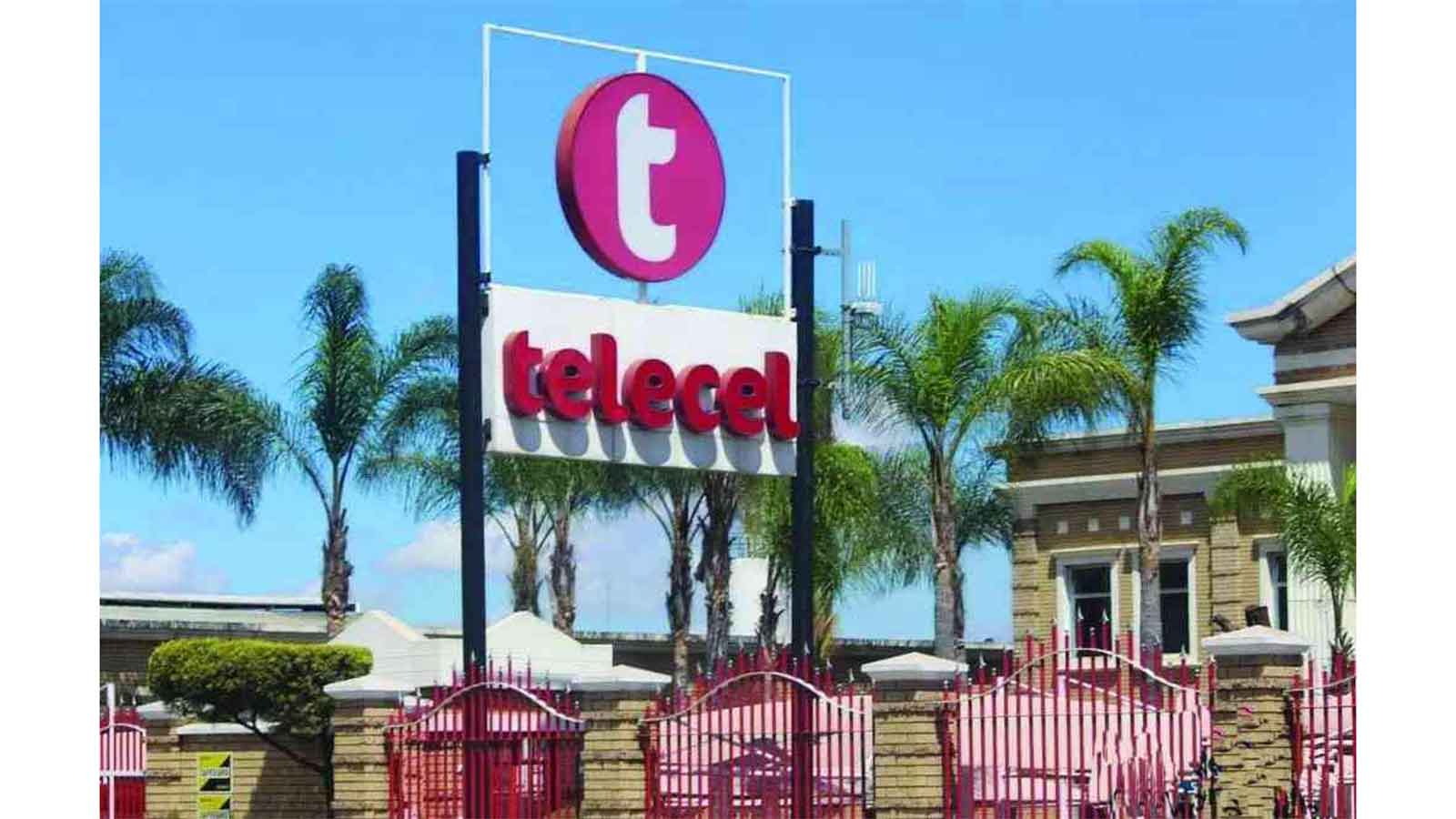
Business Reporter
SHAREHOLDERS in struggling mobile network operator Telecel Zimbabwe have been offered nominal payouts as low as US$0,50 to give up their equity as part of a turnaround strategy expected to bring the company back to profitability within 24 months.
This is contained in a rescue plan prepared by the company’s corporate rescue practitioners, Messrs Kundai Tibugare and Bulisa Mbano, of Grant Thornton Zimbabwe.
The turnaround plan envisages Telecel incurring a loss of US$4,4 million in the first year, but quickly returning to a profit of US$5,4 million in the second year, US$7,6 million in the third year, US$14,8 million in the fourth year and US$24,3 million by the fifth year.
A planned revamp of the network will rely on Fourth Generation (4G)/LTE deployment, leveraging expanded coverage, spectrum access, subscriber growth, higher network capacity and strong average revenue per user metrics.
According to the restructuring proposal, majority shareholder Mutapa Investment Fund (MIF) — which has a 60 percent stake — has been offered US$1.
Empowerment Corporation, which holds the balance of 40 percent, will receive US$0,50 as full and final settlement for its equity.
The practitioners said the amounts offered to the existing shareholders shall constitute full and final settlement of their equity contributions to the company.
Despite wiping out historical equity value, the rescue plan acknowledges past funding support to keep Zimbabwe’s smallest mobile telecommunications firm afloat.
“Notwithstanding the foregoing and as a recognition of the support provided by the existing shareholders in sustaining the company through funding support, the plan provides that shareholders with exposure in Telecel Zimbabwe shall receive a distribution of US7c in the dollar in respect of all shareholder-related loans in which Mutapa Investment Fund was the only participating shareholder,” the practitioners said.
Under these terms, shareholder-related loans amounting to US$97,7 million will be compromised (reduced compensation) at US7c per dollar, resulting in a cash settlement of US$6,8 million to Zimbabwe’s sovereign wealth fund on a net dividend basis, subject to direct deductions to relevant stakeholders to ensure an uninterrupted takeover. Prospective investor Augustus Capital has proposed allocating a 15 percent strategic equity interest in the restructured company to MIF.
Addressing the conditions surrounding this stake, the proposal outlines strict performance guidelines.
“Should Mutapa Investment Fund fail to provide satisfactory assurance of its ability to fulfil the agreed obligations, the shareholding shall be deemed to constitute a cash-out by Augustus Capital,” said the practitioners.
“In such an event, Mutapa Investment Fund shall be required to acquire the shares at a mutually agreed valuation.”
The proposal establishes structured payout terms across all creditor classes as at November 11, 2025. Huawei’s secured claim of US$10,7 million — for network equipment supplied between 2010 and 2012 that has depreciated over time — will be compromised at 40 cents in the dollar, rounding out to a payout of US$4,3 million.
The practitioners highlighted that this offer represents an improvement of US14,66c in the dollar over the estimated recovery under a liquidation scenario.
Huawei’s unsecured balance of US$4 million will also be compromised at US40c in every dollar, resulting in a settlement amount of US$1,6 million payable soon after the adoption of the plan.
Statutory liabilities totalling US$691 014 owed to statutory bodies — including the Zimbabwe Revenue Authority (ZIMRA), the National Social Security Authority (NSSA) and other pension funds — and three months of outstanding employee remuneration will be paid at 100 percent.
Concurrent trade debt amounting to US$9,8 million will be settled at US40c in every dollar, totalling US$4 million.
Historical licence fee arrears of US$40,2 million owed to the Postal and Telecommunications Regulatory Authority of Zimbabwe (POTRAZ) will be compromised at US7c in every dollar (US$2,8 million).
The balance of US$54,8 million for future licence years will be repaid in full over eight years with a one-year grace period.
A concurrent claim by another equipment supplier, ZTE, of US$8,5 million will be compromised at US40c in every dollar (US$3,4 million).
Legacy employee debt amounting to US$257 403 will be settled in full.
Addressing the future of the company’s workforce, the practitioners noted “Augustus Capital’s intention to retain all 248 employees of Telecel Zimbabwe”.
However, acknowledging potential future operational changes, the plan details additional risk management measures.
“Whilst Augustus Capital intends to retain all employees, it has set aside US$1 million to cover any unforeseen retrenchment costs that may arise as a result of future restructuring,” the document says.
Additionally, “new employees will be strategically recruited on sustainable contracts and subject to interviews by Augustus Capital”.
Telecel Zimbabwe was officially placed under voluntary corporate rescue on October 27, 2025, following a resolution passed by its board of directors.
The court-sanctioned rehabilitation process, managed by Grant Thornton, was initiated to protect the country’s third-largest mobile telephone operator from legal proceedings and liquidation while securing fresh investor capital to rebuild network infrastructure and stabilise operations.
The adoption of Telecel Zimbabwe’s corporate rescue plan is subject to strict statutory voting thresholds and multi-agency regulatory approvals before Augustus Capital can formally execute its acquisition.
Under the turnaround terms, the plan must pass dual-majority voting criteria across both creditors and shareholders.
The plan should be approved by at least 50 percent — being the majority in number — of the various classes of creditors present and voting either in person or by proxy and the requisite majority should represent not less than 75 percent in value of the votes exercisable by the creditors present.
Since the proposed restructuring alters the rights of existing equity holders, the approval terms extend to the company’s security holders on identical conditions.
Once approved by both creditors and members, the plan becomes universally binding.
The practitioners noted that any foreign creditor disbursements remain subject to exchange control regulations, statutory tax deductions and bank charges.
Finalisation of the investment transaction relies on completing full legal, commercial and tax due diligence by Augustus Capital, followed by the signing of an official implementation agreement and a share purchase and share subscription agreement.
The agreement will detail the immediate sharing of technical and marketing expertise, sync corporate rescue objectives with handover-takeover processes, and establish payment modalities for legacy debt.
Further conditions include the transfer of immediate bid funds, reconciliation of post-commencement financing and satisfaction of specific class-creditor offer terms.
In what reflects its deep troubles, Telecel Zimbabwe’s active subscriptions plummeted to a marginal 303 284 users by the end of 2025, driven by continuous subscriber loss, shrinking market share and frozen infrastructure upgrades. This represents a monumental collapse from over 1,6 million active subscribers recorded during its peak period.
Telecel’s market share has also sunk to a fraction of 1 percent of the total mobile subscriber and data market, losing an additional 0.13 percentage points in the recent reporting periods.