Online Reporter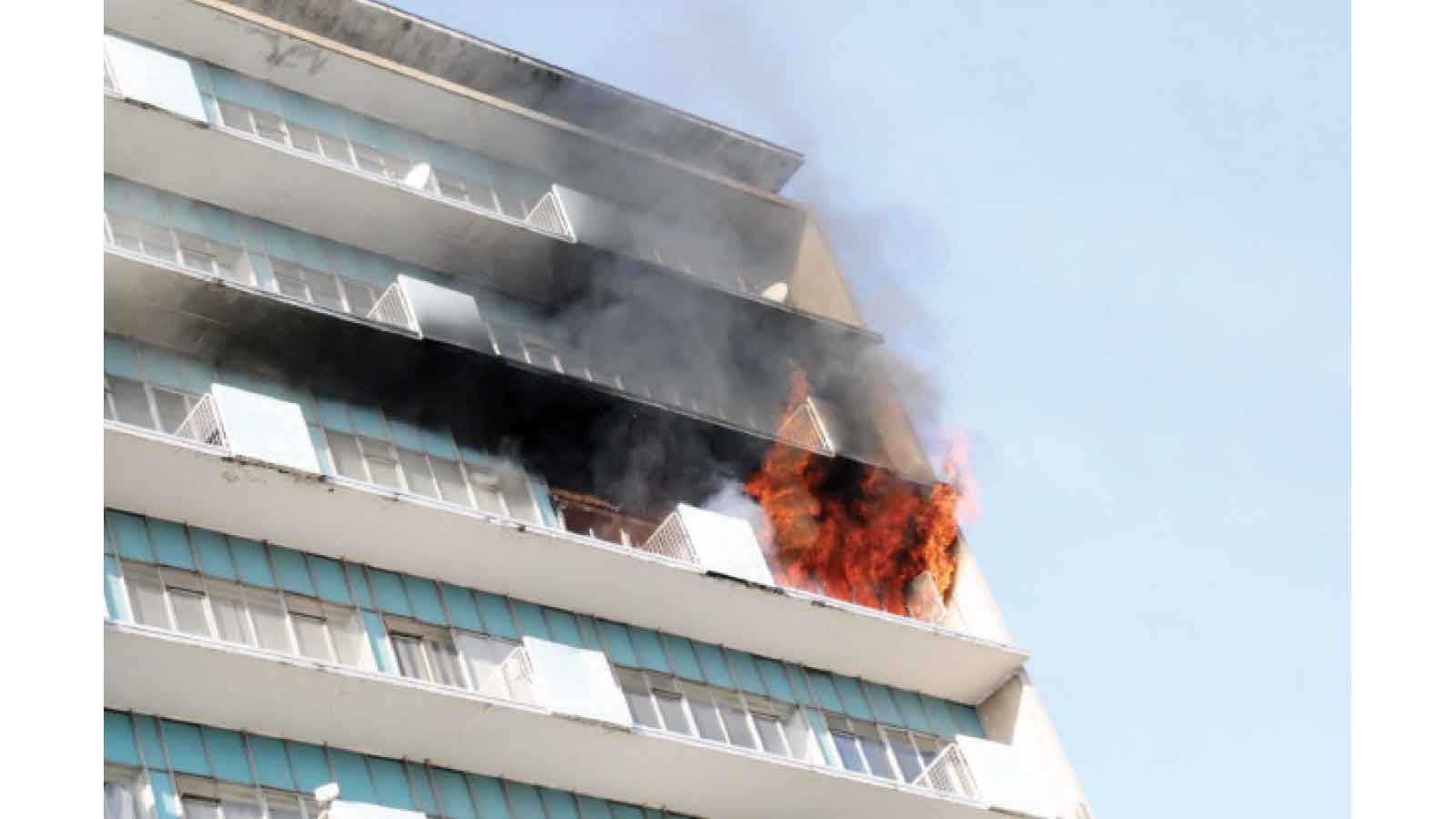
Check Point Desk
WHEN flames recently engulfed the ninth floor of Regal Star Building along George Silundika Avenue, panic rippled through Harare’s central business district.
Office workers rushed onto the streets, businesses temporarily shut down and traffic ground to a halt as thick smoke rose above one of the city’s busiest commercial corridors.
In a short space of time, however, the City of Harare Fire Brigade contained the blaze, preventing a devastating urban disaster.
Although the exact cause remains under investigation, the incident has once again shone a light on a growing concern confronting Zimbabwe’s capital: fire safety in ageing buildings and overcrowded markets.
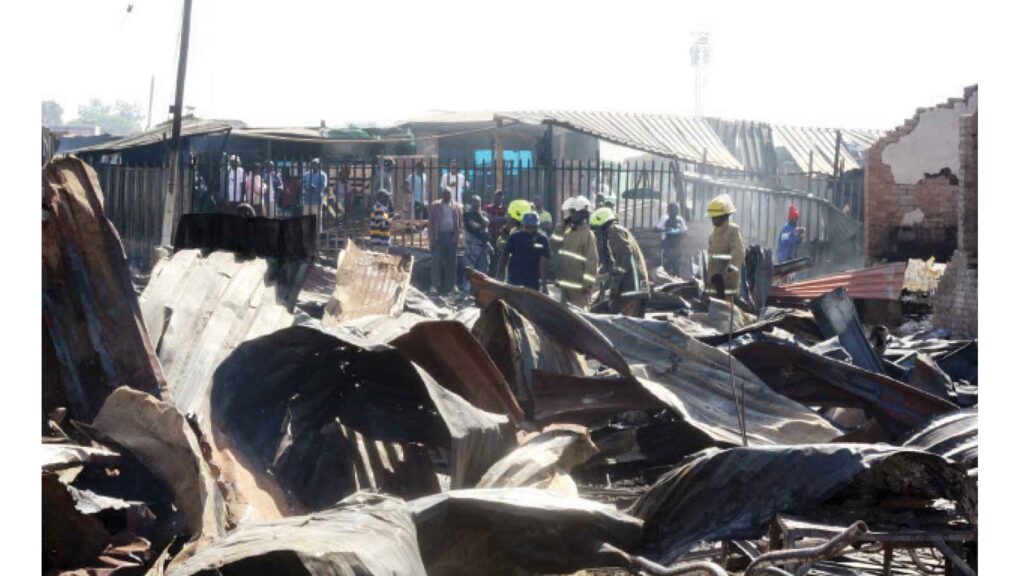
For traders at the Glen View Area 8 Furniture Complex, Mbare Musika and Magaba Home Industries, the sight of smoke brings back painful memories.
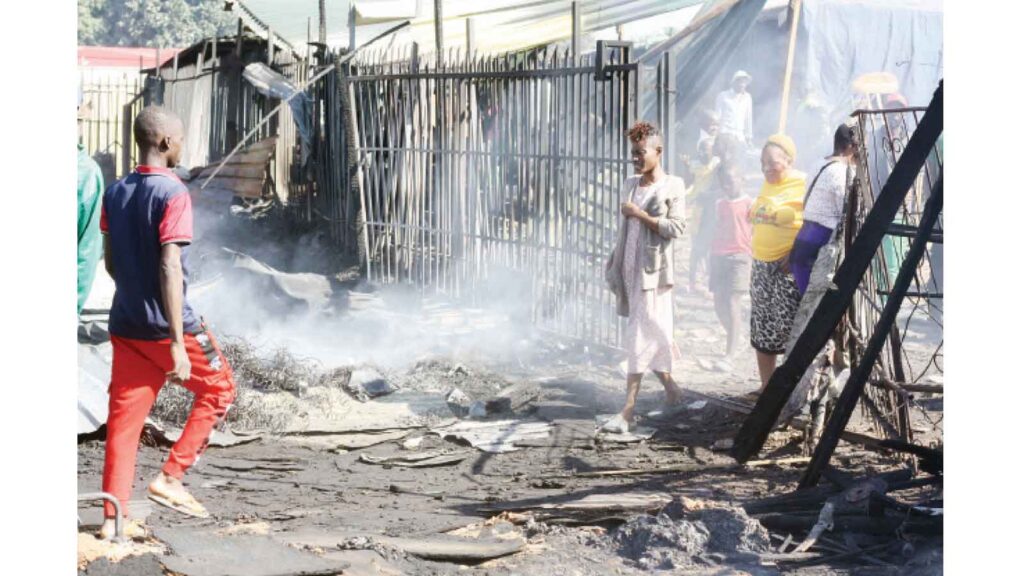
For traders at the Glen View Area 8 Furniture Complex, Mbare Musika and Magaba Home Industries, the sight of smoke brings back painful memories.
Unlike the Regal Star Building incident, where firefighters successfully halted the flames, repeated infernos at the three trading hubs cited above have routinely seriously dented livelihoods, destroyed hundreds of thousands of dollars in property and forced thousands of entrepreneurs to rebuild from scratch.
Yet, after years of catastrophic losses, the authorities are finally shifting focus from basic emergency response towards a long-term solution of redesigning Zimbabwe’s markets to make them safer, more organised and resilient.
The urgency of this transformation extends well beyond informal open-air markets.
Last year, the Harare City Council identified more than 500 buildings across the capital as unsafe, condemning 14 following inspections that uncovered severe structural and fire safety defects.
Among the condemned properties were the Mahachi Quantum Building, Vivandelphi Court, Stewarts and Lloyds, Dublin House, Msasa House, Bush House, Roslin House, Daventry House and Robin House.
Inspectors cited blocked emergency exits, defective firefighting equipment, exposed electrical wiring, severe overcrowding, illegal internal partitions and deteriorating structural integrity.
These inspections triggered hundreds of abatement orders requiring property owners to rectify defects immediately or face forced closures.
Urban planners say the dangerous conditions inside these commercial high-rise buildings mirror the challenges that have long plagued Harare’s informal markets, namely congestion, poor initial planning, inadequate emergency access, decaying electrical systems and non-existent fire suppression tools.
Overcrowding
The recurring blazes at Glen View Area 8 serve as a stark warning.
As Zimbabwe’s largest furniture manufacturing hub, the complex has suffered frequent infernos that destroy vital workshops, expensive heavy machinery, timber stocks and finished products.
Tawanda Utete, chairperson of the Glen View Area 8 Furniture Complex management committee, emphasises that these fires are no longer random accidents, but rather symptoms of an infrastructure system failing to support rapid commercial growth.
He explains that inadequate water supplies, poor sanitation, irregular waste collection and cramped working conditions have left the market deeply vulnerable.
“We all know that Glen View Area 8 is the manufacturing hub for furniture in Zimbabwe, but we continue to experience recurring fires because of overcrowding,” he said.
Utete welcomed the Government’s recent decision to allocate additional land to decongest the complex, noting that the move creates a rare opportunity to rebuild using modern urban planning principles.
“We need proper infrastructure and formal recognition. We need proper licensing and legal frameworks. We should not always be treated as illegal traders. We need proper spaces where we can operate freely without harassment,” he said.
Redesigning
Many traders believe a workable solution is already taking shape in Mbare.
For decades, the Mbare trading precincts — including Mbare Musika, Siyaso and Magaba — suffered devastating blazes that repeatedly destroyed stalls and disrupted the country’s primary agricultural distribution network.
Today, Mbare Musika is being transformed into a modern trading facility built with wider access roads, organised stall layouts, improved drainage, enhanced sanitation, upgraded electrical systems and dedicated fire safety infrastructure.
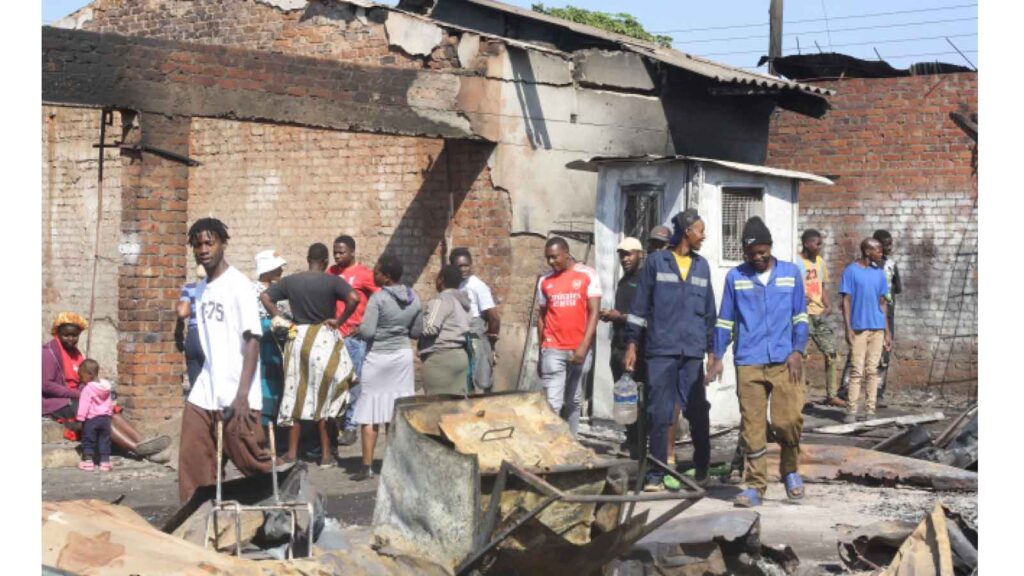
For decades, the Mbare trading precincts — including Mbare Musika, Siyaso and Magaba — suffered devastating blazes that repeatedly destroyed stalls and disrupted the country’s primary agricultural distribution network.
Urban development experts view this redevelopment as more than a simple market rebuild. It represents a practical blueprint for mitigating fire risks across the entire informal economy.
By replacing chaotic, cramped layouts with wider lanes, proper spacing between vendors, safer electrical wiring and direct access for emergency vehicles, the project sets a new standard that could dramatically reduce disasters at sites like Glen View Area 8 and Magaba Home Industries.
Alika Bhasikoro, representing the Lusaka Market in Highfield, said modern markets must also accommodate rural farmers who keep urban supply chains alive.
“Without the farmers, there are no markets to talk about. Our farmers arrive at different times.
“Some come during the day, others at midnight and some early in the morning. They need accommodation, shelter and proper facilities,” she observed.
Because many farmers transport highly perishable produce and are forced to sleep in exposed, unserviced areas, Bhasikoro argues that modern market designs must serve the complete economic value chain, from the rural producer straight through to the urban consumer.
This, she reckons helps prevent unwanted calamities like infernos.
At the Hatcliffe Dust Market, chairperson John Kazingizi believes that funding market infrastructure is ultimately an investment in Zimbabwean families.
“There is not much that has been done to show that it is an official market,” he said.
He welcomed the Harare City Council’s ongoing dialogue with traders regarding municipal market fees, while urging the authorities to ensure all new trading structures are spacious enough to accommodate every vendor who relies on them.
Similarly, Prudence Chimbo, chairperson of the Jambanja Market Operators in Chitungwiza, opines that “true reform requires municipal authorities to view informal traders as essential partners in economic development rather than illegal squatters”.
She emphasises that, because the informal sector keeps the national economy moving, councils must consult directly with vendors when coming up with market policies and designing spaces.
Secretary for Provincial Affairs and Devolution for Harare Metropolitan province Dr Shingirayi Mushamba said urban markets should be viewed as strategic economic systems rather than collections of informal stalls.
“We need to understand these markets holistically — from physical structures and participant demographics to buying power and spatial location,” he said.
Harare’s contribution of about 25 percent to Zimbabwe’s gross domestic product, he said, makes investing in modern market infrastructure a national economic priority.
It is believed that 80 percent of Harare households rely on small enterprises.
The City of Harare is understood to be actively seeking investment to modernise major trade hubs while improving roads, electricity, space allocations and microfinance access for viable businesses.
Strengthening emergency response
City of Harare corporate communications manager Stanley Gama commended firefighters for their skill.
“Our fire brigade team has proved time and again that they are the best of the best. They respond to fires promptly and execute their job professionally,” he said.
“The way they put out the fire at Regal Star Building was amazing.”
However, chief director in the Department of Civil Protection, Nathan Nkomo, reiterated that while recurring market fires remain a major threat, State agencies have pivoted towards proactive risk reduction and disaster preparedness.
He pointed to Mbare Musika as the ideal framework for national market management.
“If you look at what is happening at the new Mbare market, that is the direction we should be taking. Modern market infrastructure, proper planning and adequate access for emergency services are critical in reducing risks,” he said.
Referring to repeated fires at the Glen View Area 8 Furniture Complex, Nkomo noted that congestion remains one of the biggest obstacles to effective firefighting.
“When markets become overcrowded, access for fire engines becomes difficult. Once a fire starts, it spreads rapidly due to the close proximity of structures and the materials used. That is why decongestion and proper market planning are essential,” he explained.
He highlighted that the Government has substantially bolstered national firefighting capacity through the acquisition of 131 new fire tenders.
This national investment equips growth points, business centres and rural district councils with dedicated fire trucks for the first time in post-independence history.
Furthermore, Harare’s local fleet has been reinforced using units reassigned from smaller municipalities.
The modernisation of Mbare Musika, the physical expansion of Glen View Area 8, the rigorous enforcement of high-rise building codes and sustained investment in new firefighting fleets demonstrate that Harare is moving away from reactive emergency responses towards long-term disaster prevention.
“Despite these fleet upgrades, the decaying municipal water infrastructure continues to hamper firefighting operations. Although fire hydrants exist throughout Harare, severe water shortages mean they often lack pressure,” he warned.
“As a result, firefighters are forced to rely on supplementary water bowsers to refill their 5 000-litre trucks during active blazes.”
Nkomo also stressed that equipment alone cannot stop fires without strict municipal building enforcement.
He pointed out that many commercial structures are heavily misused, with single-tenant spaces partitioned into dozens of overcrowded stalls using flammable materials.
In many instances, traders run exposed electrical lines, store clothing and operate volatile LP (liquid petroleum) gas stoves within the exact same confined spaces.
“If our cities and municipalities were operating effectively, they would regularly inspect these buildings,” he said.
“Many structures are no longer being used for their intended purpose. Where a single tenant used to occupy a building, there are now more than 20 operators partitioning the space, with some using flammable materials.”
The fires that have scarred high-rises in the central business district and gutted stalls at Glen View Area 8, Mbare Musika and Magaba Home Industries highlight the severe risks posed by deteriorating infrastructure and neglected urban planning.
However, these challenges also offer a clear turning point.
The modernisation of Mbare Musika, the physical expansion of Glen View Area 8, the rigorous enforcement of high-rise building codes and sustained investment in new firefighting fleets demonstrate that Harare is moving away from reactive emergency responses towards long-term disaster prevention.
For the thousands of traders who rely on these spaces every day, this transition is vital.
By applying the hard-won lessons of Mbare across the nation, Zimbabwe can build trading hubs defined not by the fires that destroyed them, but by the resilience with which they were transformed.