Chronicle Editor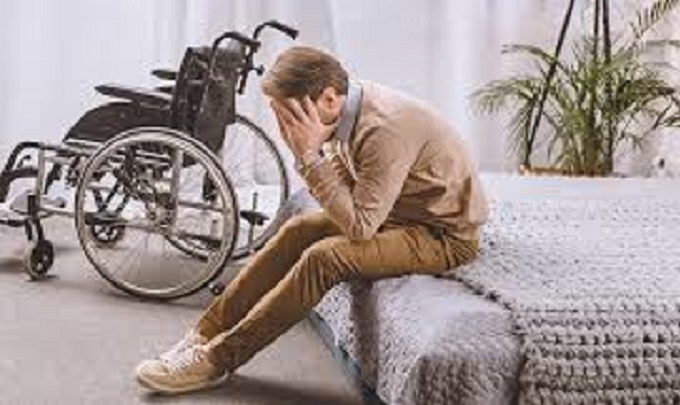
Getrude Ndlovu
The Covid-19 pandemic has brought to the fore the vulnerability of persons with disabilities during emergencies, in particular, in developing countries.
While it is agreed that everyone is affected, it is also a fact that Covid-19 does not affect us all equally.
Even within the group of persons with disabilities, the effects are different. For example, for someone who has visual impairment, is female and in poverty and someone who uses a wheelchair, is male and has access to health information.
Most persons who have visual impairment survive on begging in the streets. The current restrictions in movement obviously have negative effects on their ability to survive.
Philanthropic acts have been profiled in the media in the past about citizens helping persons with disabilities through individual or group donations. In mind,
I have a recent article by a local daily about the Higher Life Foundation which had donated food hampers to 362 persons with disabilities. I am of the view that the benevolent gesture by the organisation and other well-meaning citizens is welcome and ought to be applauded.
I wish to take the discussion further and say while these generous gestures are most welcome, what is needed are not isolated generous acts towards a few individuals, but rather, a more holistic approach as enshrined in our Constitution. Going through the comments from citizens on social media about such gestures got me thinking how as a country we still have gaps in fulfilling provisions for the rights of persons with disabilities in line with commitments in various treaties we have ratified.
What persons with disabilities need is not charity but empowerment so that they are able to live their own lives accessing rights like all citizens.
Inclusive early childhood education has the potential to cover this gap. Take for instance, the significant numbers of learners with visual impairment, who are out of school and have never accessed formal education. While UNICEF observes that there are no current and definite comprehensive incidence and prevalence statistics of children with disabilities in Zimbabwe, it is a fact that a significant number of learners with disabilities, in particular those who have profound disabilities, who live in the rural areas and live in poverty are currently out of school or are most likely not enrolled in schools that cater for their meaningful learning.
In the expanded Bill of Rights of the Constitution, education is recognised as a fundamental right for all citizens of Zimbabwe alongside other rights such as health, housing and so on.
The recognition of this right resonates with several human rights instruments the country has ratified such as the Convention on the Rights of the Child and the Convention on the Rights of Persons with Disabilities.
It is also a huge improvement when one considers that the Lancaster House Constitution, viewed by many as perpetuating colonial interests, did not make specific provision for the right to education under its Declaration of Rights.
I am of the opinion that a one size fits all approach of, for instance, abolishing all special schools and placing every child in the mainstream school system will not work in the context of our country for a number of reasons which are beyond the scope of this discussion.
It is my view that most of the learners with disabilities who are currently out of school can be included in the mainstream system with setting up of well resourced structures that are supported with programmes that target change in social behaviour across particular segments of the population. For example, addressing negative attitudes of the community, peers, parents, teachers, school administrators and policy makers may not need millions of dollars.
Zimbabwe needs to explore possibilities of increased budget allocation and alternatve modalities for financing education in order to fulfil its commitment to education for all learners as stated in the Constituition.
The only guarantee to fulfil the right to education for learners with disabilities is implementation of programmes that enhance quality inclusive education.
Zimbabwe needs to quicken its pace to adopt the Inclusive Education Policy which should be the right framework which provides for the operalisation of inclusion of all in schools. Its long term impact will certainly reduce the number of persons with disabilities who plead for aid on the streets.
Getrude Ndlovu is a disability rights student with special interest in inclusive education and can be contacted on [email protected]


 Online Reporter