

 admin
adminassessors at advisory firm Ernst & Young in their latest report (“Business Risks Facing Mining and Metals 2012-2013”) cite resource nationalism as topping the risk mining companies are grappling with, not only in mineral-endowed Africa, but across the world.
While resource nationalism presents a risk to mining companies, it is not going to peter off and mining companies are better off sharpening their diplomatic and negotiating skills in order for them to negotiate and preserve the value of their mining assets.
“Mining and metals companies must continue to engage with governments to foster a greater understanding of the value a project brings to the host government, to better communicate the implications of changes in the risk/reward equation, and to more effectively negotiate appropriate trade-offs that preserve the value to both the companies and the governments,” said Mike Elliot, Ernst & Young’s global mining and metals leader.
Africa, Asia and Latin America in particular are going beyond taxation to secure greater benefits from their mineral endowment and they are also making it mandatory for mining companies to beneficiate minerals locally by imposing export levies on unprocessed ores and capping foreign ownership in mining projects.
Ernst & Young believes that Australia’s 2010 proposals for a super profits mining tax could have emboldened other countries to start raising royalties and taxes.In March this year, India started working on modalities for a new levy on minerals extracted from its forested regions.
In 2011, Peru enacted a new mining tax and royalty regime using the example of Chile, which in 2010 enacted measures to base levies on net mining income. Between 2011 and 2012, Mongolia, Peru, Indonesia, Poland and the United States increased taxes and royalties, while others have introduced or are in the process of introducing export levies on raw minerals.
In Africa, Zambia doubled its royalty payments on metals to six-percent in 2011, Zimbabwe raised royalty payments on gold and platinum, and Ghana raised royalty payments and corporate tax.
Ghana is currently working on modalities to introduce a windfall tax on its gold mining dominated sector. The DRC is carrying out a comprehensive overhaul of its 2002 Mining Code with a view to ending tax holidays, which have been enjoyed by companies for the past decades, and raising its taxation levels. DRC’s case makes interesting reading. Despite its abundant copper, cobalt, iron ore, gold, diamonds, tin, tantalum, gas, wolframite deposits, among a host of other minerals, it collected a paltry US$100 million in tax revenue in 2011.
Iron ore and bauxite rich Guinea last year amended its mining code to enable government to buy a 20 percent shareholding in mining projects, in addition to a 15 percent free carry. Guinea has just started the process of reviewing mining contracts, some of which were signed under opaque conditions by the West African government’s successive regimes over the past decades.
Key to Guinea’s push for contracts review has been the need to create transparency in the corruption-riddled mining sector, necessitating President Alpha Conde to place the sector under direct Presidential supervision. There is speculation that South Africa will opt for “strategic nationalisation”, under which certain strategic minerals such as iron ore and coal will be managed by the state. Zimbabwe is finalising amendments to its mining laws and already miners are compelled to sell 51 percent equity to local investors. Indonesia and Mongolia have adopted almost similar approaches.
Indonesia earlier this year announced capped foreign ownership at 49 percent after 10 years of operations. In Mongolia, foreign ownership of strategic minerals is capped at 49 percent. Beneficiation strategies in South Africa, Brazil, Indonesia, Vietnam and Zimbabwe are to a large extent the same. However, perceptions of risk can be minimised, say analysts at Ernst & Young. They say this can be done through investing in transparent relationships and aligning with host government’s long-term economic and political plans. Partnerships have also been encouraged, with an emphasis on immediately empowering communities within the area where mining operations are based.
“To stay ahead, companies have to be pro-active in their dealings with communities and governments. Speed is important as it prevents a potential issue becoming political.
“For example in Chile, a deal was struck between the government and the large mining companies operating in the country whereby the miners agreed to pay a nine-percent tax rate in the years 2010, 2011 and 2012, instead of a fixed four-percent of operating profits. The increased tax has given the Chilean government access to additional funds needed to for the reconstruction following the earthquake in 2010,” the analysts say.
Buy-in from local communities enables companies to operate harmoniously and build transparency. Ernst & Young’s analysts say that international capital’s perception of risk should not be one-sided as there are also upsides.
“What are currently viewed as downside risks-resource nationalism or increasing regulation for social and environmental impacts-over the long term may produce positive results, by making the sector more transparent and ultimately strengthening the capacity of countries of extraction to manage social expectations and engender long term development.” — The Southern Times.


Online Reporter
- Chronicle , Herald , Manicapost , SundayMail , SundayNews
- September 19, 2026
- 94 views
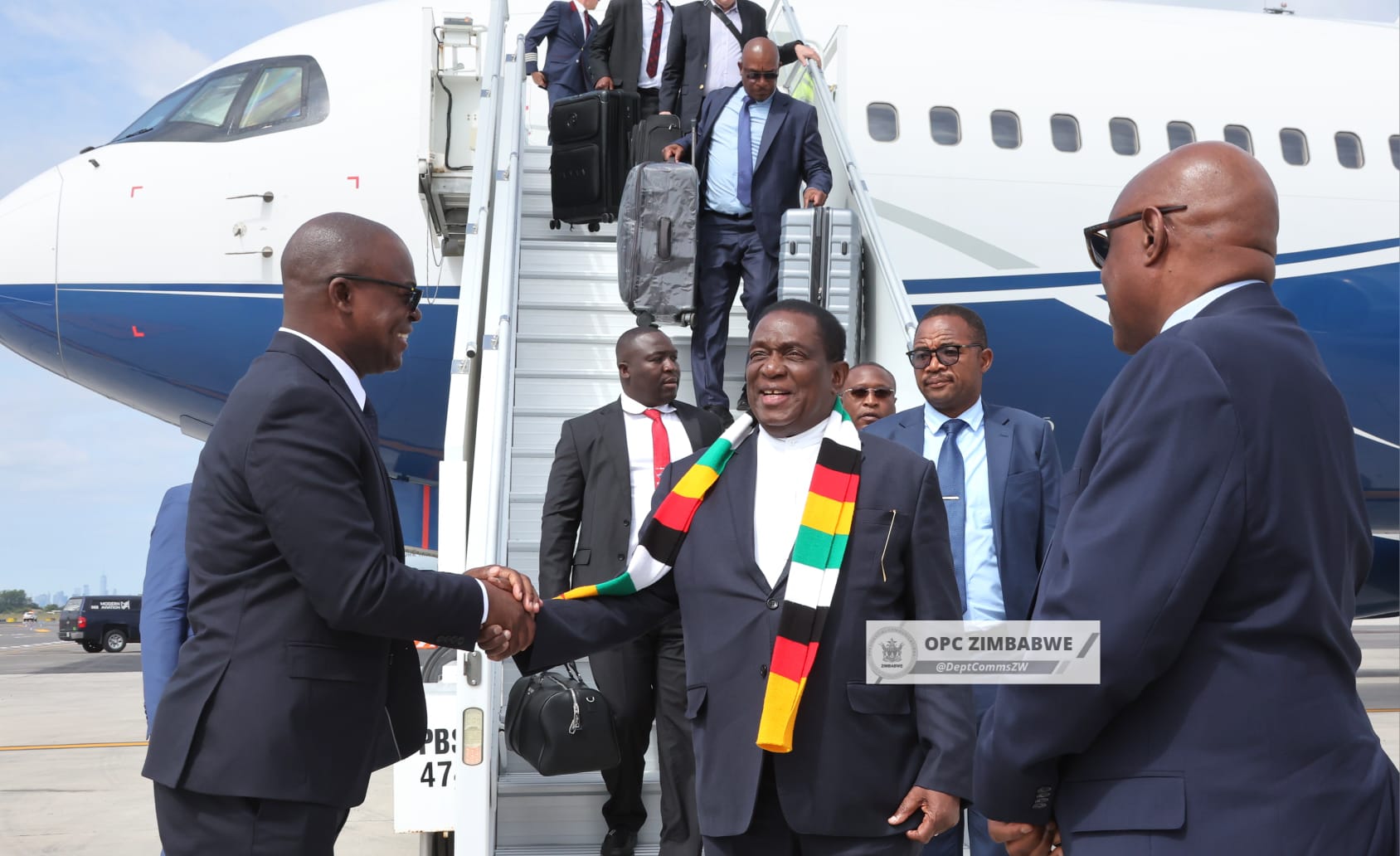
NEW: President Mnangagwa arrives in New York, to attend Zimbabwe Business Forum tomorrow
Wallace Ruzvidzo in NEW YORK, USA PRESIDENT MNANGAGWA has arrived in New York to join fellow Heads of State and Government at the 81st Session of the United Nations General…
