


 Online Reporter
The vile political creature that lurked in the shadows in the region — the Johannesburg-based Brenthurst Foundation, which was founded as an ostensible regional think tank by the Oppenheimers in 2004 — recently unceremoniously folded.
Like the wounded snake that it was, it just slithered back into the hole from whence it had come and died away from the public glare.
After a largely uneventful 21 years of existence, the closure of the foundation, whose main mission was purportedly to generate “new ideas and innovative actions for strengthening Africa’s economic performance”, was only announced by its research director, Ray Hartley, in a LinkedIn post on July 16, 2025.
Wait! So, they announced the closure of this supposedly influential and important foundation on LinkedIn?
Apparently, this unfolding saga, as Bishop Lazi prefers to call it, gets more curious and stranger. We are not told what caused it to close so abruptly, and, naturally, the rumour mill has been in overdrive.
One of the explanations leads to even more questions than answers.
Some say the foundation could not survive the resignation of its head, Greg Mills, who had steered it since its formation.
Again, the news that Greg had walked away from the foundation was hitherto unknown to the world, as it was similarly not announced.
Others also claim the unexpected decision by Donald Trump to close USAID — an unofficial outpost of the US spy outfit, the Central Intelligence Agency (CIA), that provided convenient cover for regime-change operations — could have pulled the rug from under the Mills-ran foundation, prompting its dramatic disbandment.
So, if you believe this theory, what it essentially means is that Trump could have inadvertently cut the head of the serpent that used to terrorise us in this part of the world.
Like what Matthew 26 verse 31 says, Trump struck the shepherd and the flock is now scattering.
Whichever narrative you want to believe, the fact remains: The Brenthurst Foundation is now dead in the water.
Even its founders, the billionaire family of the Oppenheimers, heirs to Cecil John Rhodes’ fortune, are not willing to rescue it.
A wolf in sheep’s clothing
But the foundation was anything but a think tank.
How can an organisation founded by extractive and unabashed ultra-capitalists, whose fortunes were built on exploiting the continent and its people, claim to champion the revival of African economies?
It is as absurd as a vegan opening a steakhouse or a firefighter selling matches. Kikikikiki.
It does not add up.
You see, there can never be a more ravenous capitalist in this part of the world than the Oppenheimers, whose empire was founded by Ernest, a Germany-born capitalist who moved to Kimberly in South Africa in 1902.
Fifteen years later, with the aid of substantial financial backing from American banks, he founded Anglo-American Corporation of South Africa with the express aim to exploit gold fields in Witwatersrand.
His empire, however, gradually spread its tentacles to mining diamonds and copper, among other minerals.
In the 1920s, Ernest made significant moves in diamond mining by gaining control of mines in Namibia. He, however, eventually gained a stranglehold in De Beers around 1929, a company that had previously been under Rhodes’ control.
It was later to become the world’s largest producer and distributor of the precious stones. Ernest later passed on his diversified business empire to his son, Harry.
The Oppenheimers’ influence continued to grow to such an extent that they exercised a degree of control in most South African mining houses.
Most consequentially, the family gradually became owners of South Africa’s largest steel trading company (Stemcor), a travel agency, brick factory, discount house, car dealership and computer software firm.
As a result, they became stinking rich.
And, as with many, if not all, of the white South African capitalists, the Oppenheimers used blacks, some of whom migrated from our teapot-shaped country, as draught power.
They were not only paid some of the world’s lowest wages, but their earnings were significantly lower than those of their white counterparts.
So, to a large degree, they were authors of the inequalities in the region that they now purportedly wanted to cure through the Brenthurst Foundation.
In Zimbabwe, Anglo’s sprawling empire included Hwange Colliery Company, which it purchased in 1953; Rhodesia Chrome Mines Ltd; Rhodesian & General Asbestos Corporation; Goldfields of Rhodesia, among others, as well as expansive agricultural estates and cattle ranches.
This behemoth actually dominated the region, including in neighbouring Zambia.
So, it is preposterous that those who invented our woes are now latter-day preachers of our salvation and prosperity.
Nxa!
Matthew 7:15-20 is instructive: “Watch out for false prophets. They come to you in sheep’s clothing, but inwardly they are ferocious wolves. By their fruit you will recognise them. Do people pick grapes from thornbushes, or figs from thistles? Likewise, every good tree bears good fruit, but a bad tree bears bad fruit. A good tree cannot bear bad fruit, and a bad tree cannot bear good fruit. Every tree that does not bear good fruit is cut down and thrown into the fire. Thus, by their fruit you will recognise them.”
And then there is Greg Mills, the chap who headed Brenthurst.
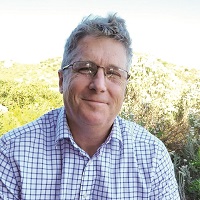
The obscene regularity with which Greg’s life and works intersects with activities of Western spies and securocrats is quite unsettling. This is a man who boasts the distinction of lecturing at the Centre for Defence and International Security Studies in Lancaster, which focuses on research, analysis, commentary and discussion on international security issues. He is also a visiting lecturer at the NATO Higher Defence College in Rome.
It, however, gets more interesting.
Between 2006 and 2012, Greg was based in Kabul, Afghanistan, and he was no missionary either, but served as the special adviser to the Commander of NATO forces in Afghanistan, General David Richards.
He actually led a creature that was called Prism Cell, which was modelled as a think tank within the International Security Assistance Force (ISAF).
And get this: Greg, who is often described as a South African historian of counterinsurgency, was classed as a major-general for “dining privileges”.
In fact, he was the most senior civilian adviser in ISAF. It is worth remembering that at the material time of Greg’s work in Afghanistan, the besieged and beleaguered country was under Hamid Karzai, a puppet that was installed after the US invasion in 2001 in the aftermath of the September 11 attacks.
If you believe that Greg was carrying out benign work with NATO in Kabul and with Brenthurst in Johannesburg, you can believe anything.
We know all too well how NATO destabilised Libya and how it played a role in fomenting the Russia-Ukraine war.
Crusade against liberation movements
In its last days, Brenthurst increasingly became known for coalescing forces that were united by their revulsion for liberation movements.
In fact, on April 6, 2023, Greg, Ugandan politician Kizza Besigye, Angolan Abel Chivukuvuku and our very own Tendai Biti wrote a scathing article titled “When liberation movements do not liberate — and what Africans can do about it”.
“The problem, fundamentally, was that the African liberation movements seldom had a plan for growing the economy and building the society beyond liberation. Instead, they replaced one set of elites with another, while lacking the managerial controls and external links of their predecessors. Monopolies, subsidies and price controls continued and in some cases were strengthened in the interests of post-independence elites and their power,” wrote the quartet.
“African oppositions also must seek to create a gravitational effect, by operating under fronts formed less around ideology, but focused instead on agreement about governance, including welfare provisions, service delivery, the rule of law and the establishment of a meritocracy. And for their part, Africa’s citizens have to apply the same judgement to African oppositions as they do to their ruling parties in assessing their prospects.
“Continuing to place faith in those incumbents with a poor record of reform on the grounds that the opposition does not perfectly ascribe to the voters’ preferences is to apply a double standard and undermine the power of choice and deny the possibilities of change.”
It was a desperately written piece that sought to insidiously preach the message of regime change.
However, the designs of the Brenthurst Foundation did not come to pass.
Last year, liberation movements reasserted their dominance in Mozambique (FRELIMO) and Namibia (SWAPO), while the ANC barely survived in South Africa.
In two months, it would be Chama Cha Mapinduzi’s turn.
The continued survival of liberation movements, however, will depend on the effective implementation of resolutions that were made at the recent Liberation Movements Summit in SA, which, for the first time in a decade, brought together both the heads and secretaries-general of these political gladiators.
By coming together to form an institutional bulwark, liberation movements can put themselves in better stead to withstand counter-revolutionary forces, which are still extant.
Brenthurst might be dead, but its conspirators are still alive.
So, the devil might be dead, but Satan is still alive.
Bishop out!



 Online Reporter