admin
admin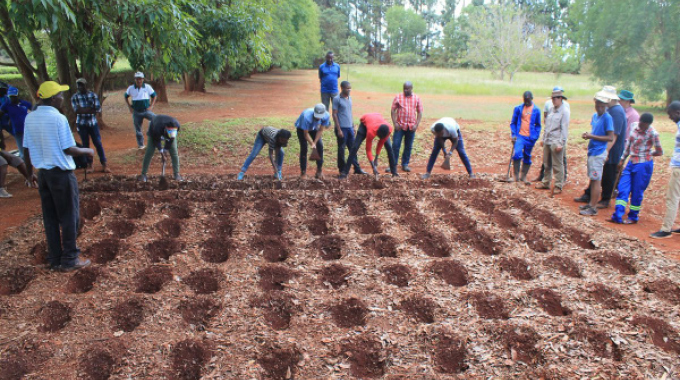
Edgar Vhera
Agriculture Specialist Writer
GOVERNMENT has heeded the call by stakeholders in the agriculture industry to include biofortified seeds in the Pfumvudza/Intwasa programme to fight the hidden hunger scourge and for food and nutrition security.
Biofortification is the process of increasing the density of essential nutrients in food crops through conventional plant breeding, genetic engineering or agronomic practices. This aims to improve the nutritional quality of food and reduce nutrient deficiencies in populations that rely on staple crops for their diet.
Lands, Agriculture, Fisheries, Water and Rural Development acting chief director, Mr Leonard Munamati said in the 2024-25 summer season there are plans to also use biofortified seeds under the Pfumvudza/Intwasa programme.
“The sugar bean variety of NUA 45 will be major biofortified seed to be included in the input package. Other varieties like the orange fleshed maize seed will be distributed though on a minimal scale,” he said.
Harvest Plus country manager Mrs Sakile Kudita concurred saying it would indeed a good idea for Government to include biofortified seeds in its Pfumvudza/Intwasa programme as that was akin to killing two birds (hunger and malnutrition) with one stone.
I know that there are plans to include orange fleshed sweet potato plants among others this season, but the full details can be found from the Ministry, she said.
Meanwhile, at the recently held national biofortification policy dialogue hosted by the Smallholder Irrigation Revitalisation Programme (SIRP) in Harare recently, stakeholders said as the Government’s Pfumvudza/Intwasa programme was the major consumer of all produced agricultural inputs, it was essential for malnutrition to be fought by distribution of biofortified seeds for planting this summer season.
A smallholder farmer from Macheke district Mr Isheunesu Bvumba said the biofortification policy will be a success if the seeds where to be distributed under the Government’s all-inclusive input programme.
“The Government need to make it mandatory, subject to seed availability, for each beneficiary in its Pfumvudza/Intwasa programme to get a small pack of biofortified seed for planting on a small plot. This will increase availability of nutrient reach crops on the market to fight malnutrition,” he said.
Mr Bvumba added that other Government departments, development partners and private sector would then collaborate and coordinate to increase awareness on production, consumption and nutritional benefits of bio-fortified crops.
Lands, Agriculture, Fisheries, Water and Rural Development’s training and information director Mr Sibangilizwe Dlodlo concurred saying the hidden hunger problem could be tackled by promoting production and consumption of biofortified crops.
“There are several methods of promoting biofortified foods such as awareness campaigns, community demonstrations, partnerships, certification and labelling among others. Strategies for increasing uptake and scaling up production, processing and consumption of biofortified crops also include research and development, capacity building, policy support as well as value chain development,” he said.
In Zimbabwe, various stakeholders are involved in the biofortification value chain. These include plant breeders, farmers, Government agencies and development partners who provide support in terms of training, seeds and market access while retailers and consumers create demand for biofortified foods.
The country now has biofortified seed varieties of orange maize and orange fleshed sweet potato which are rich in Vitamin A as well as the iron rich NUA 45 beans. By 2023 the country produced 9, 6 tonnes orange maize and 4, 8 tonnes of iron beans.
Global biofortification research started in 2004 with breeding starting in Zimbabwe in 2006 and by 2010 the country released the first variety NUA45.



 Online Reporter