Online Reporter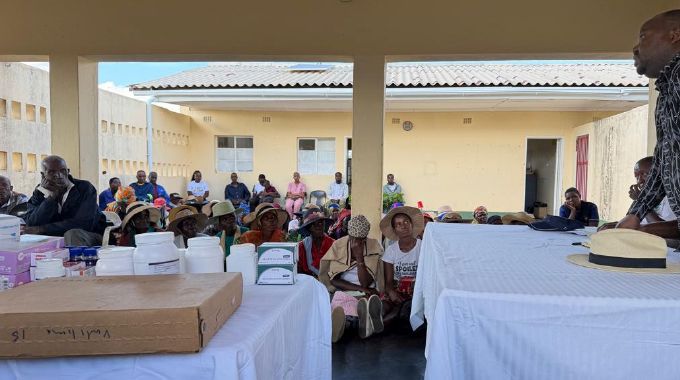
Mthabisi Tshuma, [email protected]
ACCESS to technology remains a major challenge in many rural communities, where schools, clinics and local leaders often operate without reliable internet or basic digital tools. In Bulilima District, however, there is now renewed hope after a recent donation aimed at bringing digital services closer to the people.
Deputy Minister of Information and Communication Technology (ICT), Postal and Courier Services, Dingumuzi Phuti, has donated laptops and Starlink kits to selected schools, a clinic and traditional leaders in the district. The donation is part of the Government’s ongoing efforts to close the digital gap between urban and rural areas.
Under the initiative, Huwana Primary School and Ntenjane Primary School each received 10 laptops. In addition, Starlink kits were distributed to Ndutshwa Primary School, Matjinge Clinic, Headman Macebo and Chief Manguba, a move expected to improve internet connectivity and communication in these areas.
Speaking during the handover, Deputy Minister Phuti said the donations are part of wider national efforts to ensure that no community is left behind when it comes to development.
“The vision of the Ministry of ICT is following in the footsteps of President Mnangagwa, who has always advocated that no one and no place be left behind,” he said.
He said that the ministry has set clear targets to make sure digital services reach every part of the country, including the most remote areas.
“As a Ministry, we have set targets to ensure digitalisation reaches all community structures, from schools and clinics to traditional leadership.”
The handover ceremony at Ntenjane Primary School on Friday was conducted through Zanu-PF Central Committee member Cde Charity Ndlovu, who represented the Deputy Minister. The event brought together education officials, school authorities and community members, all keen to witness the development.
While handing over the equipment, Deputy Minister Phuti reminded the school community that access to technology is only useful when supported by proper infrastructure. He urged the School Development Committee (SDC) to prioritise electrifying the school’s computer laboratory.
“I am fulfilling my promise made during the pre-elections campaigns. President Mnangagwa emphasises leaving no one and no place behind. I have done my part. I challenge the SDC and school administration to work on the electrification of the computer laboratory block. Otherwise, the computers will be of no value without electricity.”
His message highlighted a key issue facing many rural schools — the lack of reliable electricity, which often limits the use of modern equipment. Without power, computers and internet systems cannot be fully utilised, making infrastructure development just as important as the donation itself.
Looking ahead, the Deputy Minister also pledged to assist the community further by supporting the construction of a secondary school in the area. This, he said, would reduce the long distances that learners currently travel to access secondary education, especially in rural parts of Bulilima.
The event also saw additional support from Cde Charity Ndlovu, who made a personal commitment to assist vulnerable learners. She announced that she would sponsor the school fees of two pupils until they complete Grade Seven.
“May the school select two learners in the lower grades that I can pay fees for until they finish Grade 7,” she said.
Education leaders at the event welcomed the donation, describing it as timely and in line with the country’s vision to strengthen learning through modern technology.
South Zimbabwe Conference education director Mrs Zibusiso Sibanda said the initiative supports the goals of Zimbabwe’s Heritage-Based Curriculum and Education 5.0, which emphasise practical skills and innovation.
“It emphasises innovation, industrialisation, research, problem-solving and the development of practical technological skills,” she said.
She added that access to laptops and internet connectivity would greatly improve learning conditions in rural schools, allowing both teachers and pupils to benefit from modern teaching methods.
She said the laptops and internet connectivity would enhance ICT practical lessons, online research, e-learning, science projects, teacher training and school administration.
“We are so grateful for these gifts and for the support from our MP, represented here by MaNdlovu,” said Mrs Sibanda.
At the school level, the impact of the donation is already being recognised. Ntenjane Primary School head, Mrs Nomagugu Mwanza, said the equipment would make a significant difference to both learners and teachers, particularly in a setting where access to digital tools has been limited.
“This development marks an important step toward bridging the digital divide and equipping students with 21st-century digital skills,” she said.
For many pupils, this will be the first time they will have direct access to computers and reliable internet. It opens new opportunities for learning, research and skills development, helping them prepare for a world where technology plays a key role.
The donation is also expected to benefit the wider community. With Starlink connectivity now available at the clinic and traditional leadership centres, access to information and communication will improve, making it easier to deliver services and stay connected.
Follow on X: @mthabisi_mthire