Chronicle Editor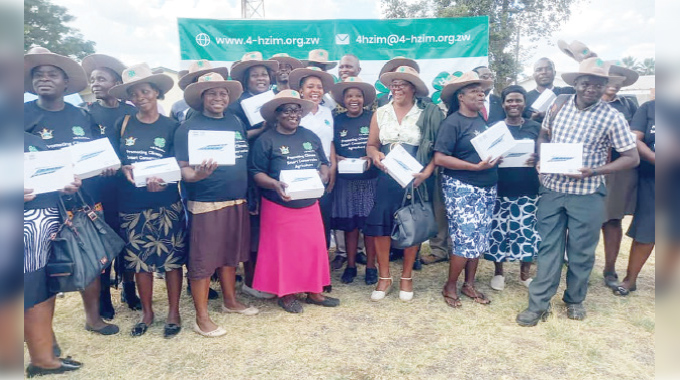
Patrick Chitumba, [email protected]
PLANS are underway for the establishment of eight village business units (VBUs) in Chiwundura on the outskirts of Gweru in the Midlands Province as part of the Government’s Rural Industrialisation 8.0 programme.
Government is making strides in terms of creating 10 000 village business units to boost the economy of rural communities and empowering women and youth.
This initiative, which includes drip irrigation and solarised boreholes, is part of a larger effort to improve rural livelihoods through agriculture and business, aligning with the Government’s commitment to ensure inclusive development.
In an interview, chief director in the Ministry of Lands, Agriculture, Fisheries, Water and Rural Development Mr Leonard Munamati said Chiwundura area will be leading in Rural Development 8.0 through the VBUs.
He said the VBUs will be established on the back of the eight solar-powered boreholes that are being drilled by 4-H Zimbabwe Foundation, a non-governmental organisation.
“So 4-H Zimbabwe Foundation is drilling boreholes in eight wards and we will establish nutrition gardens. In addition to that, they are also going to establish some fish ponds,” said Mr Munamati.

“So this is actually in line with Rural Industrialisation 8.0 where we are saying each village should have a village business unit and this is an example of what we call a village business unit.”
Mr Munamati said every community should embrace the life-changing projects in line with the Second Republic’s philosophy of leaving no one and no place behind.
“We are saying the community should own this project, villagers must make sure the business units are a success. Agritex officers and villagers are trained and this should be a success,” he said.
“In the face of the El Nino-induced drought, we have seen that the only way to go is irrigation to mitigate against climate change.”
Mr Munamati said they are targeting to establish 10 000 village business units throughout the country by the end of the year.
“Our target is to set up 1 000 every month and we want to appreciate 4-H Zimbabwe for complementing what the Government is already doing,” he said.
Chiwundura legislator Cde Sleiman Kwidini said the VBUs are envisaged to spur rural industrialisation and modernisation in Chiwundura.
“This programme is there to complement what the Government is doing in terms of mitigation against climate change. Agritex officers working in those wards should be able to use the current technology so that they can share information and teach the farmers in the area about Rural Development 8.0,” he said.
Through rural industrialisation, the Government hopes to stem rural to urban migration, which saps growth from the African countryside, transferring it to towns and cities.
Rural industrialisation, which hinges on the Second Republic’s devolution policy, involves nurturing agro-processing start-up enterprises in rural areas through financial and technological support via venture capital funding and Government agencies.


 Online Reporter