admin
admin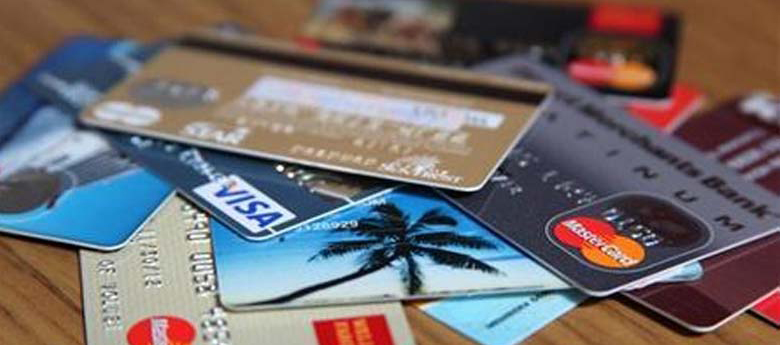
Africa Moyo —
THE drive to promote the usage of plastic money and electronic transactions to reduce demand for bank notes could be plunged into disarray as some traders – mainly foreign nationals – are offering discounts for cash purchases of as much as 20 percent.
Cash purchase discount offers, which see a customer saving a mammoth US$200 after buying products worth US$1000 for instance, are seen as very lucrative, forcing low income earners to spend nights in bank queues so that they enjoy the price markdowns.
Some retailers say they have resorted to offering cash discounts so as to have hard cash for use in the importation of raw materials and/ or finished products for resale due to the current teething challenges with transfers.
Industrialists and retailers say some transfers made over three months ago, are yet to be processed, resulting in diminished access to raw materials and other finished products.
The Sunday Mail Business has also gathered from some cross-border traders that utensils and clothing wholesalers in Turkey, Dubai and China, are alive to the cash challenges in Zimbabwe and are now offering almost 50 percent discount to bulk buyers who pay cash.
A Zvishavane-based clothing and construction retailer who claimed to be importing products from Dubai said she would not use plastic money as that would cripple her business.
“My brother, I am not foolish to use plastic money; where will I get my money when I want to import products?
“Also, when I go to Dubai and buy for cash, I get a 50 percent discount and that means more profit for me. The good thing with Zvishavane is that there are many gold panners and informal traders and these ones always have cash,” said the businesswoman.
In Harare, a Chinese-owned firm, ZLG (Private) Limited, which bottles water has not been accepting plastic money and electronic transfers. ZLG is a huge player in the wholesaling and retailing of bottled water in Zimbabwe.
A utensils and musical instruments retailer, Kadir & Sons, also run by foreigners, accepts plastic money but offers massive cash discounts of up to US$10 to lure customers to use cash. For instance, a set of pots marked US$108.90, can be bought for US$99 using cash.
Every product in the shop has a cash discount and it is always a hive of activity as buyers jostle to take advantage of the cash price markdowns.
Another retailer, Bathroom Boutique, with branches at KuMbudzi Roundabout and Msasa in Harare, offers a massive 20 percent for products such tiles, in a move seen as attempting to persuade customers to use cash.
Similarly, top construction retailer, PG Industries’ Zvishavane branch, did not have a Point of Sale (POS) machine by the month-end of November, and was accepting cash purchases only.
It could not be established if other PG Industries’ shops accept plastic money or Real Time Gross Settlement (RTGS) for transactions. Fuel traders such as Zuva Petroleum and Total Zimbabwe, either don’t have POS machines or the attendants always claim that they are out of order.
Interestingly, when the POS machines are “working” at Zuva, a single transaction for a maximum of US$20 is accepted per day at an individual station. Both Zuva and Total officials refused to comment on the issue.
Zimbabwe Energy Regulatory Authority (Zera) officials declined to comment last week saying the Ministry of Energy and Power Development had already made a statement on that.
Permanent Secretary in the Ministry of Energy Mr Partson Mbiriri told The Sunday Mail recently that: “The rejection of plastic money (by some fuel retailers) has been overblown.
“It is really a monetary issue, though. The way we understand it is that some commercial banks have been allocating foreign currency on the basis of a retailer’s cash deposits in that financial institution . . .”
Contacted for comment last week, RBZ Deputy Governor Dr Kupukile Mlambo could not speak on the issue saying: “That one (plastic money issue) is handled by someone called Mr Mirirai Chiremba (the RBZ director, financial intelligence unit)”.
Efforts to get a comment from Mr Chiremba were fruitless as he was reportedly in and out of office. An official in his office took this reporter’s contacts and promised to hand them over to Mr Chiremba so that he calls back, but he had not done some by the time of going to print.
The refusal to accept plastic money by some traders in favour of cash flies in the face of efforts by the RBZ to reduce dependency on hard cash, which is not readily available.
Economic analyst Mr Persistence Gwanyanya said the rise in traders offering discounts on cash purchases comes on the backdrop of difficulties in accessing cash from the banking system, resulting in increased usage of plastic money in transactions.
“Due to increased usage of plastic money, retailers have resorted to cash discounts as incentives for cash purchases. They need cash, mainly the US dollar, to facilitate importation of merchandise.
“Nostro funding challenges have seen increased foreign payment backlogs and banks are actually prioritising cash depositors in allocation of foreign payments. Even those who smuggle goods into the country would need cash to pay for the same, which makes cash sales more superior than electronic sales.
“This will definitely impact on the uptake of plastic money as the cash discount provides an incentive for cash purchases. In some cases the cash discounts are as high as 10 percent, which is quite lucrative for the enterprising customers.
“Given this incentive some bank customers are sacrificing to sleep in bank queues just to access cash and benefit from the cash discounts offered by some shops,” said Mr Gwanyanya.
He suggested that incentives for cash purchases can only be dealt with adequately through ensuring that the nostro account is funded.
The RBZ recently got a US$150 million nostro facility from the Egypt-headquartered Africa Export-Import Bank (Afreximbank) to replenish nostro accounts to allow companies to make seamless payments to foreign suppliers.
At the moment, foreign payment backlogs are going as far as three months at some banks and this could be a crucial short-term measure. A permanent solution would be increasing production and exports, which should be rebalanced by a reduction in imports.
But Mr Gwanyanya said given the obtaining challenges in the real economy, increasing production would be problematic due to lack of both domestic and foreign capital.
The RBZ has hit out at some business entities and individuals that are reportedly selling cash at a premium against RTGS or bank transfers from the cash buyers’ accounts.
A statement released by the RBZ in October indicated that some cash-generating businesses, especially retailers and wholesalers, have not been banking all their cash receipts, as required under the Bank Use Promotion Act (Chapter 24:24).
The Bank Use Promotion and Suppression of Money Laundering Unit of the RBZ has stepped-up monitoring activities to ensure that businesses comply with the legal requirement to bank all cash receipts.
Traders demanding cash are thought to be involved in illicit cash dealings and rent seeking behaviour that is worsening the inefficient use of scarce foreign exchange resources in the economy.
Revelations by cross-border traders that they ship large sums of cash to other countries raise question marks over airports and border security, as travellers are not allowed to carry more than US$1000 to foreign destinations.
Despite efforts to frustrate the plastic money initiative, annual electronic transactions have grown 726 percent to US$56,85 billion in 2015 from US$6,88 billion in 2009 when the country adopted multiple currencies.
Recently, Finance Minister Patrick Chinamasa said the financial services sector now holds over US$6 billion in deposits due to an upturn in electronic money usage.
Given the jump in plastic money usage, Mr Gwanyanya has called for the development of “appropriate regulatory” framework supporting electronic transactions for the “overall benefit of the market”.
“As a country evolving from a cash-based economy, the regulatory framework for cashless transactions is still underdeveloped. Ideally, a framework to deal with cashless transactions should have been developed at or immediately after dollarisation to reflect the new economic order.
“This framework should spell out issues to do with infrastructure sharing, interoperability and dealing with associated risk,” said Mr Gwanyanya.
Currently, electronic transactions are regulated by the National Payment Systems Act (Chapter 23:24) of 2001.



 Online Reporter