Chronicle Editor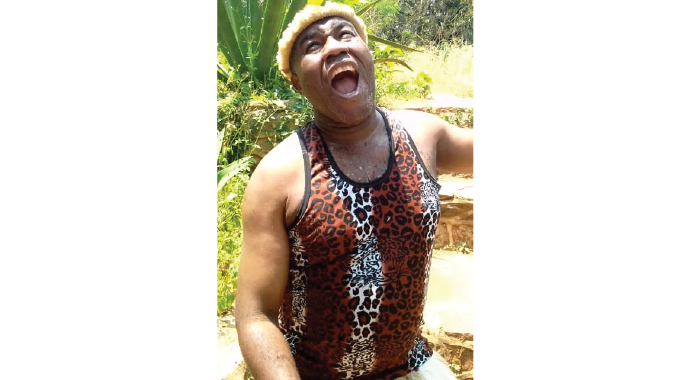
Bongani Ndlovu, Showbiz Reporter
Praise poet, Woza OkaNyathi who has been away from the local industry for the past 20 years says nothing has changed as artistes are still finding it hard to make ends meet, something that needs to be rectified as they are the fibre of society.
One of the first artistes to come out of Amakhosi Theatre, the Bulawayo-based poet who has been performing ever since the early 90s has shared the stage with the likes of Lovemore Majaivana and his brother Albert Nyathi.
He has been performing solo for most of his career, but in 2002, he decided to leave Zimbabwe and took a break from the arts and travelled to South Africa to pursue greener pastures. He returned in 2019 and this year, Woza OkaNyathi has decided to pursue his talent.
Woza OkaNyathi said the arts industry has not changed.
“There are many artistes who are very talented, especially in Bulawayo, which is called the boiling pot of the arts and culture in Zimbabwe.
However, art is still not giving people a living wage for those who have the talent. They are still living in poverty despite high levels of creativity,” said OkaNyathi.
He said funding from Government, the corporate world and the society for artistes and their projects was very limited.
“There are beautiful ventures such as Amakhosi Theatre that were started and are now defunct because of the lack of support. The arts industry is viewed as not competitive, yet it is because we all need time for recreation, relaxation and time to watch shows.
“But we aren’t able to turn that into part of the economy because we don’t have resources to start with,” said Woza OkaNyathi.
According to the poet, the arts are the fibre of society and should be valued.
“The arts need to be supported because they are the fibre of society. Any society that doesn’t value its own fibre is dead.
So, we really need to invest in our culture. The Ministry of Youth, Sport, Arts and Recreation must improve the investment, as much as the corporates, so that we make the arts industry part of the commerce of our country,” said OkaNyathi.
Asked about the opportunities that the opening of the airwaves would envisage, Woza OkaNyathi said he hoped this would translate to a living wage or salary for artistes.
“We welcome the opening of the airwaves and other television studios, but unfortunately this does not translate to livelihood. Even if we go to those studios and we present our work at the end of the day, what we get from there can’t keep us alive.
“Artistes don’t live on being popular or from being flighted in the media, they live on what comes to their tables. But we welcome the venture and hope more with the coming of corporates at new studios, they may be able to pay us well for what we provide,” said OkaNyathi.
The praise poet said poetry is very important, even in the olden days as they were the mouthpieces of society.
“It was a way to speak to the leaders, kings and rulers on behalf of people or society. There are things that society would want to say, but couldn’t say to the rulers. So, the poet would be the one who would speak to the leadership through beautiful words, making what they might have been doing bad, sound wonderful, but the message would have been sent to them,” he said.
Woza OkaNyathi said leaders would listen to poets and gauge what society thinks about certain issues.
“This would make the king know what the people were saying with regards to his rule or policies. There was something called poetic justice where the poet was given the leeway to speak without him being harassed.
“Besides sharing the cries of people to the leaders, the poet would conscientise society. The poet would point out the good and bad that is happening in society that many might not realise and through the poems, this would be brought out.”
Woza OkaNyathi formed a group called Maripo Music in 1992 which was a fusion of marimba, dance and poetry and other traditional instruments. He toured Botswana and performed at the uMhlanga Reed dance in 1998.
Over the years, he has worked with artistes around Bulawayo and taught performing arts at Girls College in Bulawayo before leaving for South Africa.
He also conducted workshops with Godlwayo Omnyama, worked with Thabo J Nkomo and the Border Voices and Albert Nyathi.
He started his poetry in primary school — Beitbridge Government School, before completing his Grade 7 at Inzwananzi primary in Luveve, Bulawayo and then Cyrene Mission High School.
He formed Ghetto Kids in 1999. – @bonganinkunzi


 Online Reporter