Online Reporter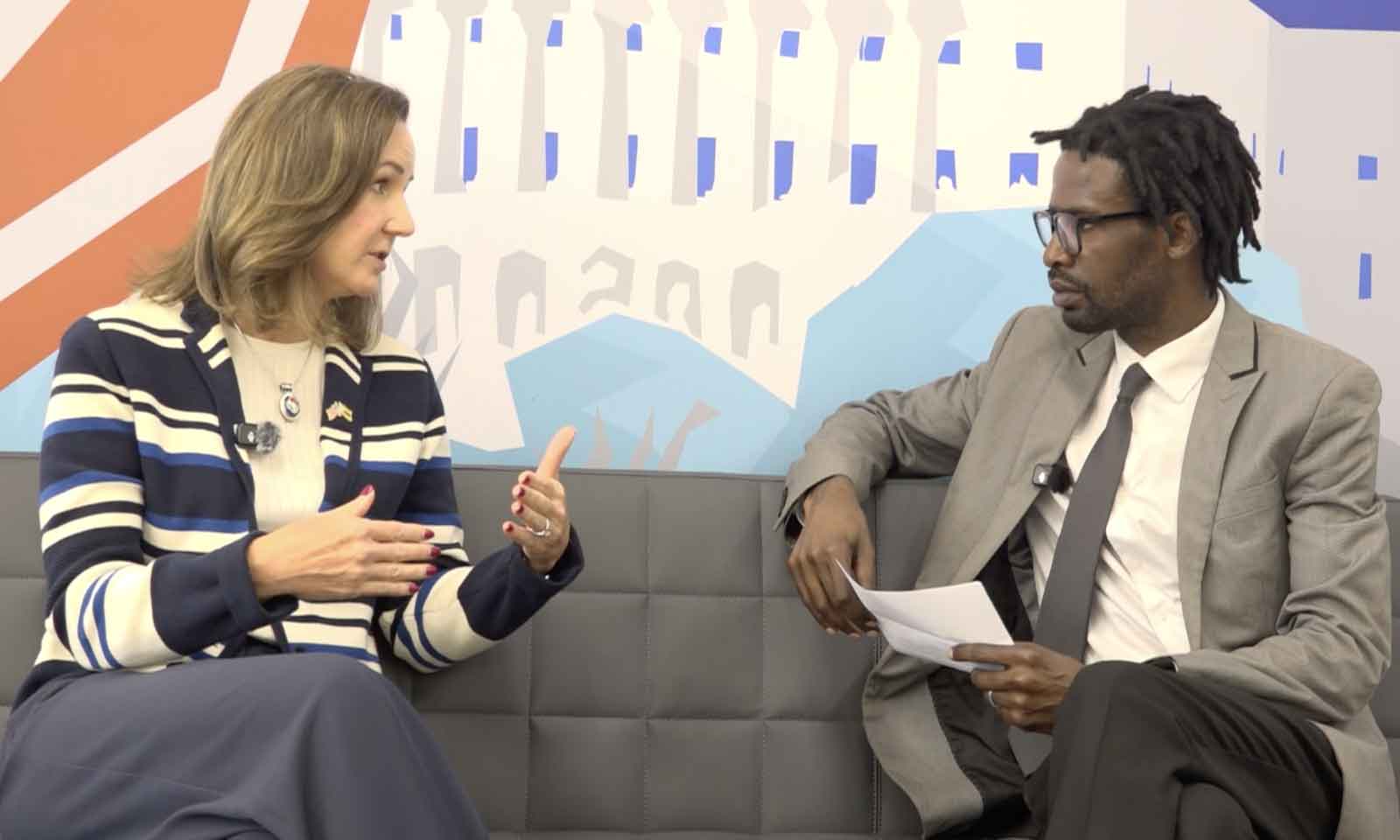
The US recently announced a major policy shift in its engagement with Zimbabwe, moving away from a traditional donor-assistance model towards a partnership centred on trade and investment cooperation. Zimpapers Politics Hub’s GIBSON NYIKADZINO sat down with United States Ambassador to Zimbabwe Pamela Tremont to discuss how the two countries plan to operationalise this new strategic relationship. Below are excerpts from the interview
********************
Q: What is the state of diplomatic relations between Zimbabwe and the US, and what do you consider to be the key areas of cooperation at the moment?
A: The US has been a reliable and dependable partner for Zimbabwe for 45 years, and we were the largest bilateral donor, including now. Even after our significant cuts in aid to Zimbabwe, we are still the largest bilateral donor. But we are transitioning that relationship from one based on assistance to one based on true partnership. We are in the process of transitioning our significant investment into the health sector to Government ownership through a memorandum of understanding process.
We are also focusing more on trade opportunities. There are significant opportunities in the agriculture sector and the tourism sector that US companies are involved in.
We are looking around the world at opportunities to secure our supply chains for critical minerals.
And of course, there are opportunities for that here, if US companies find a good reason to come here.
Q: What do you mean by true partnership? In which sectors are you investing in this partnership?
A: We are reducing our foreign assistance to countries around the world. So, we are not investing in public sectors, besides health.
And over the course of the next five years, we will be transitioning responsibility for almost all of that to the Zimbabwean Government.
So, the sectors that we will be focused on are private sector kinds of opportunities in trade and investment, but also policy issues.
There are several policy areas where we can work together more deeply.
A huge one is migration, including asylum, abuse of the asylum system, uncontrolled migration, but particularly trafficking in persons, which we know has been a problem in Zimbabwe . . .
So, we should be able to cooperate more on that. There are issues around the world that are destabilising global affairs, including violations of borders and religious extremism, (as well as) persecution of religious minorities. These policy issues are something that we are looking at for much deeper cooperation on.
Q: How are issues of trade, investments and economic cooperation factored in this regard?
A: In the trade area, there are a lot of US brands and companies represented here, particularly in the agriculture sector, tourism, but also just retail products, food and beverages and the services sector.
One sector that we are particularly excited about is business process outsourcing. Some companies are having huge success, taking advantage of the tremendous human capital here that is so educated.
So, they are coming in and providing thousands of formal sector jobs to Zimbabweans who are looking for opportunities to use their considerable educational experience.
Q: You highlight many positives envisioned in this cooperation. There is an issue about trade tariffs. How, in your view, can they impede investments and business cooperation?
A: The US has one of the most open economies in the world. President (Donald) Trump is trying to rebalance relations with other countries. For many years, we have offered tariff-free access for countries selling products to the US, and those countries have not reciprocated. Zimbabwe did not have tariff-free access, but I think the average tariff rate for Zimbabwean goods coming to the US was like 10 percent.
President Trump has raised it to 18 percent. But that is still far lower than the tariffs on many US products coming to Zimbabwe, which are sometimes 40, 80 or even 100 percent.
So, we look forward to having further conversations with the Zimbabwean Government about how we can make the tariff playing field a little bit more level and benefit both of our countries through better trade and investment.
Q: Zimbabwe’s mining sector has potential to lure investors. Are there American companies knocking on this door looking for investment opportunities?
A: It is no secret that the US is trying to secure its critical minerals supply chains in particular.
The few mining investments that the US does have here are in the gold sector, and gold does not really fall into that category.
We are trying to secure critical minerals from around the world.
Zimbabwe has tremendous potential to be part of that.
When investors come in, we want to make sure that they are treated fairly and that there is some predictability and certainty to their economic business plan.
Otherwise, it will be really difficult to get other US companies to come to Zimbabwe.
Q: Have you raised these issues with the Government?
A: We are having good conversations with the Zimbabwean Government.
Minister Mthuli Ncube (Finance, Economic Development and Investment Promotion) made several announcements about reducing the bureaucracy related to permits, licences and other things.
We strongly welcome those initiatives. Those could be huge steps, particularly for new businesses getting up, getting going.
There does need to be predictability.
Q: You mentioned cooperating with Zimbabwe on illegal immigration. Is there a co-relationship between the strict visa restrictions by the US on Zimbabwe and dealing with illegal immigration?
A: The Trump administration is very focused on the issue of illegal immigration and particularly overstays. There were some Zimbabweans who overstayed their visas or were deported back here.
The Government of Zimbabwe was extremely cooperative in welcoming their citizens back to Zimbabwe.
We appreciated that cooperation.
We are likely to see more of that going forward.
Many of them are just people who went to the US and decided not to leave for whatever reason.
We are underscoring to everybody who will listen that illegal immigration can be extremely dangerous.
It leaves people vulnerable to trafficking and abuses, and it’s not worth the risk.
We did pause our visa services here, particularly for visitor visas, on August 8, 2025.
Zimbabweans who would like to travel to the US need to apply in Johannesburg, South Africa.
We recognise that is not terribly convenient for a lot of people, but this is related to our government’s crackdown on making sure that people who get their visas abide by the terms of them.
Q: How much are the two countries exchanging in terms of people-to-people or socio-cultural cooperation?
A: I am happy to say that there are at least 1 900 Zimbabwean students studying at US universities — the best universities in the world — and many of them on scholarships.
On a per capita basis, that’s the second-largest source of students from Africa.
We think that shows a strong connection between our two countries and a deep admiration for our educational system and the quality of the students coming from Zimbabwe.
We also have dozens of exchanges that we run through this embassy for high school students, all the way up to professionals on a variety of issues.
Some of them are semester-long, some of them are a few weeks, but dozens of people every year travel to the US.
And we have Fulbright scholars who come here as well and help universities set up programmes and do studies.
We think that our exchanges are quite vibrant.
And of course, we are looking forward to hosting the FIFA World Cup next year, and there are a number of huge worldwide sporting events coming to the US that will highlight how much the US and the rest of the world have in common, particularly in sports diplomacy.