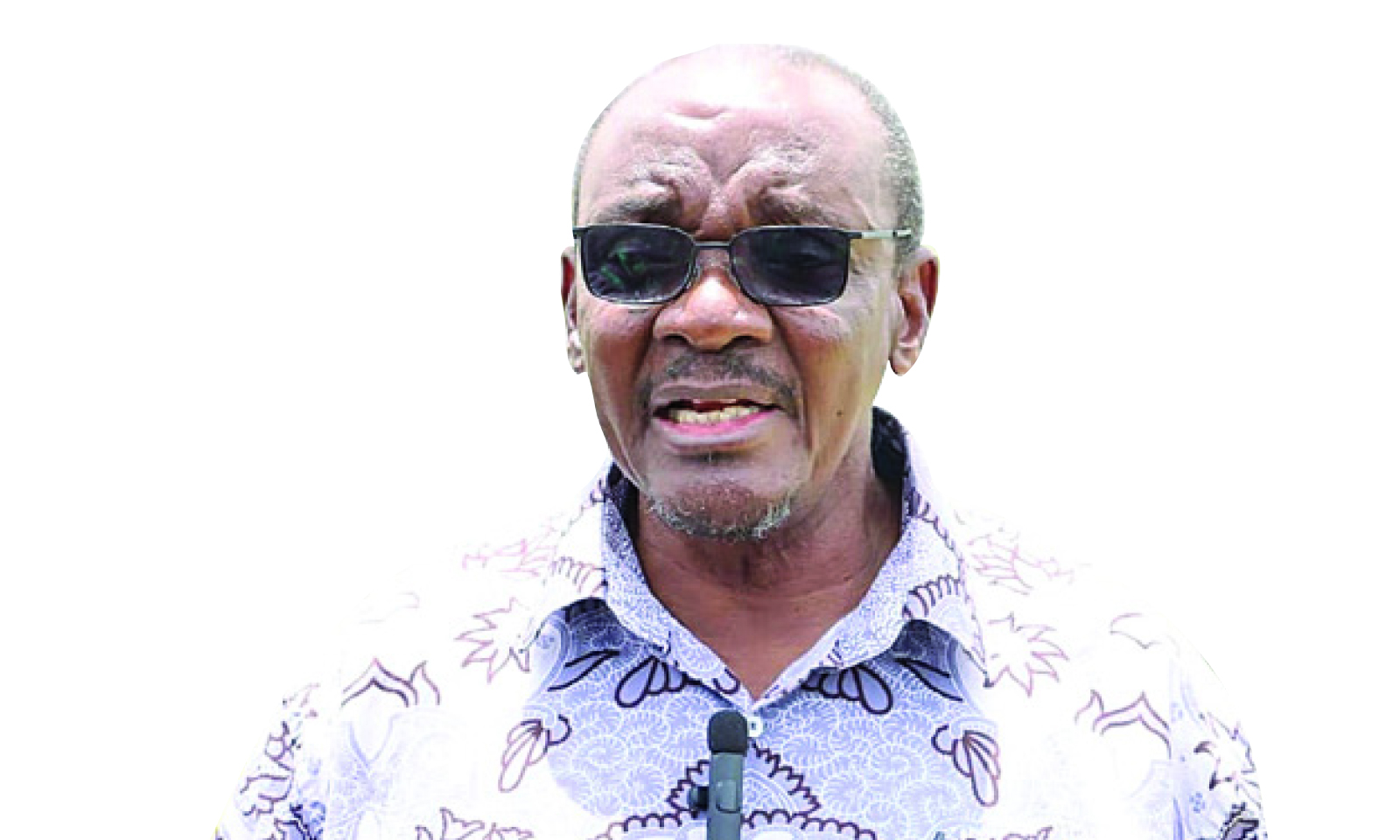
Zimbabwe continues to make progress in its infrastructure development agenda. Apart from construction of schools, clinics and roads, efforts are being made to construct dams to ensure uninterrupted crop production even in years that experience erratic rains due to climate change. Our Deputy National Editor AFRICA MOYO sat down with Vice President KEMBO MOHADI last week to have an appreciation of how far the country has progressed. Below are the excerpts of the interview.
**********************
Q: Honourable Vice President, thank you for setting aside time to talk to us. You may want to start by walking us through the development projects that are underway in the country.
A: Thank you very much for that question, which is quite broad. Yes, from our own side of things, we don’t look at what we have covered so far as a lot. We still think that there is a lot more that can be done. But, let me give you a bit of background.
When we came in, in 2018, we looked at what could actually propel development within Zimbabwe. We realised that for a country to develop meaningfully, there has to be communication. You have got to be able to reach the furthest areas that are not easily reached. That is when we decided to embark on road construction and road rehabilitation. The flagship one, being one of the longest, is the Beitbridge-Masvingo-Harare. The first leg was Beitbridge to Harare.
Q: How far have we gone with this project? Some people still express concern about detours on the road.
A: We have done quite well there; we have done a tremendous job, and we are just about to complete that road. I think what is left is less than 70km, which we think we may be in a position to open to traffic at the end of this year, if not the first quarter of next year. So, that was that. And the next thing that came on our table, which we decided on, was that the people of Zimbabwe have to be fed.
This was premised on the fact that times are changing and climate change is upon us. So, for our people to have livelihoods, or to be self-sufficient, we had to get them in a situation whereby, whether it rains or not, they must be able to harvest, they must be able to feed themselves and they must be able to be food self-sufficient. We did so by building a lot of water bodies. We built some — some were already there — so that we develop irrigation. So, it is our view as Government that in the near future, or maybe by 2030, we will be largely dependent on irrigation agriculture. We want to move away from rain-fed agriculture, which is very unpredictable because of climate change. I am told this year the forecast is that we are going to have La Niña.
El Niño comes with dryness, comes with hunger and poor yields in the agriculture sector. La Niña comes with good rains but accompanied with flash floods. So, we are in between a rock and a hard place. We, therefore, said the best thing to get out of this is to create dams so that when La Niña comes and there are flash floods, we must harness the water. Once we harness that water, we must then create irrigation, give it to the people, let the people use it. So, we have got dams that we have completed such as Muchekeranwa. We are also in the process of doing Kunzvi Dam and in terms of Lake Gwayi-Shangani, we have covered a lot of ground. We are more than 40 metres high, to be more precise. We want to take it to 70 metres.
That is the optimum height we are looking at. But we think we can start damming some water. I think it’s high enough that we can dam a little bit of water. So, this is where we are headed. We need to look at the social needs of the people. We need to be able to reach the people and we need to give all other services that the people want.
For instance, electricity and water, hence we have been sinking boreholes here and there quite a lot. And we have been doing a tremendous job. Rural electrification has been doing quite well also, especially clinics and schools. We have also been creating solar mini-grids here and there.
That is the way I see a human being; the human being must have all those needs, all those services I have mentioned, such as communication by way of roads and communication by way of air. We have seen that already. If you look at our airports — the Robert Gabriel Mugabe International Airport and the Victoria Falls International Airport — we have upgraded them and they are amazing.
Victoria Falls International Airport can now receive wide-bodied planes. When many people land there, they think maybe they are landing in another country somewhere, or another country in a place they call the developed world. But we are right here in Zimbabwe. We have also rehabilitated other smaller airports, like the Buffalo Range and the Grand Reef in Mutare.
Q: How important is it to have good roads and airports, Honourable VP?
A: We want to reach everybody. Look, I indicated earlier on that we are investing in agriculture, so the produce that we will derive from the irrigation needs to be taken to the markets — locally, regionally, continentally and even internationally.
So, it is important to emphasise on infrastructure such as roads. If you are in Gutu and you have got your bumper harvest, then there should be a road that takes you to the market. That market is not just in Masvingo, but also in Harare, because that is where you have got more people.
If you have satisfied the Harare market, then you can take it to the region. But there should be a road that takes you to the region, there should be air traffic that takes you to the region. That is why it is important to have that infrastructure.
Q: We have seen some projects taking a little longer to complete. For instance, the Lake Gwayi-Shangani. What are some of the challenges and how do you plan to overcome them?
A: I mentioned the Lake Gwayi-Shangani in passing. But, let me give you a little bit of the background on the Gwayi-Shangani. It was first mooted in the year 1912. Since then, no other government decided to take on the project until 2018 when we came in. Those that did not try, I think they thought it was very difficult to do so or they were not confident enough that they could do it. But, when we took over in 2018, we decided to say, no, let’s take the bull by the horns.
Q: Tell us the main reason for the Second Republic’s determination to tackle such a giant project that was ignored by everyone before you?
A: The main reason is still the people. The people in Bulawayo did not have water and Matabeleland North is a dry region. Bulawayo was being fed by dams in Matabeleland South and because of climate change, they were drying up. So, there was a (water) crisis in Bulawayo. There cannot be any industry in any given situation where there is no water. The industry in Bulawayo has to be resuscitated and, first and foremost, we must give them water because industry runs on water. And along its way to Bulawayo, we said we need to create a greenbelt, which means we are going to have take-off points along the pipeline that we have already started working on, by the way.
We hope that Lake Gwayi-Shangani is going to create a lot of aquatic activities. It will also create tourism, which will eventually create employment. If people are employed and others are in all kinds of businesses, their income increases. Now I come to your specific question of why it has taken that long? I just mentioned that it has to be 70 metres high and it is not built in the manner other dams are built, because it is a compacted sort of wall.
It means you pour the concrete and the mixtures, you compact it and let it set. You then come through another layer and make sure that it gels well or it connects well with the other part. So, we are doing that bit by bit and we have not stopped. It is the work that is involved that is taking long. But every month Treasury releases something in the tune of between US$4 million and US$5 million. So that is why we have to work, and we are working, and we will get there.
It is our project. We have decided to implement that project and we are going to finish it. After we have done all this, we then come to the major thing, the major thrust of this Government, that of seeing Zimbabwe attain an upper middle-income society by the year 2030.
It doesn’t mean that everybody will be rich, by the way. It means that each and every individual in Zimbabwe must be in a position to do things for him or herself, things that are going to earn him or herself an income without necessarily waiting for social welfare to intervene.
So, we have created that conducive atmosphere, that conducive ground for everybody to thrive. We started with the Transitional Stabilisation Programme (TSP), which would stabilise things first before we took off, and after that, we came out with the NDS1, which is the National Development Strategy 1. That is where all these things I am talking about came in. But we are now transitioning to the next phase, which is National Development Strategy 2, come 2026. We are building on what we have already done.
So, I don’t think there is much delay on the construction of Lake Gwayi-Shangani. It is slow but sure.
The good thing, comrades, is that we are doing this on our own. There is no funding that is coming from elsewhere. Zimbabweans are building their own country. We have to do it together. I think sanctions must have taught us a lesson that we look inward since we are on our own to survive. And we have done so. I always talk to those that come from these ivory towers of the world, capitals of the world, but when they come here, they get back with a different mindset altogether because of what you find in Zimbabwe, which other countries don’t have. Zimbabweans own everything that is in Zimbabwe. The land belongs to Zimbabweans.
All the infrastructure we are talking about belongs to Zimbabweans, and there is no mortgage. We are not intending to get trapped in debt. But we still owe the IMF (International Monetary Fund) and the World Bank some money. Some of it is legacy debt. We can’t erase that one or eliminate that one with the stroke of a pen.
It’s not possible, but we are going to do that. But you must realise one thing, that the First World was built from African resources. They scooped the bowels of Africa to build their Eiffel Towers. When they came to Africa, they enslaved you first and you build Washington, you build all those buildings in whatever capital you think of; that was slavery labour, free labour. They paid nothing for that labour, right.
When Africa and the world became so vociferous, became so loud about the ills of slavery, they said they agreed to abolish it. But they brought it back in another form; they colonised us. They said, let’s go there and take the resources that they have, because Africa is one of the richest continents, yet it is so poor.
When we said no, with the winds of change in the 1960s, we started getting our independence. But they still wanted our resources. So, how do they continue? Then they created what they called the Bretton Woods institutions; that is, the IMF and the World Bank, where they said since you are now independent and you don’t have much money, you can borrow money and develop.
But once you get that money, you will never, never, I tell you, you will never be able to pay it off. Secondly, they will then dictate the pace at which you must develop. If you raise any financial resources for your own country, they say pay us first what you owe and you remain with very little money to develop yourself. So, you remain underdeveloped all the time. That’s the evil mind of capitalism.
I’m not addressing individuals here, I am addressing a system called capitalism. So, that’s where we are. We are not out of the woods yet. Africa is not out of the woods yet. At the moment, they then deliberately create wars within Africa, so that there is destabilisation and in doing so, they are creating a market for themselves. We don’t produce the weapons ourselves, they produce them and we must go and get them and kill each other.
Q: Thank you for that detailed response. Possibly the last question, because of your programme, Honourable VP, in 2024, the ZANU PF National Peoples Conference held in Bulawayo had two critical resolutions: one that July 1 should be declared a national holiday in honour of Umdala Wethu, the late former Vice President Dr Joshua Nkomo, and the other one on removing tribal provincial names such as Mashonaland and Matabeleland. How far has the party gone in driving this?
A: You are saying ZANU PF Conference? And what is a conference? It is the people, isn’t it? It is the people. So, the voice of the people is the voice of God. Who are we to say no when the people have said yes? It’s like when I am a commander, if I tell you to jump, you don’t ask me why. You say how high? So, it’s a resolution that the people have given us. That’s what the people want and processes to address that are underway.