Online Reporter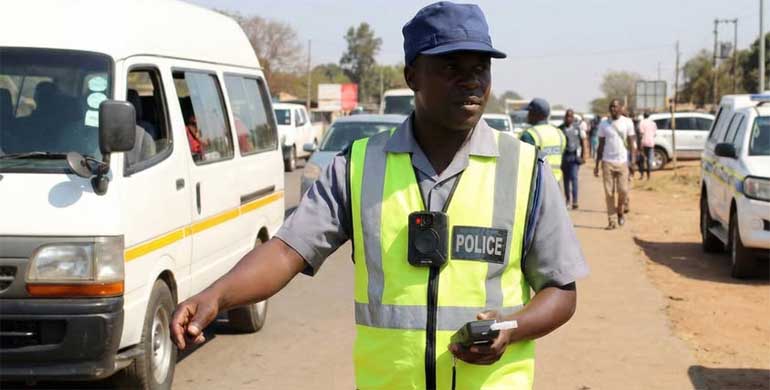
Tendai Gukutikwa
Post Reporter
THE Zimbabwe Republic Police (ZRP) has introduced body-worn cameras for officers in Mutare Central District as part of a renewed drive to strengthen accountability, combat corruption, and rebuild public trust in law enforcement.
In addition, all uniformed officers will soon be required to wear visible name tags — a move designed to make police personnel easily identifiable and enhance transparency in their interactions with the public.
The developments were announced by Officer Commanding Mutare Central District, Chief Superintendent Rossum Shonhiwa, during the re-launch of the District Client Service Charter held at the former Hobhouse Rank in Mutare last week.
The re-launch formed part of ongoing efforts by the ZRP to strengthen relations with communities and improve service delivery through a renewed commitment to professionalism, integrity, accountability, and respect for human rights.
Addressing community members at the event, Chief Superintendent Shonhiwa emphasised that the police are determined to restore public confidence and ensure officers uphold the highest standards of conduct.
“The organisation expects increased public involvement in tackling police corruption. Accordingly, let me inform you that we introduced body-worn cameras for police officers. This is a decisive action that brings integrity out of the shadows, encouraging open accountability and professional policing.
“The gadgets serve both as a deterrent to misconduct and a shield for honest officers. Very soon, you will notice that no police officer will go out on deployment in police uniform without wearing his or her name tag. Any untoward behaviour by a police officer must be promptly reported to authorities,” he said.
Chief Superintendent Shonhiwa said the introduction of the cameras and name tags reflects the organisation’s determination to promote ethical conduct among officers, while giving members of the public greater confidence when dealing with the police.
He said the measures will help improve accountability by providing an accurate record of police interactions, and ensure that officers remain conscious of their professional obligations while carrying out their duties.
He also acknowledged that concerns over police conduct and service delivery has contributed to strained relations between law enforcement agencies and some sections of the public.
“We are not blind to concerns of dissatisfaction and criticism. We hear the stories in marketplaces and read them in the media. In some instances, trust between the police and the public has deteriorated, and we acknowledge that reality.
“It is at this juncture that we endeavour to rebuild and cherish that trust. We are looking forward to a revived and enduring relationship between the police in Mutare Central District and the public,” he said.
Chief Superintendent Shonhiwa said the re-launch of the Client Service Charter was intended to reaffirm the police force’s commitment to serving communities in a professional, efficient and transparent manner.
He described the charter as a pledge outlining the standards members of the public should expect whenever they engage with police officers.“The core importance of this charter is our commitment to meet the service delivery expectations of our clients. It answers the fundamental question of what every citizen can rightly expect as the minimum service standards when they interact with police officers.
“In doing so, it clearly lays out standards for professionalism, courtesy, efficiency, integrity, accountability and commitment. This is far more than a document. It is a solemn pledge and handshake extended to every citizen in Mutare Central District,” he said.
Chief Superintendent Shonhiwa said the charter also serves as a reminder that effective policing requires cooperation between law enforcement agencies and the communities they serve.
“The charter we are re-proclaiming today marks a decisive turn. It is a call to unity to move beyond our gates and join a collective front against crime.
“Our shared security depends, not only on police vigilance, but also on everyone’s determination. When you see something, say something. Do not dismiss a piece of information as too petty. In the great tapestry of community safety, every thread counts,” he said.
He encouraged residents to participate in neighbourhood watch initiatives and work closely with police in identifying and reporting criminal activities.
Chief Superintendent Shonhiwa said members of the public also have a responsibility to hold the police accountable by reporting misconduct and providing feedback on service delivery. “We promise professionalism where every officer is defined by integrity and respect for human rights. We promise efficiency with prompt responses and clear timelines. We also commit to transparency, including the right to reference numbers, feedback and case follow-ups.
“Use the phone numbers and social media platforms that will be provided in the Client Service Charter to share with us your concerns, appreciation and suggestions,” he said.
Community members who attended the re-launch welcomed the initiative, expressing optimism that the reforms would improve accountability, responsiveness and communication between the police and residents.
Chief Superintendent Shonhiwa said the success of the initiative will depend on both police officers and members of the public embracing their respective responsibilities in building safer communities.
“This is your charter, use it. Let us walk this new path together in partnership for a safer, more secure and just district,” he said.