


 Online Reporter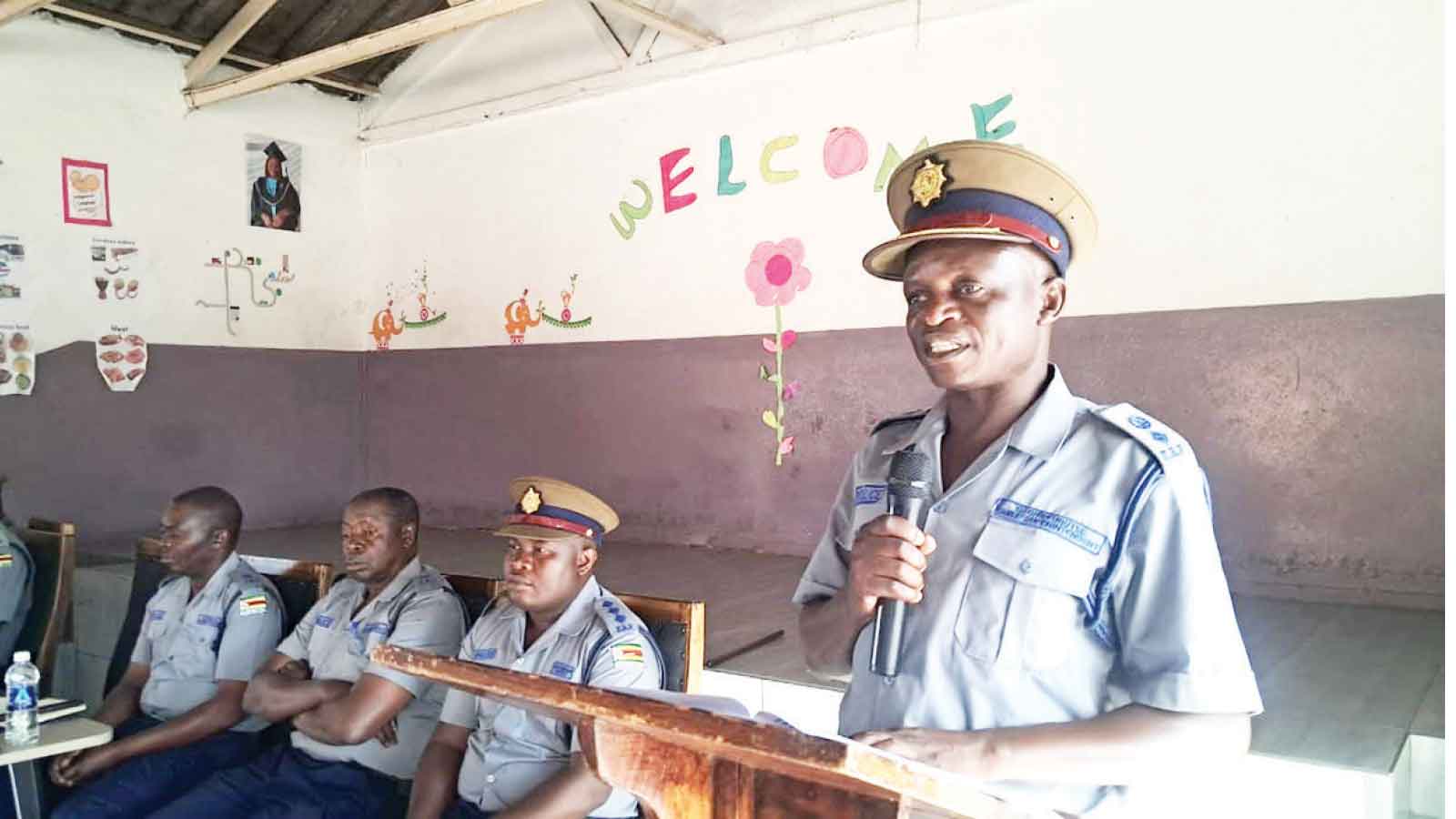
Arron Nyamayaro
A strategic workshop aimed at strengthening police investigation standards for cases headed to prosecution opened yesterday, bringing together police investigation officers, senior prosecutors and criminal justice trainers.
The programme’s central focus is ensuring evidence is complete, admissible and well documented—so cases stand up in court.
The initiative, organised by Mbare District officer commanding Chief Superintendent Runwell Chipfurutse, said effective policing must translate into proof that is legally compliant and “court-ready”, enabling the successful prosecution of serious and repeat offenders—including serial criminals.
Speaking at the workshop, Chief Supt Chipfurutse said the training is intended to improve conviction outcomes for repeat and serial offenders by reinforcing the principle that justice depends on evidence, not assumptions.
“Over the course of the sessions, officers were trained on best practices for evidence preservation, witness handling, chain-of-custody discipline, documentation that can withstand cross-examination, and the correct application of investigative protocols from the moment a case is reported,” he said.
Participants also reviewed practical case studies showing how weak or incomplete investigations—such as missing corroboration, poor documentation and gaps in forensic handling—can undermine prosecution efforts.
Chief Supt Chipfurutse said a key theme was the importance of preparing cases strong enough not only to secure convictions, but also to support bail opposition in appropriate circumstances where suspects are believed to pose a continuing risk to public safety. “Trainers stressed that bail outcomes should be informed by credible risk assessment supported by the evidence gathered, rather than by uncertainty created through investigative gaps,” he said.
The workshop, which runs for two days, gathered investigation officers to strengthen what organisers described as a fundamental pillar of justice: quality criminal investigations.
“The criminal investigation process attracts significant public attention because it has a profound impact on lives and communities. To maintain public confidence, we all have a responsibility to ensure investigations are conducted ethically, professionally and to the highest agreed standards,” Chief Supt Chipfurutse said.
He added that law enforcement officers must defend individual rights and collective security within the rule of law, noting that Police Commissioner-General Stephen Mutamba had recently relaunched the Police Client Service Charter, which is intended to address community concerns.
“Community members do not want to continue meeting dangerous criminals in society, hence the need to sharpen our investigation skills,” he said.
The programme also covered a range of topics, including the investigation process, fingerprint lifting by the Criminal Investigation Department/Forensics structures (CIU), docket accountability, opposing bail and requests for remand, as well as scene revisits.
Chief Supt Chipfurutse said the workshop was a call for joint reflection and action to upgrade investigative capabilities, urging participants to share knowledge and contribute to a more resilient, efficient and ethical investigative framework.
Among the facilitators was Francisca Mukumbiri, the Mbare Public Prosecutor in Charge. She emphasised that investigation officers must attend the workshop because the standard of dockets being brought to court is, according to her, below required levels.
“Thorough investigations must be done before bringing an accused to court. Remember, we are taking away the freedom of an accused, so there must be reasonable suspicion that an offence has been committed.
‘‘If it is a full docket, there must be evidence in the docket,” Mukumbiri said.
She further noted that transfers of police officers mean some new investigators may struggle with testimony and bail opposition procedures, adding that training is necessary so that witnesses are properly guided. “Matter of fact, no matter how intelligent a prosecutor is, if witnesses are confused, you will never win a case,” she said.
Mukumbiri also explained that fast-tracking of cases has recently been introduced and that officers were being taught how to identify matters suitable for the programme.
She said that as the State, prosecutors must prove guilt beyond reasonable doubt, and poor investigations cause cases to fail.
“Both prosecutors and police represent the State, so justice must be done. Procedures must be followed during arrest of accused and after arrest,” she said.
Officers drawn from Mbare District police stations included Southlea Park, Matapi, Mbare, Waterfalls, Braeside and Stodart.


 Bongani Ndlovu
 Mathew Masinge