admin
admin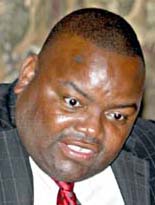
Industries Dr Joseph Kanyekanye has said.
Dr Kanyekanye, who was instrumental in lobbying for the creation of a rescue package for struggling city firms, said funding for the facility was also supposed to come from the Government and not financial institutions as the affected companies could not meet the stringent lending requirements of banks.
Dimaf has been turned into a national fund with companies from all over the country eligible for funding. The money is channelled through CABS, which vets applicants.
In an interview, Dr Kanyekanye said the original Dimaf was meant to benefit only large manufacturing companies in the city which were going though tough times.
“Dimaf was meant to be a stabilisation package for Bulawayo. We went through all the companies and the state of the companies was bad and it became apparent that if they were not given cash injection or a stabilisation package, there was going to be disaster. We tabulated company by company and what they required,” he said.
He said some of the companies which had been identified for funding under the facility included Cairns, Dunlop, G and D Shoes and the National Railways of Zimbabwe because of its importance to the economy.
However, he said the momentum to save the companies had been lost as politicians made various pronouncements on the fund.
“The greatest tragedy is that there has been no deployment of funds. Politicians ought to be ashamed. It’s a betrayal of people’s trust,” he said.
Dr Kanyekanye said it was not proper for Dimaf to be channelled through banks as such an intervention did not work for struggling companies.
“You cannot put a bank fund to deal with a distressed fund. Few banks would give money to companies under judicial management,” he said.
He said in their original plan, it was envisaged that funds to save Bulawayo companies would come from central government through the International Monetary Fund’s special drawing Rights.
Meanwhile, Dr Kanyekanye said injecting money into struggling companies was not the solution as some companies have failed to recover even after cash injection.
He said in some cases, it was necessary for shareholders to step aside and allow people with fresh ideas to take over.
He said there were a number of companies which received funding from the National Social Security Authority (NSSA) but were still facing challenges.
“A number of companies failed due to poor management. The way forward is for original shareholders to let go. A lot of companies in Bulawayo got money from NSSA but very few were able to get out of the problems they were in,” he said.
He said most companies also needed to upgrade equipment to make them more efficient.
Meanwhile, Dr Kanyekanye said elections, though not good for business, must be held next year as the inclusive Government had failed to deliver.
President Mugabe told a High Court hearing recently that elections would be held in the last week of next March.
Dr Kanyekanye said a lot of investment decisions will be delayed while the Zimbabwe Stock Exchange had started reacting to the poll announcement. Despite, this, he said the elections must be held.
“Business does not want elections. (During elections) politicians make promises which increase consumption but the reality as things stand, the GNU has lived beyond its original mandate. It has failed to deliver,” he said.
Dr Kanyekanye said the inclusive Government was more concerned about politics than economic issues.
“There has been a pre-occupation of getting elected at the expense of economic issues,” he said.
He also said the inclusive Government had failed to have the illegal economic sanctions removed three years after it came into being and the economy was choking from the Zimbabwe Democracy and Economic Recovery Act enacted by the United States Congress.


 Online Reporter