

 admin
admin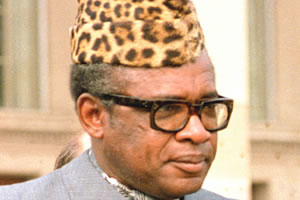
disgruntled voices of the Occupy Movement groups which are calling for a reasonable distribution of resources to the people. These groups are arguing that capitalism has failed to deliver basic social services to the majority of the people in their countries.
The devil is indeed on the cross. What we mean by this is the financial crisis that has gripped Europe and the austerity measures that are being instituted as the panacea to these self-created European problems.
This is a case of poetic justice as the North tests its own bitter medicine of “structural adjustments” which have been politely termed “austerity measures” by the same notorious monetary institutions that brought untold suffering to many families in Third World countries in the 1990s.
It really requires a miracle to resuscitate the ailing imperialist-capitalist system. This is the very same system that Africa’s pseudo-democrats are trying to pay homage to, the neo-liberal, “neo-imperialist devil.” Are they not realising that this capitalist structure is already on the cross and requires nothing but a miracle to save it?
This is the devil that Lenin regarded as the highest stage of imperialism, the very same demon that Francis Fukuyama in his “End of History” thesis showered with praises. The very same fiend who Karl Marx, Lenin, Mao Tse-Tung, Julius “Mwalimu” Nyerere, Patrice Lumumba, Thomas Sankara and all other Pan Africanists have resisted and refused to pay homage to.
African leaders must speak with one bold voice and together openly tell the neo-imperialist West and their front parties of regime change (pseudo-democratic parties) that what the continent wants are not wolves in sheep’s clothing but true development partners not those who want to deny Africans their heritage.
Thomas L Friedman observed that globalisation has its own dominant culture. In the past, this cultural homogenisation occurred on a regional scale, the Hellenisation of the Near East, the Turkification of Central Asia, North Africa, Europe and the Middle East by the Ottomans, or the Russification of Eastern and Central Europe and parts of Euracia under the Soviets and what is now apparent is the Americanisation of the globe.
This Americanisation of the globe is what professor Schumpeter coined the “creative destruction.” This meant the perpetual destruction of the old and “less efficient” services replacing them with new “more efficient ones.” This is exactly what the neo-liberals did in Iraq, Afghanistan, Ivory Coast and now Libya.
Dear reader, are we then to call this destruction a more efficient service? Is there any peace and stability in these countries after the so-called democratisation process? Another Scholar, Andy Grove warns against Schumpeter’s propositions and argues that in such a scenario, only those who are suspicious, those who constantly peep over their shoulders, to see what might destroy them, and stay just one step ahead, will survive.
It cannot be disputed that we are living in a unipolar world where the United States is currently the sole superpower with other nations being subordinate to it. Peter W Roadman opined that while Americans celebrate their “unipolar moment” in history, the rest of the world is not celebrating. It is a paradox; America’s dominance is a “problem rather than a blessing.”
The constitutionalist discourse is an effort by the neo-imperialists in alliance with the pseudo-democratic parties of regime change to remain relevant and in control.
They are at it again, playing the old imperial game of divide and rule by setting up citizens against themselves.
This dispensation more than anything throws the future of Africans into disarray and in significant doubt. Africa should know that the “good” and “bad” African mentality brewed in Western “democratic” pots is heavily flawed and it breeds animosity among and between Africans themselves. This divisive Western “good African” and “bad African” political labels should be discarded in totality if the continent is to realise its true potential in the international system.
President Sata will soon be labelled a “bad African” for trying to protect Zambian interests. What good then comes from a “good African” who is at the forefront of calling for neo-liberal policies which have failed world-wide?
Dear reader, it must be known from the beginning that Structural Adjustment Programmes were doctrines downloaded and forcefully foisted onto Africa by the International Monetary Fund and the World Bank.
They instituted a grand strategy with some of our own, “good Africans”- the educated intellectuals, who got funding from Ford and Rockefeller foundations.
These were the same fellows who ‘eloped’ with the neo-imperialist institutions and one of the ‘marriage vows’ that they made was to “teach Africans to embrace and carry out economic stabilising programmes in line with the IMF/WB’s theories of development.
SAPs came with their legendary ills that racked havoc on an unsuspecting African working class and the general populace in the rural areas.
George Ayitteyi posits that politics of adjustment is embedded in IMF/WB policy prescriptions that are not the right policies for economic adjusting countries in SSA. He goes on to argue that Africa’s continued linkage with its former colonisers is detrimental.
The Bretton Woods institutions and the former colonising countries, through economic policies like SAPS, kill infant industries in the developing countries, eroding benefits brought about by independence.
This is aggravated by the imposed “economic straitjacket”, the “one size fits all” model that is considered the panacea of all ailing economies. According to Claude Ake: ‘‘The unique feature of African SAPS is their rigorous austerity: outright ban on some essential commodities, even where no local substitutes exists, precipitate rollback of subsidies; massive privatisation usually associated with a steep rise in prices and unemployment; massive devaluation and phenomenal inflation; steep cut in government expenditure, often disastrous for the social sector.”
It does not delude the eye therefore; to see the negative effects of these “draconian SAPS” in post-colonial African countries. Africa and its people were encouraged to soldier on under the false pretext that the situation would improve. Little did they know that these neo-liberals, neo-imperialist policies would continue to be an albatross around their neck?
These policies were indeed neo-imperialist vampires bent on sapping blood out of their own existence; they are like a python that slowly squeezes life out of its victim. Ali Mazrui and Okello correctly observed that the IMF/WB was bent on forcing African leaders into a corner so that they would lose support. Social frustrations and dislocations had been engineered to cost the ruling parties in Africa.
It is not surprising then that Africa witnessed the mushrooming of pseudo-democratic parties that came onto the political scene. These political parties were not any different from puppet leaders like Mobutu Sese Seko (a good African by Western standards) who had carried the neo- imperialist bags.
The tragedy is that these are the very same policies that the pseudo-democratic parties want Africa to uphold. The question to ask is why should we go back where we are running away from? Common sense tells us that there isn’t anything beneficial to Africa if championed by the IMF/WB.
One can plausibly argue that national liberation can only exist when productive forces are completely liberated or freed from any kind of foreign domination. This liberation, this freedom, it can only be enjoyed when the continent is in total control of its own resources. Africa must never be deceived.
There is no way a rider and the horse can ever be on an equal footing. The sobering truth is that, we might deplore the manner in which lions kill their prey, saying that it is deplorable, but then it will continue to do so, because that is its nature.
This explains why in our last contribution on GNUs we concluded that Africa is traversing a waterlogged path which will not get it anywhere. Amilcar Cabral advised that “our task is to prepare our hoe, our plough, our hammer, with which we are going to construct the future of our people in freedom, progress and happiness.
To Muammar Gaddafi (a “bad African”) we, “say go well son of the soil”. Africa is weeping, not only for the death of a man but a man who was a companion in Africa’s struggle to be masters and beneficiaries of their own resources, an exemplary revolutionary. African leaders have betrayed one of their own by failing to stand for him in his time of need.
Does this not show the true dimension of the “good African” leaders? What is the purpose of asking questions when the deed has already been done? African leaders should have done something. African leaders and the African people as a whole must learn that they must understand the past, live the present and prepare for the future.
They must understand that a struggle is a normal condition of all living creatures in the world. Issues of national security are the core of human existence, the reason why we argued in one of our instalments that Africa should smell the rat, in times of peace they must prepare for war. Africa’s struggle requires enlightened leadership.
If they do so, then no power in the world will be able to destroy the spirit of pan-Africanism. If one may ask, whose blood is going to be shed next, NATO and the NTC’S hands are dripping with blood, they have fulfiled their pleasure, like an animal Gaddafi was hunted and like a deer he was struck, it was indeed a savage spectacle, the hunters have killed their spoil, what next?
l Darlington N Mahuku and Bowden BC Mbanje are lecturers in International Relations, and Peace and Governance at Bindura University of Science Education



 Online Reporter