admin
admin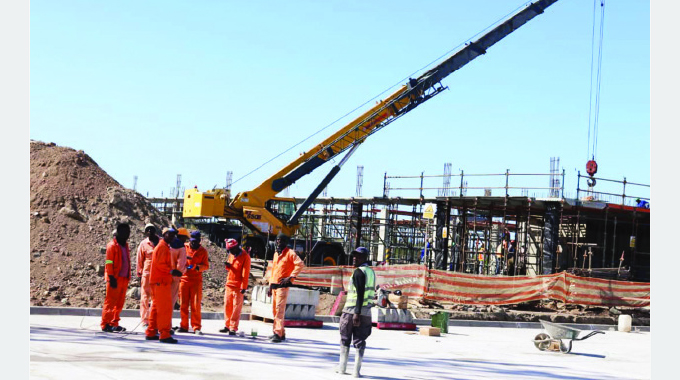
Thupeyo Muleya-Beitbridge Bureau
A BILL to set up the legal framework for the National Ports Authority that will run all the country’s ports of entry and exit under the aegis of the Ministry of Transport and Infrastructural Development is now at the drafting stage.
In an interview following an update visit to the ongoing US$300 million transformation of Beitbridge Border Post, Secretary for Transport and Infrastructure Development, Engineer Theodius Chinyanga, said the required Act should be in place in the first quarter of next year.
“The principles of the Act have been approved by Cabinet,” he said.
Legal drafters are now fleshing out the principles into the proposed law and that will have to, after further Cabinet approval, go to Parliament and the hope is that it will go through Parliament in the first quarter of next year.
“We are confident that once the enabling legislation is put in place, we will have the body corporate to manage the energy points,” said Engineer Chinyanga.
It is envisaged that such an authority will be independent and deal specifically with issues regarding the operations at the border and will not be bogged down by technical issues.
It is very critical that the ports of entry are user-friendly to facilitate the free movement of trade and people and also minimise issues affecting regional and international trade.
Under the new order, the NPA would have a board made up of various stakeholders from different ministries to run the affairs at border posts, with the Ministry of Transport and Infrastructural Development playing a supervisory role.
“To improve on the border efficiency management issues, we are currently transforming the Beitbridge Border Post in partnership with the Zimborders Consortium at a cost of US$300 million,” said Engineer Chinyanga.
“So far, we are impressed with our partner who has kept to all timelines as agreed in the concession document. In some cases, they are even ahead of schedule.”
“This project has changed the face of the entry point for Zimbabwe from down south and within the infrastructure, Zimborders have inculcated the efficiencies that we have all expected and that was promised at the start of this initiative”.
The infrastructure at Beitbridge had changed the ambiance and aesthetic of the port of entry.
Engineer Chinyanga said Zimborders had also come up with improved systems and that training of border workers was undertaken to improve co-ordination and cut the waiting time for travellers and transporters.
The Ministry expected the situation to improve even more over the next four months.
“The automation of services and the introduction of pre-clearance before goods are moved is working wonders. We will continue working on a number of strategies to make the movement of cargo and people seamless through our borders,” Engineer Chinyanga said.
The transformation is being rolled out in three phases including the freight terminal, ICT facilities, roads in phase 1, the bus terminals in phase 2, and the light vehicles terminal and the offsite works including the upgrading of water and sanitation facilities in Beitbridge town in phase 3.
So far the freight and bus terminals are now fully operational with the contractor now seized with the last phase of the project.



 Online Reporter