

 dyton mupawaenda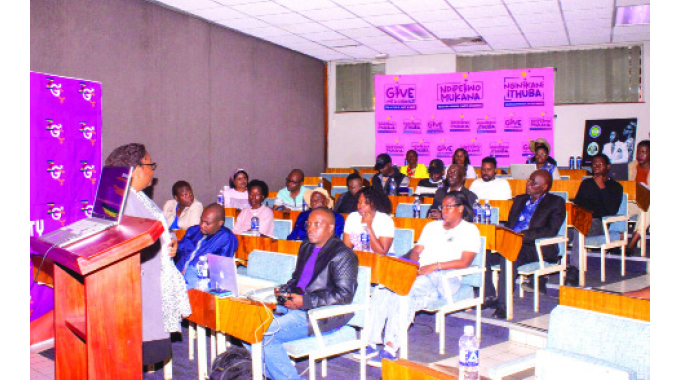
Talent Gore recently in KADOMA
FROM the backstreets of Mbare to the quiet corners of addiction recovery, stories of pain and resilience are emerging not in whispers but in powerful public testimony.
Survivors of gender-based violence and substance abuse are now using their experiences to help others navigate the same troubled paths they once walked.
Speaking recently at a media workshop hosted by Population Solutions for Health (PSH), in partnership with the Zimbabwe Gender Commission and supported by the Embassy of Sweden, three individuals shared their personal stories of transformation.
The session formed part of the Love Shouldn’t Hurt, Give Me a Chance and The Strength Is in You campaigns initiatives aimed at tackling the root causes of gender-based violence while promoting rehabilitation and social reintegration.
Among the voices was Mukoma Amos, a brickmaker from Mbare, who was once known in his community for his short temper and violent outbursts.
“I used to drink a lot and I would get angry when my wife asked about money,” he said.
“Often times I would beat my wife for merely just asking me to be a responsible father, the violence would begin when I drank alcohol.
“My children feared me. My home was broken, and even my business suffered.”
In a country where cultural silence often conceals domestic violence, many men struggle to cope with pressure sometimes turning to alcohol and aggression.
But in 2022, Mukoma Amos stumbled upon a lifeline — an outreach programme that was being conducted at a local football and music event.
“That’s when I learned that true strength is not in fighting your wife, but in listening to her and lifting her up,” he recalled.
Since then, Mukoma Amos has transformed his life.
He has reconciled with his wife and paid lobola to her family, something he had postponed for years.
He takes his children to school, has rebuilt his business, and, most importantly, he has earned the trust and love of his family once more.
“I now live peacefully with my family,” he said.
PSH Executive Director Dr Noah Taruberekera said over 6,000 individuals had been reached through grassroots GBV prevention efforts
Dr Taruberekera explained that the campaign focuses specifically on intimate partner violence (IPV) which is one of the most prevalent forms of GBV in the country.
“Most IPV takes place in domestic settings, making the home the most dangerous place for many women,” he said.
A key aspect of the campaign is its deliberate effort to involve men as central figures in driving behavioral change. Dr Taruberekera revealed that 69 percent of women in Zimbabwe have experienced IPV, while 41 percent of men openly acknowledge committing it.
“The issue is so pervasive that, statistically speaking, every second man could be a perpetrator,” he said.
He also critiqued traditional responses to IPV that focus exclusively on women, arguing that such approaches are insufficient.
“One particularly troubling revelation from the campaign’s research was the widespread belief among both men and women that violence is an expression of love,” he said.
“I’m only repeating what participants shared with us, but this belief is deeply rooted and incredibly damaging.”


 Blessing Chizhande
 Online Reporter