Chronicle Editor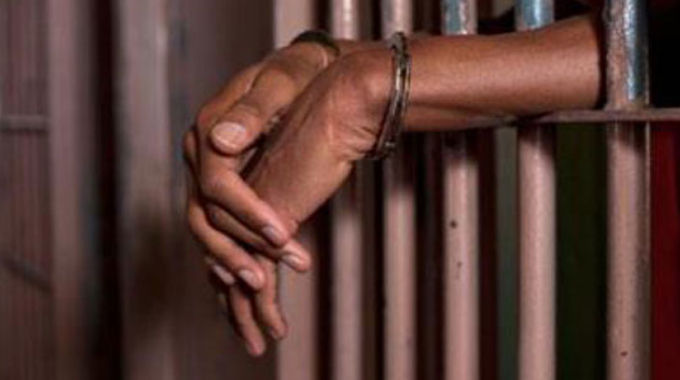
Pathisa Nyathi
PRISONS are associated with incarceration of individuals who have engaged in criminal or anti-social activities and errant behaviour.
They are physical places where prisoners, after conviction before the courts of law, are kept away from society in the hope that they will be rehabilitated and given life skills to fall back on.
Their being integrated back into society after their prison terms was not an issue that was considered. Providing them with life skills is certainly a new development.
In the past, it was enough to ensure they were isolated, punished through hard labour with punishment being the major aim. There was no correctional aspect to prison life. The system was retributive and punitive.
The conditions were not meant to give the prisoners comfort. At least that was better than facing the French-made guillotine.
They were meant to feel the pain and desist from engaging in activities that would take them back to the prisons.
In colonial Rhodesia, the prisons were built for another type of prisoner, the nationalists and captured guerrillas. Some of these guerrillas were hanged while others were given long jail sentences so that they abandoned their quest for independence.
Some were placed under dehumanising solitary confinement where they did not see light and knew not what time it was.
The experience was mentally harrowing and psychologically traumatising. Some prisoners so traumatised had the juicy carrot dangled before them.
They were given the option to be recruited to join enemy ranks. Indeed, some did abandon the struggle and served in the ranks of the colonists. However, there were others, who constituted the majority, who never abandoned the ideals and principles that had led them to be in the prisons in the first place.
A few weeks ago I was reading about the commissioners of Botswana and Zimbabwe who are in charge of the respective prisoner and correctional services in their countries. The former, Commissioner Dinah Marathe was being shown some income-generating projects by her Zimbabwean counterpart, Commissioner Moses Chihobvu.
It was clear the income-generating ventures in Zimbabwe’s prisons were serving a purpose. Not only did the horticultural ventures provide food for consumption by the inmates but, equally important, were the life skills that the inmates were being given.
Commissioner Marathe seemed impressed by what the Zimbabwe Prison and Correctional Services (ZPCS) were doing.
Nevertheless, my wild mind was asking several questions. Did African states prior to colonisation operate prison services? So far, I am not aware of a single African state, which incarcerated errant, antisocial and criminal individuals before colonisation.
Certainly, there were thieves and other categories of antisocial persons. Were they punished? My view is that yes, they were punished, but how when there were no prisons? One of the institutions that were created after occupation were prisons where men who resisted colonisation were taken to before they were hanged. Some were tried in the courts and given prison terms.
Bulawayo Prison was the first prison to be built in Bulawayo to house Ndebele political resistors to colonisation in 1896.
When districts were established, at each district centre were the offices of the native commissioner (uMsitheli, uNdabazabantu), a police camp, a hospital and a prison. This legacy was inherited from the inception of colonisation. How was King Mzilikazi able to run a state without prisons? How was policing done back then?
Not so many years ago I was visited by some police officers from Police Headquarters in Harare. They had been sent by the then Police Commissioner Augustine Chihuri wanted me to answer questions in the questionnaire he had designed.
Essentially, he wanted information relating to how policing was conducted within the Ndebele State.
In the absence of prisons, just how did African rulers deal with criminals of different types? There were crimes that were punishable by death.
The person with the authority to pass the sentence was the King himself. Amanxusa, the executioners, were dispatched to deal with an individual who, after being killed, was not buried. Instead, his/her corpse was left in the open to be consumed by vultures and hyenas.
Witchcraft is another crime that was punishable by death. Commission of the crime was proved by means known and accepted within the cultural context.
In Bulawayo there is a hill that is known as Intaba yabathakathi, hill of the witches, located close to Sizinda Township. Those who were found guilty of witchcraft were killed on the hill.
It is clear there were other cases of errant behaviour beyond witchcraft. How were these dealt with when there were no prisons? Where a state operates a prison service, it is presumed that when an individual wrongs another the state, on behalf of the individual, punishes him/her.
The system inherited from the West is punitive or retributive. It was not so with African societies who gave emphasis to restorative justice. Where a crime has been committed against an individual what comes into existence are strained interpersonal relations. Social equilibrium has been disturbed. There is conflict.
Of major concern therefore, is to restore the shattered social relations. Suppose a man had his cattle stolen by another man. What was important was to take measures to restore the poisoned social relations.
The judicial system seeks to ensure the stolen cattle are reinstituted/compensated to their owner. The two have their strained relations repaired and restored.
Sending a thief to prison is most unAfrican. The man will serve a prison term but that does not lead to the man’s cattle being returned. The cattle did not belong to the state. This is why sometimes problems are encountered.
The man wants his stolen cattle back and not a prison sentence, which does not bring back his cattle.
The war may then be fought underground where the man who has served a term will still face the problem whose solution is to repay the cattle.
It is in such cases where the aggrieved, outside of the state, will take recourse to so-called witchcraft. Knowing how witchcraft works, the man or his relatives may decide to pay back and avoid serious repercussions.
Working on that front is easier as the state does not believe in witchcraft. Through the 1899 Suppression of Witchcraft Act, witchcraft has been protected and abated.
We inherited a law about witchcraft, something about which the white colonists knew next to nothing in terms of its philosophy and practice.
In fact, I am devoting quite a lot of time to come up with a clearer understanding of the craft as a science that is neutral. It is either evil or good depending on the use it has been put into by man.
It is just like nuclear energy; it is neutral and becomes evil when evil men deploy it to annihilate fellow men. It is the same energy that helps in health technology, for example in the diagnosis of sources and nature of illness or disease.
Getting rid of the witch component leaves the craft to be studied more objectively and empathetically with the aim of identifying and unearthing the scientific principles at work.
I will argue that it is an advanced form of science that has been demonised, denigrated, despised and paganised.
I do realise I have not answered the question of how African states, without prisons coped with criminal antisocial and errant behaviour in their societies. That will be left to another day.



 Online Reporter