Chronicle Editor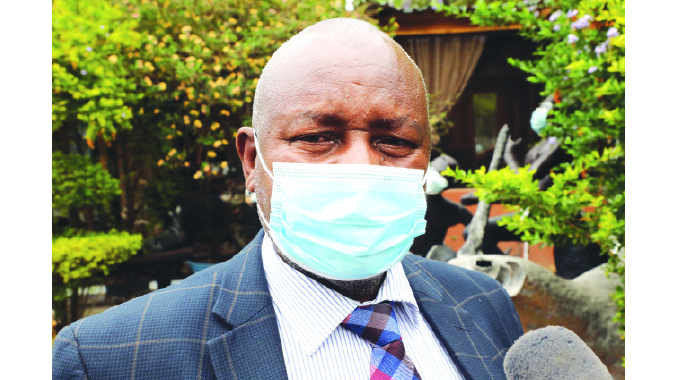
Nqobile Tshili, Chronicle Reporter
GOVERNMENT has started identifying sites and making designs for 144 modern boarding schools that will be constructed countrywide in the course of this year.
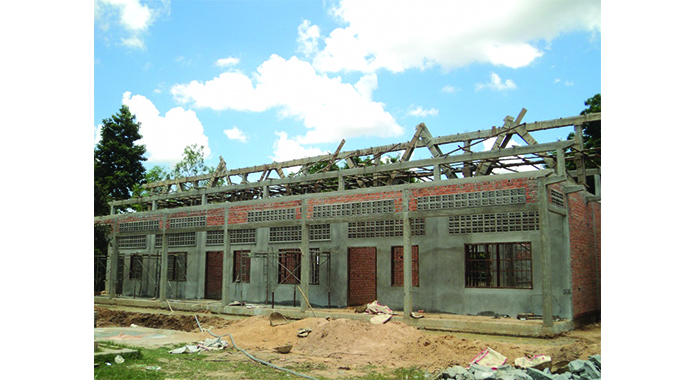
Cabinet last November resolved to construct 144 boarding schools countrywide to address the shortage of such learning institutions.
Each of the country’s 72 districts will have two modern boarding schools.
The country has a deficit of 3 000 schools and boarding schools are overwhelmed with enrolments which has seen only 0,5 percent of learners being enrolled in secondary boarding schools.
Enrolment of pupils in boarding schools had become a cash cow for schools before Government introduced an online application platform.
Schools were inviting hundreds of pupils to entry interviews for a fee but only enrolled a few learners.
The Ministry of Finance and Economic Development will fund the construction of the boarding schools which will be fitted with Information Communication Technologies ICTs infrastructure, modern ablution facilities and will have access to potable water.
The schools will have adequate land to conduct commercial activities in line with the competence based curriculum.
In an interview yesterday, Primary and Secondary Education Deputy Minister Edgar Moyo said the process of constructing the boarding schools has started.
“Preliminary works have started and these include siting of the schools and engaging all stakeholders including local authorities where the schools will be located. The Physical Planning Department is also in the process of mapping and everything.
“The Local Government Department was doing the architectural works of those schools,” said Deputy Minister Moyo.
He said an inter-ministerial committee which includes the Treasury, Primary and Secondary Education Ministry and Local Government and Public Works is driving the construction process.
“The processes have started; the actual construction has not started but the process towards the construction has started.
We will be doing reviews on how far they have gone.
I know there was a meeting between our Ministry and the Ministry of Finance and Local Government and Public Works, there is an inter-ministerial committee which is driving this process.
There was a meeting two weeks ago which was receiving updates from different councils,” he said.
Deputy Minister Moyo said Government wants more learners to access boarding schools as existing ones charge exorbitant fees.
He said civil servants are set to benefit from the construction of the new schools as they constitute a high population with learners learning in boarding schools.
“There are many reasons [why we want to construct such schools] but key among them is that boarding schools are dominated by private players like churches, trusts and these schools are increasingly becoming out of reach for many people.
Therefore, Government is coming in to be a major player in the construction of boarding schools so that we can provide those facilities at affordable rates which are not driven by profits like we are seeing happening,” he said.
“We are seeing that most of our civil servants, because of the nature of their work, work away from the areas where they reside and they send most of their children to boarding schools and they are the ones who are hardest hit because of these increases.
We think there is a glaring opportunity where Government can come in and help mitigate challenges that the society is facing in terms of boarding schools. It’s an area that we cannot leave for other players.”
With regards to addressing the schools’ deficit Deputy Minister Moyo said Government cannot single-handedly address the problem and it invites partners as this has an impact on the country’s quality of education.
“We are saying there is a deficit of 3 000 schools and we are calling all players interested in providing an education service churches, private sector, individuals and so forth, to say here is an opportunity.
Government is addressing that problem through partnering the private sector through Public Sector Investment Programme (PSIP) and those [boarding] schools that we are talking about are designed towards addressing that deficit.
We are also saying that communities through partnerships can establish and build schools, even through diaspora participation and local participation through the devolution of funds,” he said.
— @nqotshili


 Online Reporter