tawandamusarurwa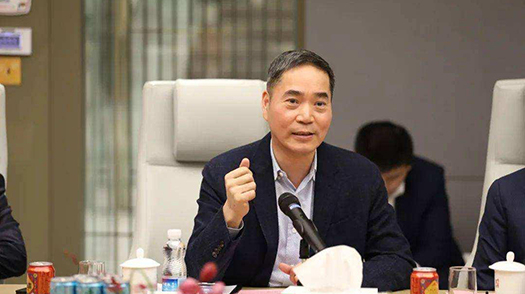
Sunday Mail Reporter
While Zimbabwe only has one billionaire – Strive Masiyiwa, the founder of Econet Global Limited, who has an estimated net worth of US$1,9 billion, according to Forbes – China, the world’s second-biggest economy, has a constellation of more than 946 billionaires, whose value, as reported by the Hurun Research Institute, was more than US$3,2 trillion last year.
And some of them are now actively treasure hunting in Zimbabwe to boost their fortunes. They are spending billions, particularly in the mining sector.
But they are just part of a cast of the world’s richest investors from across the world, from Dubai to Nigeria, whose path to the country’s alluring mining sector has been cleared by the new political administration’s policy to open up Zimbabwe to the world. There are also investors who are seeing opportunities in real estate.
The Sunday Mail gives you the low-down on the identity of some of the billionaires and the moves they have made so far to strike gold, or, rather, more gold.
- Xiang Guangda (US$1,8 billion)
Ranked number 494 on the list of Chinese billionaires by Hurun, Xiang Guangda, who is reportedly worth a cool US$1,8 billion, first dipped his toes to test the Zimbabwean market in 2012 by establishing a US$25 million ferrochrome smelter through Afrochine, a subsidiary of Tsingshan Holdings – now the world’s biggest steel producer – which he founded in 1988.

Over the past decade, Afrochine has progressively increased its investment and now operates five smelters, after adding two more furnaces in Chegutu last year. Its workforce has, as a result, doubled to 1 000.
Born in 1958 into a working-class family in Wenzhou, Zhejiang province, Xiang, who is popularly known as “Big Shot” in mining circles mainly because of his knack to take chances, did not actually start in mining.
Legend has it that he started off fixing machinery at a Chinese state-run fishery, before quitting his job to start his own business in the late 1980s.
His start-up was actually involved in the manufacture of frames for car doors and windows for state-owned carmakers, helping him build a small fortune.
According to various reports, it was while on a business trip to Germany in 1992 that he stumbled on a major life-changing revelation.
He learnt, to his dismay, that major carmakers such as Mercedes-Benz and BMW did not outsource their doors and windows, as they made them on their own.
Fearing that his line of business would not be sustainable, he decided to switch to steel, culminating in the establishment of Tsingshan in 1988.
Its primary motivation was to wean China from its dependence on imported steel.
Burgeoning business helped the steel producer become the biggest in the world, culminating in Xiang becoming a sheik of sorts in the metal industry.
His companies now employ over 56 000 people from around the world.
But there is something that he has seen or smelt in Zimbabwe since 2017, which has prompted him to go big in the mining sector.
Tsingshan has since established Dinson Colliery in Mpongola village, Hwange.
Although it began operations on June 1, 2021, it has already built two coke oven batteries that are now producing more than 300 000 tonnes of coke.
The new business has grand plans, it is expected to embark on phases three and four, which would boost production and make Dinson Colliery the largest coke producer in Africa.
But the crown jewel of Xiang’s local projects is arguably the US$1 billion Dinson Iron and Steel Company (DISCO) carbon steel plant in Manhize, which, all things being equal, will start production in August this year.
About US$500 million has already been spent on the project, where President Mnangagwa broke ground on October 6 last year.

Straddling three provinces – Mashonaland West (Mhondoro), Mashonaland East (Chikomba) and Midlands (Chirumanzu) – the steel venture’s benefits to the Zimbabwean economy could be immense.
Experts believe local steel manufacture could help cut imports of the product by 90 percent, helping save between US$400 million and US$500 million per annum.
More than 6 000 jobs will also be created at the project, which also includes an iron ore mine.
Overall, more than 30 000 jobs are envisaged to be created in downstream industries.
In 2013, Xiang – who is also referred to as the Steve Jobs of the metals industry after the founder of American company Apple – embarked on a similar venture in Indonesia by investing in the Morowali Industrial Park on the Indonesian island of Sulawes.
It is now the largest nickel-based industrial area in Indonesia, with 11 smelters.
In addition, Indonesia is now one of the major producers of stainless steel, thanks to Tsingshan.
In Zimbabwe, the billionaire’s plans are clear: To make DISCO the biggest integrated steel plant in Africa.
To underline how serious he is about his sprawling business empire, Xiang flew all the way from his base to Zimbabwe to witness the signing of an addendum to the memorandum of understanding between the Government of Zimbabwe and Tsingshan on November 29, 2022 at State House in Harare.
In essence, the company has since made an undertaking to increase carbon steel production to five million tonnes per annum, while also boosting ferrochrome output to 500 000 tonnes per annum from the current 150 000 tonnes.
Most significantly, the resources company, whose annual revenues topped more than US$40 billion in the past two years, intends to spread its tentacles into copper and cement production. It also plans to construct a lithium processing plant, a railway line to the port, as well as a power plant.
One small detail about the self-made billionaire – he is not the suit-and-tie type but loves sneakers and buttoned-down shirts.
- Pei Zhenhua (US$9,8 billion)
Also a self-made billionaire, Pei Zhenhua is fabulously rich, as he is rated number 60 in China with a fortune worth US$9,8 billion.
Although he has a relatively small footprint in Zimbabwe, he seems to have been smitten by the country’s bountiful lithium resources, which is not surprising.
The businessman, who initially worked for the Jiangsu Textile Research Institute before venturing into business by founding Suzhou TA&A in 1997, made his fortune as an early investor in Contemporary Amperex Technology Limited (CATL) – the largest battery manufacturer and supplier in the world, which was established by another Chinese investor, Robin Zeng, in 2011.
Pei, who is presently CATL’s board chairperson, has a 5 percent stake in the company through Ningbo Lianhe.
He, however, holds 35 percent in Suzhou TA&A, together with his wife.
Overall, CATL – which supplies EV makers such as Volkswagen, Geely Automobile Holdings Ltd, Nissan Motor Co and Elon Musk’s Tesla Inc – also has the remarkable distinction of having nine shareholders who are billionaires in their own right.
These include 52-year-old founder Robin Zeng – the 47th richest person in the world – co-vice chairpersons Huang Shilin and Li Ping (US$14,7 billion and US$6,6 billion, respectively); early investor Pei Zhenhua (US$9,7 billion); Zhao Fenggang (US$2,4 billion); Wu Kai (US$2,3 billion); Wu Yingming (US$1,9 billion); Chen Qiongxiang (US$1,8 billion) and Chen Yuantai (US$1,3 billion).
Shares of the Shenzhen Stock Exchange-listed CATL have soared more than 150 percent in the past year, driven by the rising demand for lithium-ion battery-powered electric vehicles, as the world races to put a lid on rising harmful greenhouse gas emissions.
It is, therefore, not surprising that in March 2022, Pei’s Suzhou TA&A Ultra Clean Technology Co Ltd bought shares worth about US$15,7 million in Premier African Minerals in Matabeleland North, which is presently developing Zulu Lithium Mine.
Just like Tsingshan’s chairperson Xiang Guangda, who was in the country in November last year, Pei also jetted into the country in January and travelled all the way to Fort Rixon, Matabeleland North, to monitor progress at the lithium mine.

Encouragingly for the businessman, the mine is on course to produce its first spodumene concentrate before the end of this month, guaranteeing him additional rich pickings.
- Shaji Ul Mulk (US$2,5 billion)
One of the major new projects in Zimbabwe that has not escaped the world’s attention is the US$500 million Cyber City in Mount Hampden, Harare. Even American media company Bloomberg in January devoted acres of space on the multi-million-dollar project, which is being spearheaded by Dubai-based billionaire Shaji Ul Mulk through Mulk Holdings.

The businessman is known as a risk-taker and go-getter.
In 1982, he travelled from his native India to Dubai with the intention of raising some money needed to enrol at the prestigious Wharton business school of the University of Pennsylvania, the United States.
Initially, he was employed at his brother-in-law’s small business, but he later quit to form his own business.
After raising the money needed to pursue his dream in the US, he had a change of heart and decided to give up his admission at the reputed business school, thus marking the beginning of Mulk Holdings.
Today, Mulk’s business empire spans four key sectors – construction, renewable energy, plastics and healthcare – and has operations and manufacturing bases in the US, Europe, India, the United Arab Emirates (UAE), Oman and Ghana.
Overall, it employs 7 000 people.
In 2021, after being charmed by the pitch made by President Mnangagwa at the Dubai Expo 2020, the businessman, who is also an avid cricket enthusiast, decided to take a chance and visited Zimbabwe in April 2022 to scout for potential business opportunities.

He later decided to invest in the Cyber City, which is now touted as Africa’s most exciting real estate project.
On July 20, 2022, President Mnangagwa broke ground at the building site.
Modelled around Dubai, the ultra-modern city in the UAE and the capital of the Emirate of Dubai, the two-year project – covering a 2,5-million-square-foot space in the Mashonaland West farming district – will replicate real estate development along Sheikh Zayed Road, the longest road in the UAE and home to many high-rise buildings that house residential apartments and serviced hotel apartments.

According to the developers, the envisaged city will include 24-hour advanced built-in surveillance technology directly connected to law enforcers for maximum security of the residents.
More importantly, it will host the signature Mulk Tower, a five-star hotel, a duty-free mall, office buildings, luxury villas and recreational facilities, among other features.
The residential side will have 250 units of three-bedroomed townhouses, 80 units of three- to five-bedroomed villas.
The plans provide for the development of several high-end dining lounges, night clubs, sheesha bars, nurseries and schools, medical facilities and a modern transport network.
Close to the villas and townhouses will be a community centre, private swimming pools, a health club, a gym and sports centre, a kids play area and a pet zone.
The plans also include a diplomats’ block “with high-end finishes and 27/7 advanced security systems will be one of the highlights”.

There are expectations that Mulk could broaden his investments into other sectors as well.
After all, he is renowned for taking calculated risks.
“Taking the risk is important but backing it up with the proper research and hard work is equally important – perhaps more. You need to take risk – but a well-calculated one,” Mulk once said in an interview with Gulf News.
- Benedict Peters (US$2,7 billion)
The Nigerian media-shy tycoon was educated at the University of Benin and graduated with a degree in Geography and Town Planning.

Initially, he was an employee in the oil and gas business, where he spent several years working with Aliko Dangote’s younger brother, Sayyu Dantata.
In 1999, he established Sigmund Communecci, which, however, had challenges and had to be later restructured.
The businessman actually formed his Lagos-headquartered Aiteo Group out of the restructure of Sigmund in 2008 and the good times began to roll.
In essence, Aiteo specialises in the provision of petroleum products to the international market, as well as exploration and distribution of refined products to retail outlets.
Over the years, Peters has grown to become Nigeria’s seventh-richest person and number 17 on the African continent, according to Ventures Africa.
Of late, he has been diversifying his portfolio, and Zimbabwe’s mining sector seems to have caught his eye.
On May 28, 2019, Peters’ consortium, Bravura, signed an investment agreement with Government on the Southern Serui Platinum Concessions in Mashonaland West province.
By the end of last year, the company was finalising resource exploration at its claims, where it is set to invest US$250 million to develop a new platinum mine.
The company started exploration at its concessions in July 2019, but progress was disrupted by Covid-19.
Up to 2 000 jobs are expected to be created when production starts.
Trend
So, the trend over the past five years has been clear: Consequential cash-flush investors from across the world – China, Dubai and Nigeria, in this instance – are beginning to see opportunities in Zimbabwe and increasingly seeking to capitalise on the first-mover advantage. This is expected to continue as Zimbabwe becomes a new frontier for fortune-seekers.


 Online Reporter