admin
admin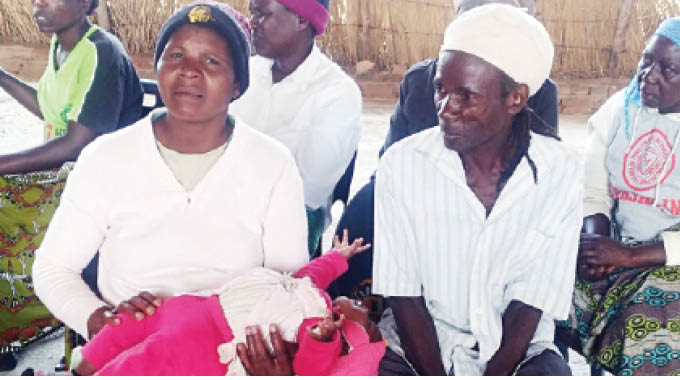
Patrick Chitumba, Midlands Bureau Chief
It is a partly cloudy day at Taga Farm in Ward 15, Seke District, and present at a local community hall are eight women and two men gathered for their weekly Community Antiretroviral Treatment (ART) Refill group meeting.
The group, formed about two years ago, brings together people living with HIV and Aids and are on ART from Ward 15.
Part of this group is a couple who are proud parents to three beautiful children aged between six months and five years.
What is unique about this couple is that they are HIV positive but they have managed to have three HIV negative children.
HIV is transmitted in only three ways: through unprotected sexual intercourse; through blood or blood products, donated semen or organs; or from an infected mother to her child (vertical or mother-to-child transmission). More than 70 percent of infections are a result of heterosexual transmission and over 90 percent of infections in children result from mother-to-child transmission.
Life for the couple, Mr Claudio Hanyiwa (55) and his wife Ms Chipo Makuvire (42) did not end back around 2011 when they were both initiated on ART – rather – they have lived better days and are now proud parents of an HIV free generation.
While HIV and pregnancy is not a topic we hear a lot about in Zimbabwe — the incredible success of ART means most Zimbabweans diagnosed with HIV assume a long and healthy life, along with a normal sexual relationship and family.
The well-managed use of ART means mother-to-child transmission of HIV is now controlled in the country.
For a person living with HIV like Ms Makuvire, however, sustaining a healthy pregnancy is not without its complications. She said condoms are central to safe sexual intercourse — the main protection against transmission of HIV. Condoms also protect against pregnancy.
For heterosexual people in a sero-discordant relationship (where one person is HIV-positive, the other HIV-negative), options for conceiving children have tended to be either expensive or risky. At the expensive end are fertility treatments, such as sperm washing and in-vitro fertilisation.
At the riskier end, many couples take a chance on sexual intercourse without a condom. If the HIV positive partner is on ART and the virus has been suppressed in their system, then recent studies suggest this can be a relatively safe option.
Mr Hanyiwa and his wife have been fortunate to have access to pre-exposure prophylaxis (PrEP)- a course of a combination ART drugs called Truvada that she took to prevent their children from becoming infected.
Research has shown that, taken correctly, PrEP significantly reduces a person’s chance of acquiring HIV. PrEP has been described as a sexual intercourse game changer: a pill that re-introduces the possibility of “safe” sexual intercourse without condoms.
While some have argued that PrEP provides licence to be irresponsible, undermining years of effort to legitimise condom use and risking an increase in rates of other sexually transmitted infections – PrEP has more supporters than critics. Yes, it does not offer a global solution to stopping HIV, but it certainly presents an effective prevention option for people at high risk of acquiring HIV.
For sero-discordant couples wanting to conceive children, PrEP is undoubtedly a game-changer, allowing natural conception with minimal risk.
The existence of Gracious (six months old) Liberty (three years) and Tanaka (five years) is clear evidence to support the safety and efficacy of PrEP for couples trying to conceive.
“We were both initiated on ART around 2011. You know, at first I was in denial but with my wife by my side, we managed to support each other and today we have three children who are all HIV negative so all things are possible these days. Now we have organisations like the National Aids Council (Nac) and its implementing partners who are rolling out different programmes in response to HIV and Aids in the country.
“When we wanted to have children, we thought it was not possible at first but on getting constant education on HIV and Aids from Nac and at the hospital we started trying for the children while taking PrEP and the success is evident enough. We have these children,” said an elated Mr Hanyiwa.
He said joining the refill group had also assisted him and his family live healthy lives.
“I’m one of the two men in the refill group around here. In 2011, I was initiated on ART and accepted my condition. Look now I am very fit, I am very well. I also encourage other men to go for testing so that they know their status. Knowing one’s status promotes a healthy lifestyle,” said Mr Hanyiwa.
But people living with HIV and their partners still encounter stigma if they decide to have children. Ms Makuvire said there are people in society who look down upon people living with HIV and Aids and are on ART.
“As you can see, I am breastfeeding and I was told that it is safe for about a year. I am happy that we are living positively. We are grateful to this Nac-initiated refill group which is helping us fight stigma. With this group, we send one member to collect our drugs and that saves us money and time. At the same time, we don’t all go and crowd health institutions,” she said.
The chairperson of the Community ART Refill Group Mrs Violet Nyamande said they are a self-formed group for people living with HIV who are on ART.
“The group assists us to reduce cost of going to collect medication. One person goes with all our cards once after three months or so. Members to benefit should not be pregnant because such people require constant checkups at the hospital. One should be over 15 years and should not have TB or other opportunistic diseases which also require constant checking with health experts. So this group has created a bond and we put each other to task for continuous intake of ART. We now have income-generating projects because of the bond we have,” she said.
Asked why there are only two men in the group, Mrs Nyamande said many men are still afraid and embarrassed to join the group or even talk about HIV and Aids.
“Men are leaders in the community and don’t want to be seen to be taking ART. But the brave ones took advantage of this group. Some who were too proud to join or refused, are dead. People should not be ashamed of this condition. We urge men to come in the open. Some go as far as Chivhu or Harare to collect ART when we get ours from Beatrice,” she said.
Nac Seke District Aids Coordinator Mrs Florence Nyandoro said there are 20 such Community ART Refill groups in her district.
“These groups are working wonders as they are assisting members save money and make money through projects. There are low cases of defaulting because they advise each other, we check on each other and do pill count to ensure continued taking of the ART drugs and so it is one way of curbing defaulting on ART,” she said.
“After three months, they all go to the hospital together for CD4 count, weighing and other health matters. After one of the members collects ART, they meet and share the medication so that the ART is not taken to an individual home.”
The number of people acquiring HIV each year is falling in Zimbabwe, although levels are still relatively high. In 2017, there were 41 000 new infections, compared to 73 000 in 2010.
Zimbabwe’s National HIV and Aids Strategic Plan 2011-2015 saw the country adopt a Combination Prevention Strategy approach, which focuses on a number of areas to prevent new infections. This approach remains in place and includes prevention of mother-to-child transmission, voluntary medical male circumcision, behaviour change communication, condom programming and STI management.
In 2014, Zimbabwe rolled out Option B+, whereby HIV positive mothers receive antiretroviral drugs for life in line with WHO treatment guidelines — a promising move for Zimbabwe’s HIV response. As a result, in 2017, over 95 percent of pregnant women living with HIV in Zimbabwe received ART to prevent mother-to-child transmission.
In 2015, mother-to-child transmission was estimated to account for 6,39 percent of all new HIV infections in children aged 0-14 years. The number of new infections in this age group has itself fallen from 12,000 in 2010 to 4,900 in 2015. In 2015, HIV prevalence among this age group was 1,8 percent.


 Online Reporter