Online Reporter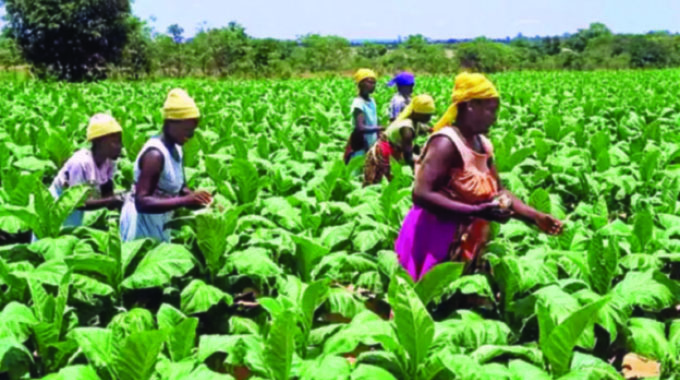
Elita Chikwati
Tobacco farmers have started sowing seedbeds for the 2025/26 irrigated crop, and seed sales are beginning to intensify.
Seed sales have, however, been lower compared to last year but are expected to intensify as many farmers complete harvesting, curing, and marketing of the current late-planted crop.
Statistics from Kutsaga Research show that as of yesterday, farmers had bought 482 565 grammes with the potential to cover 96 513 hectares. This is slightly lower than the seed that had been procured by farmers during the same period last year. Last year, during the same period, farmers had bought 489 990 grammes, equivalent to 97 998 hectares.
The earliest date for sowing seed is June 1, while the earliest date for transplanting is September 1. All seedbeds are also expected to have been destroyed by December 31 every year.
The decline in seed sales has been attributed to the late rains last year, which saw farmers delaying planting. Currently, some farmers are still reaping and curing their late tobacco crop.
Mr Tatenda Mugabe, Kutsaga Research’s public relations and communications officer, said tobacco seed sales had, nonetheless, started to increase. “Some farmers are still reaping, while the majority are busy grading and baling for delivery to auctions. Sales have started to surge this month as farmers prepare for the July 1 dryland tobacco season,” he said.
Mr Mugabe added that the country had enough seed in stock to last up to five years.
Mr Edward Dune, president of the Tobacco Farmers Union Trust, said farmers had already started sowing seedbeds. “June 1 is the stipulated earliest date for planting; it is business as usual. Farmers with irrigation facilities are sowing tobacco. The union is also working very closely with the plant quarantine branch within research to ensure sanity in pest and disease control nationwide. Preparations for the dryland crop are also advancing well,” he said.
Meanwhile, tobacco sales have hit 269 million kilogrammes, which is 31 million kg shy of the targeted 300 million kg. By day 63, farmers had sold 269 million kg, valued at US$904 million. This is an increase of 41 per cent from the 191 million kg worth US$664 million that had been sold during the same period last year.
Farmers are raising concerns over late payments by some contractors.
Tobacco production has been on the increase due to favourable prices and orderly marketing. The crop, which used to be produced by a few farmers, is now being produced by more than 140 000 farmers, mostly from the communal and A1 sectors.
Tobacco is also now being grown in Matabeleland South. The crop used to be confined to Manicaland, Midlands, and Mashonaland provinces. Decentralisation has enabled tobacco farming in Matabeleland South. This expansion empowers rural communities with income and employment.
TIMB, together with the Government and other stakeholders, have been working hard to improve the viability of growers, ensuring 100 percent compliance with regulations and ensuring sustainable tobacco production and good agricultural labour practices.
The quality of the crop is also improving as many farmers gather the requisite knowledge and skills to grow, cure and handle the leaf. The tobacco industry has implemented several initiatives that include training farmers to increase tobacco yields.