admin
admin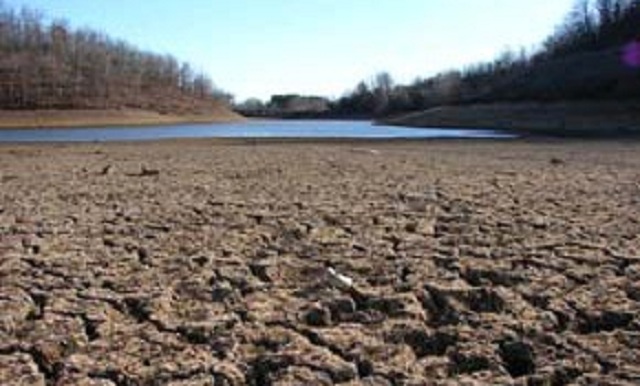
Tapuwa Mashangwa
SOMEONE once said that there is no progressive future possible without an understanding of our past, a process crucial for human development.
This statement could be no further from the truth as large parts of Zimbabwe, Malawi, Zambia, South Africa, Mozambique, Botswana, and Madagascar, have currently faced the driest rainfall season in the last 35 years, according to the UN Food and Agriculture Organization (FAO).
Investment into irrigation systems and borehole drilling should be made and endorsed by governmental agricultural ministries rather than continuously relying on the aid of non-governmental organization.
Irrigation is the artificial application of water to the land or soil.
It is used to assist in the growing of agricultural crops of disturbed soils in dry areas and during periods of inadequate rainfall.
Some companies have developed what they refer to as smart irrigation. Smart irrigation is more than smart nozzles, micro irrigation, and weather sensing controllers.
It’s preparing the season before and knowing your soil.
It’s applying soil surfactants that reduce runoff and water use. It’s understanding best practices for water conservation and applying them based on the needs of the site.
Food reserves that can last for longer period of time should be maintained.
Levels of food stock held at the national and household levels are an important determinant in the consequences of drought.
They offer a timely response to impending food shortages and reduce short term pressures on foreign exchange reserves.
For example, maize stocks in excess of official minimum food security targets were important in ensuring adequate food availability in the aftermath of the 1984 and 1994 droughts in Zimbabwe.
Individual countries should therefore review acceptable levels of risk and the appropriate size food reserves as we ll as the possibility of holding some reserves in financial form too.
Taking up hydroponic farming would be another worthwhile solution.
The use of has the potential to revolutionise agricultural farming methods with regard to the technology, cost efficiency and taking into consideration the unstable weather patterns we are experiencing it would yield better results.
Hydroponics is originally defined as crop growth in mineral nutrient solutions and it is a subset of soilless culture.
Rainwater collection is an old age technology that involves the collecting and storage of rain water for agricultural and domestic purposes.
The water can be stored underground or aboveground tanks or reservoirs.
Underground storage prevents water loss from evaporation that is seen to increase by between 5 to 15 percent during the next decade.
Atmospheric water generation can also be looked into for development by individual countries.
Many of these systems rely on harvesting water from dew or humidity. To date, but one of the largest players in the field, Aqua Sciences, have a proven ability to harvest rain in almost any climate.
They have a contract with the US military and have deployed their 20 foot-long machine in areas such as Haiti and Saudi Arabia, where it has produced 600 gallons of clean water a day.
In brief systems collect and dispense hundreds to thousands of gallons of water daily by capturing and processing naturally occurring water molecules from the air.
Cloud seeding is a weather modification technology that was developed in the 1940s by a team that included Bernard Vonnegut, including in California in the early 00’s and in other dry states such as Nevada and Idaho.
Geo-engineering of rain can also be considered.
This geo-engineering technique sees silver iodide crystals dispersed across the top layer of clouds where they mimic ice crystals, giving water droplets more to ‘cling on’ to, and in turn boosting precipitation levels—it can be used to either stimulate rain or snowfall.
According to Arlen Huggins, associate research scientist in the division of atmospheric sciences at the Desert Research Institute in Reno, Nevada the best time to do cloud seeding is when you have normal levels, or higher-than-normal levels, of precipitation.
Then you could save the extra water in a reservoir for when you are in a drought.
The writer is Engineer Tapuwa Justice Mashangwa, a young entrepreneur based in Bulawayo, founder and CEO of Emerald Agribusiness Consultancy. He can be contacted on +263739096418 and [email protected] <mailto:[email protected]>.


 Online Reporter