Online Reporter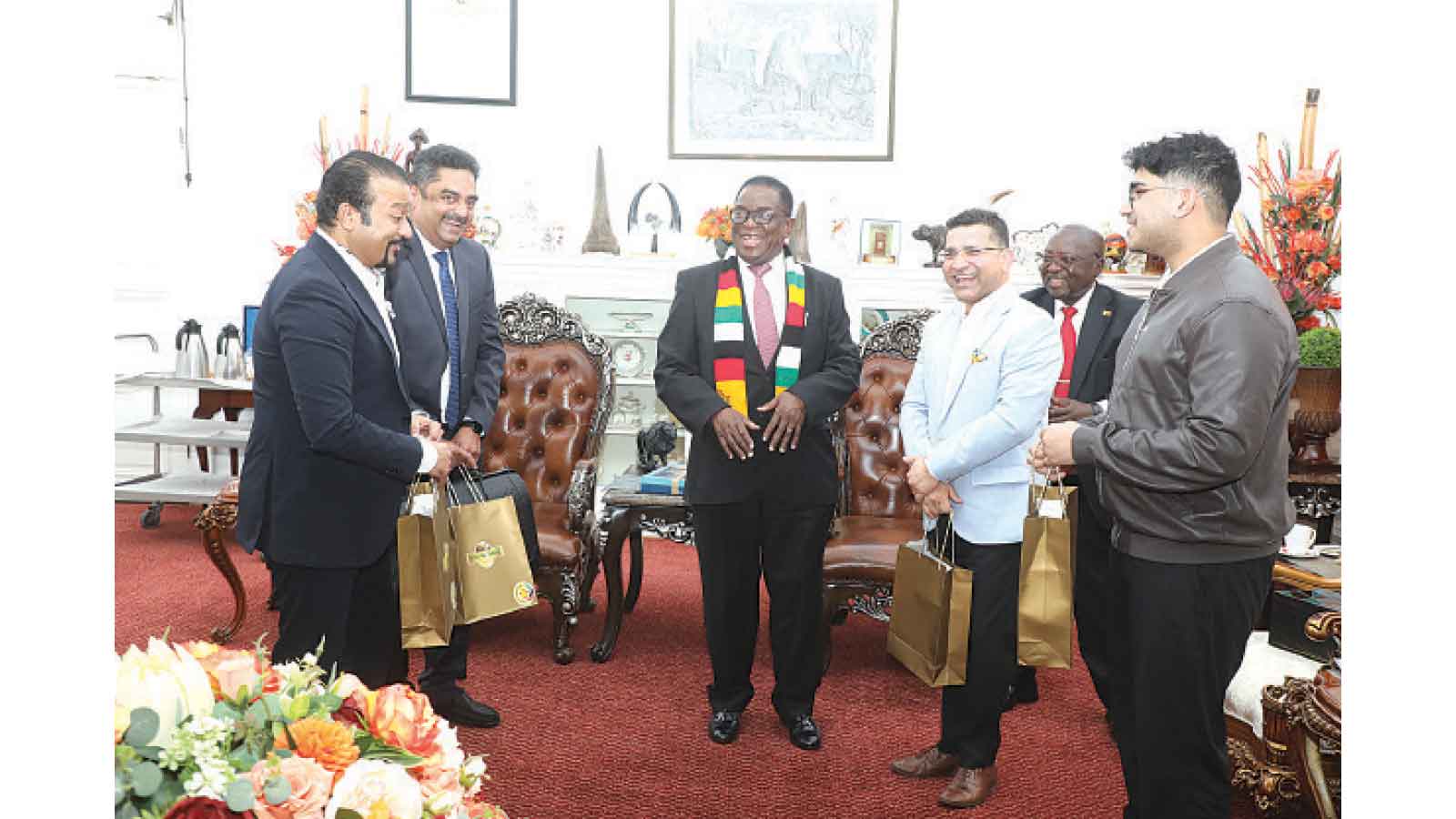
Debra Matabvu-Senior Reporter
PRESIDENT Mnangagwa yesterday met a high-level delegation from Fujairah in the United Arab Emirates at State House in Harare, with discussions focusing on the digitalisation of Zimbabwe’s aviation and border management systems as the country accelerates its modernisation drive.
The proposed programme is expected to strengthen aviation and border security while improving efficiency in immigration processes and supporting growth in sectors such as tourism, hospitality and mining.
The initiative is also expected to create opportunities for young Zimbabweans through skills development and employment linked to digital transformation.
The Fujairah delegation was led by Engineer Shenbaga Nathan (B.S. Nath), who said the discussions centred on supporting Zimbabwe’s digitalisation agenda through the deployment of modern technologies in key sectors.
“We discussed the implementation of a digitisation project for the Government of Zimbabwe in terms of how we can improve aviation security and border security and basically take the Zimbabwe Government and be a part of the digital transformation journey,” he said.
“We have experience in implementing such solutions in other parts of the world and we would like to carry this experience and be a part of the transformation journey of Zimbabwe.”
Eng Nathan said the proposed project would contribute to enhanced security systems and facilitate smoother movement of people and goods across Zimbabwe’s borders.
He said the initiative was also intended to deepen the already strong bilateral relations between Zimbabwe and the UAE.
“Zimbabwe is a very important country. There has been an excellent bilateral relationship between these two countries.
“We would like to expand this further and see how we can play a part in enhancing border security, improving the immigration process, and contributing to the mining industry.
“It is all about digitisation, and how digitisation can help the Government of Zimbabwe for security, for improving tourism, for getting more people coming in, and basically improving the employment opportunities for the youth of Zimbabwe.”
Eng Nathan said discussions between the two countries would also extend to other sectors of the economy beyond digitalisation.
The UAE has emerged as one of Zimbabwe’s most significant economic and trading partners in recent years, particularly in the mining sector.
Trade between the two countries has grown substantially, with the UAE becoming one of Zimbabwe’s leading export destinations, largely driven by gold exports.
Several UAE-based companies have also expressed interest in investment opportunities in mining, infrastructure, energy, tourism and agriculture.
Relations between Harare and Abu Dhabi have continued to strengthen under the Second Republic’s engagement and re-engagement policy, which seeks to attract foreign direct investment and enhance economic cooperation with strategic international partners.
President Mnangagwa’s visit to Dubai earlier this year for the World Governments Summit further consolidated ties between the two countries.
During the summit, the President held bilateral meetings with political and business leaders and used the platform to market Zimbabwe as a prime investment destination.
Zimbabwe’s digitalisation programme is a key component of the country’s broader economic transformation agenda under Vision 2030 and the National Development Strategy 2 (NDS2), which identifies information and communication technologies as critical enablers of economic growth, improved public service delivery and enhanced competitiveness.
Since the advent of the Second Republic, Zimbabwe has witnessed growing investor interest from the Middle East and other regions, with investors targeting opportunities in mining, agriculture, manufacturing, tourism, infrastructure development and renewable energy.
The latest engagement with the Fujairah delegation is expected to further strengthen cooperation between Zimbabwe and the UAE while supporting the country’s efforts to modernise critical national systems and attract increased investment.