

 Online Reporter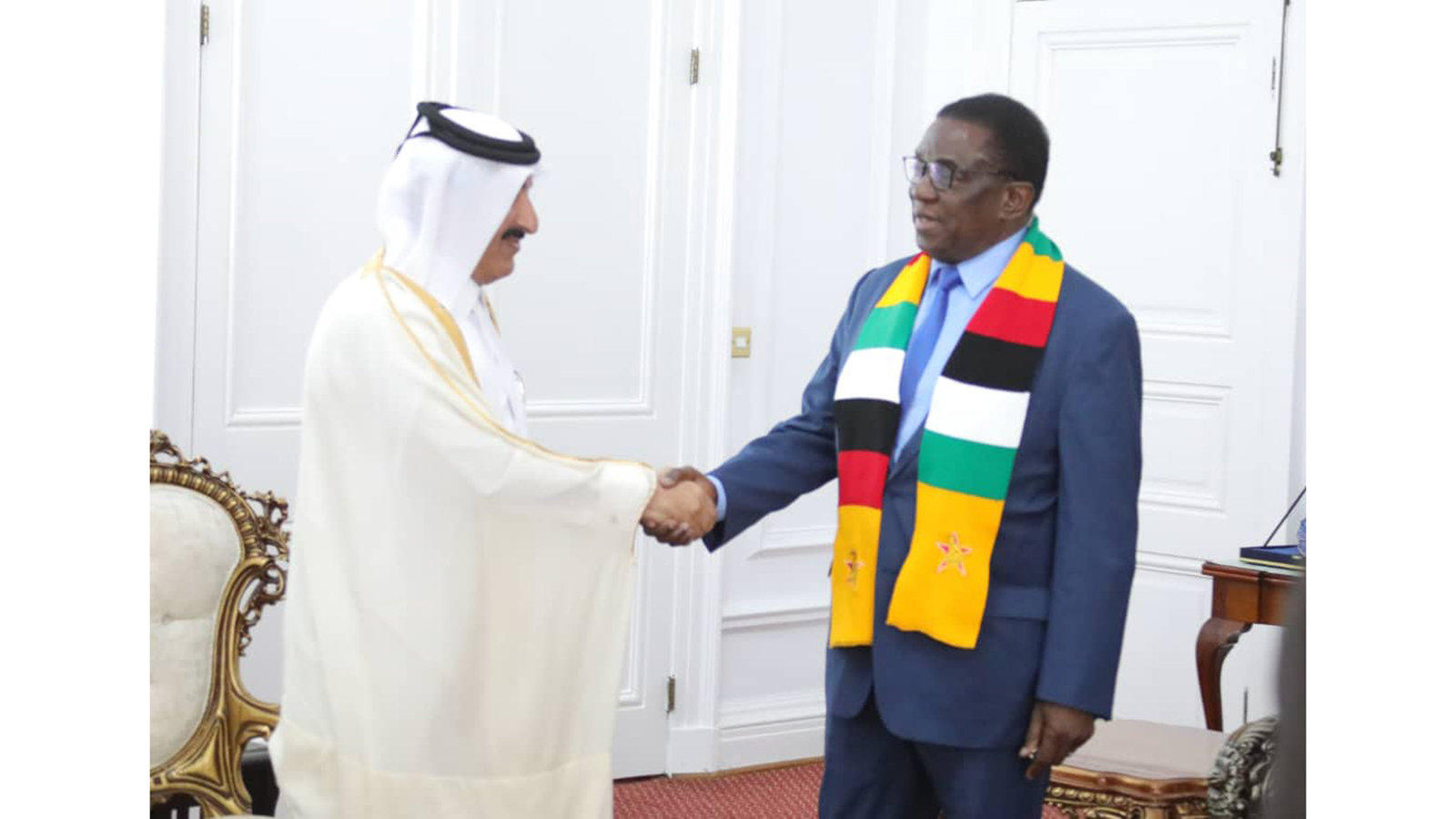
Zvamaida Murwira
Senior Reporter
President Mnangagwa has this morning met a Qatar investment delegation that is led by His Highness Sheik Mansour Bin Jabor Bin Jassim Al Thani at State House in Harare.
The delegation is exploring possible areas of cooperation in various sectors of the economy.
Finance, Economic Development and Investment Promotion Minister, Professor Mthuli Ncube; Industry and Commerce Minister Mangaliso Ndlovu and Attorney General Mrs Virginia Mabhiza attended the meeting.
Mutapa Investment Fund Chief Executive Officer, Dr John Mangudya, and Permanent Secretary in the Ministry of Foreign Affairs and International Trade, Mr Albert Chimbindi, also attended.
Formerly Sovereign Wealth Fund, Mutapa Investment Fund is a State-owned fund established to manage the country’s strategic investments for sustainable economic growth.
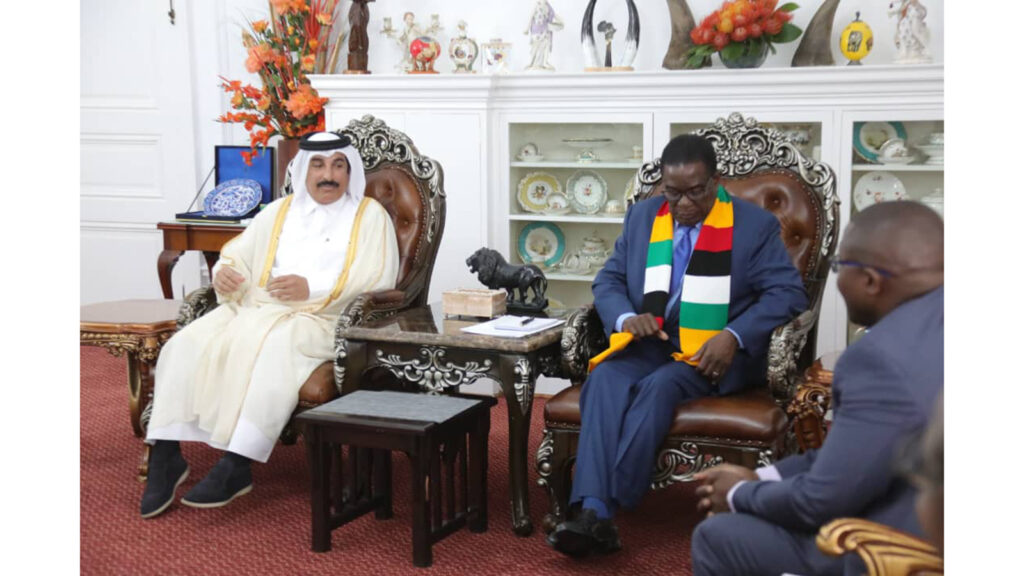
The meeting is part of efforts by the Second Republic to pursue diplomatic, economic and strategic cooperation between Zimbabwe and the oil-rich Qatar.
The Sheik leading the business delegation is a member of the ruling family of the State of Qatar.
Their visit will formalise partnerships and initiate key and strategic investment across priority sectors.


Genuine investors, real development. President Mnangagwa’s recent meeting with Qatar investors highlights the Second Republic’s ongoing commitment to its “Zimbabwe is Open for Business” mantra, even in the face of persistent negative media coverage at international stage, governance issues, and economic challenges in other sectors of the economy. By maintaining a focus on economic diplomacy, the government has worked to attract foreign investment through streamlined processes, such as those facilitated by the Zimbabwe Investment and Development Agency, which simplifies approvals and encourages investor confidence. This engagement with Qatar, a country known for its strategic global investments, could pave the way for meaningful collaborations in critical sectors like energy, agriculture, infrastructure, or manufacturing. Such partnerships have the potential to create the much needed jobs, boost export revenues, and support Zimbabwe’s broader economic goals under Vision 2030, which aims for an upper-middle-income economy. Rather than getting bogged down by external criticism, the Second Republic’s approach emphasizes practical steps to secure deals that could benefit both Zimbabwe and its international partners, reflecting a strategy of prioritizing tangible outcomes over addressing negative narratives.