Online Reporter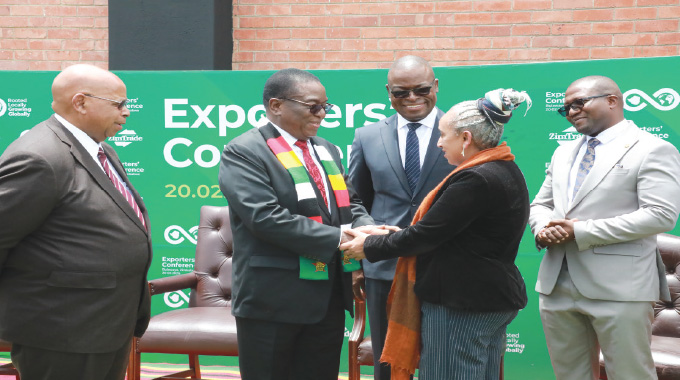
Nqobile Bhebhe, [email protected]
PRESIDENT Mnangagwa has directed established exporters and corporates to take the lead in mentoring, integrating and supporting young people across export value chains as Zimbabwe accelerates efforts to build a diversified and competitive export-driven economy.
Officiating at ZimTrade’s Annual Exporters Conference and Awards in Bulawayo yesterday, President Mnangagwa said delivering an export-led growth trajectory depends on the deliberate inclusion of young entrepreneurs in production, innovation and digital trade.
“I would like to specifically address the future of our nation, the youth, more so, as we commemorate the National Youth Day tomorrow (today) the 21st of February, in Mashonaland East Province,” he said.
He acknowledged progress made by young Zimbabweans in various sectors, but urged the next generation to take a more active role in producing, innovating and engaging in digital trade focused on value-added exports.
“While notable strides are being made by our youth in all sectors of the economy, I call upon the younger entrepreneurs to be producers, innovators and digital traders with focus on the export of value-added Zimbabwean goods and services.
“Individually and collectively, you have a duty to be more active participants as drivers of the industrialisation, modernisation and economic growth agenda.
“I urge established exporters and corporates to help mentor, integrate and support youth participation across export value chains. Together, in unity, let us translate the ongoing economic reforms into shipments, partnerships into premium prices and strategy into shared prosperity.”
The annual Youth Day holiday honours the legacy of the late former President Robert Gabriel Mugabe, born on February 21, 1924, and coincides with the rollout of the National Youth Empowerment Strategy (2026–2030), launched by President Mnangagwa last year to expand youth participation in the economic, digital and social spheres.
President Mnangagwa will preside over this year’s National Youth Day commemorations, themed “Youth Agenda for Transformation”. More than 30 000 youths are expected to attend, alongside regional youth councils, foreign delegates and representatives from Government, civil society and the private sector. The event will also honour graduates of the Youth Service in Zimbabwe through displays showcasing the 2024 and 2025 cohorts.
The President’s remarks come as Government intensifies implementation of the National Development Strategy 2 (NDS2), which places export diversification, value addition and industrialisation at the heart of economic transformation. He said Zimbabwe is capable of unlocking export potential across every province if stakeholders work collaboratively and with focus.
“Sector by sector, province by province, we all have the capacity to build a value-added, diversified and competitive export economy under National Development Strategy 2. We must shoulder and drive our economic development and transformation agenda. As exporters, continue to play your part, which has positively contributed to the realisation of the overall national economic success, recorded to date. Nyika inovakwa, inotongwa, inonamatirwa nevene vayo / Ilizwe lakhiwa, libuswe, likhulekelwe ngabanikazi balo.”
His message reinforces Government’s push to ensure that young people are not marginal participants but central actors in production, beneficiation and global trade. With Zimbabwe’s youth forming a significant share of the population, the opportunity — and responsibility — to harness innovation, technology and entrepreneurship for export growth has never been greater.
Held under the theme “Rooted Locally, Growing Globally”, the conference brought together exporters, policymakers and development partners to explore ways to expand Zimbabwe’s export footprint and strengthen the competitiveness of locally produced goods and services on the global market.
President Mnangagwa said economic reforms must ultimately deliver tangible trade outcomes that improve livelihoods and drive inclusive prosperity. Against the backdrop of increasingly demanding global markets, he stressed the need for innovation, productivity and collaboration to firmly position Zimbabwean brands on the world stage.