admin
admin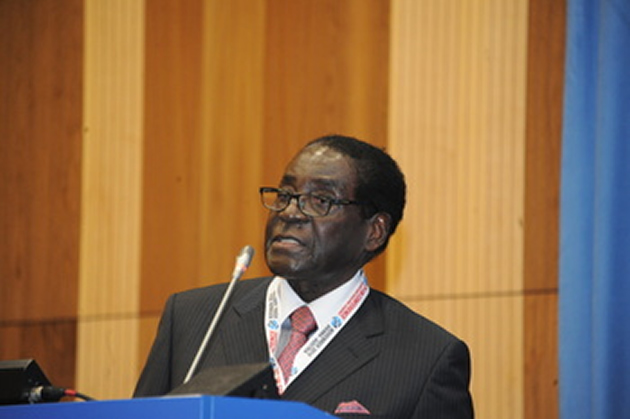
Knocks Zengeni Correspondent
The ascension of President Mugabe, a doyen of Pan-Africanism, to the hot seat of Chairman of the African Union is both riveting and engrossing.
In a way, this development marks a rebirth or revival of real African values such as standing up to imperial manoeuvres and deepening Pan-African unity.
In recent years, some African leaders and states alike have meekly acquiesced to imperial manoeuvring on the international arena.
One of these manoeuvres is the creation of the International Criminal Court (ICC) in 2002.
The controversial ICC began its operations in 2003 when it took over from two UN Tribunals, namely, the UN tribunals for former Yugoslavia and Rwanda.
The ICC was ostensibly formed to hear cases of genocide, war crimes, and crimes against humanity from anywhere in the world.
What makes the ICC controversial is the idea of universal jurisdiction — that the court has the ability to prosecute individuals of any nation. This distinguishes the ICC from the World Court (formerly the International Court of Justice), which has only states as complaints and defendants.
More importantly and unlike the ICC, the World Court hears grievances of one state against another but cannot infringe on state sovereignty in most cases.
Meanwhile, under the ICC, individuals can be prosecuted for their roles in violations of ‘‘human rights’’.
It should be noted that three mechanisms can trigger an ICC trial.
In the first scenario, a state can turn over an individual for trial if the state agrees to do so.
In the second scenario, against the wishes of a state, a special prosecutor at the ICC can begin a trial if the crimes occurred in the territory of a signatory to the ICC.
In the final scenario, the UN Security Council (the organ with the responsibility to maintain international security and peace), can begin proceedings even against individuals from non-signatory states like Zimbabwe, Malaysia and so forth.
It should be noted that no African state is a permanent member of the UN Security Council.
Since the five permanent members of the Security Council, that is, the United States, UK, France, Russia and China, possess the veto power, a ‘‘no’’ vote by any permanent member defeats any resolution.
There are key objections to legitimising the operations of the ICC.
A key argument against the ICC is the problem of abuse by big powers, some of whom are not signatories to the ICC.
The case of the United States is very instructive.
It is striking and ironic that the US has refused to ratify the ICC agreement and demonstrates little interest in doing so.
Furthermore, the US has pressured many ICC member states to sign immunity agreements known as Bilateral Immunity Agreements (BIA) to protect American soldiers serving in those countries from prosecution.
Remember, one of the triggers of an ICC trial is that a special prosecutor at the ICC can begin a trial if the crimes occurred in the territory of a signatory to the ICC, even against the wishes of a state. Thus, it is scarcely surprising that in 2005, after several ICC members refused to sign a BIA, the US Congress voted to cut foreign aid to those states.
A closer inspection of the US refusal to accept the ICC reveals an interesting raison d’etre.
According to Stewart Patrick, a senior fellow at the US think tank, the Council on Foreign Relations, the US has not joined others in accepting the ICC on the grounds that it would subordinate judicial decisions in the US to review by an outside body — as well as place US military troops and officials at risk of politically motivated prosecutions.
So, why should African states subordinate their judicial decisions to an outside body such as the ICC?
Another major argument against the ICC is selectivity of response.
In other words, double standards.
The argument here is that states always apply principles of the ICC selectively, resulting in an inconsistency in policy.
It is therefore not surprising that the ICC began its first trial in 2008, of a militia leader from the Democratic Republic of Congo for killing civilians.
Yet a number of atrocities and war crimes were committed against civilians by a number of Western forces including the US and some of its contractors like Blackwater in Afghanistan and Iraq.
It is no wonder then that Western leaders like George Bush and Tony Blair have not been brought under the ICC trial when it is clear that their decision to invade Iraq in 2003 was illegal under international law.
On the other hand, the ICC in 2009 indicted the sitting Sudanese president, Omar al-Bashir on charges of war crimes and crimes against humanity.
Meanwhile, former Liberian president Charles Taylor was indicted, tried, and incarcerated by the ICC.
The argument here is not that nothing should be done in cases of genocide, war crimes, and crimes against humanity.
The argument is that the ICC mechanism as presently constituted is open to abuse and is being applied selectively. Such instruments like the ICC will also be based on the preferences of the powerful.
The African Union must try its own leaders or individuals who violate human rights rather than abdicate such a role to the whims and caprices of imperial forces as is the case now.
The Rwandan genocide and events in the eastern DRC testify to the need to tackle human rights violators, but this should be done under the direction of the AU.
International platforms such as the ICC have been used by some powerful Western forces as legal covers to cloak the pursuit of traditional national interests. Without a shadow of doubt international regimes or mechanisms such as the ICC serve as instruments of the powerful, justifying the competitive pursuit of national advantage without regard to morality or justice.
The advent of new justifications for intervention into the domestic affairs of sovereign states in the form of tools like ICC reflects a growing sentiment that sovereignty is no longer sacrosanct.
Unsurprisingly, in recent times we have seen renewed debates over the limits of sovereignty.
There is an increasing tendency to treat state sovereignty as something relative. According to this emerging view, which has been most strongly backed by Western countries, a state may lose its presumption of non-intervention in its domestic affairs if it fails to meet fundamental ‘human rights’.
To tackle this emerging viewpoint, the African Union must remind the Western powers that no principle of international law is more important than state sovereignty.
After all, state sovereignty remains, as it has been for many years, the foundation of international order.
However, since the end of the Cold War state sovereignty has come under considerable stress.
Coping with this daunting agenda require a revival of Pan-African values and increased multilateral cooperation among African states.
With President Mugabe at the helm, Africa awaits its salvation from the clutches of imperial forces.
Pulling out from the International Criminal Court in June as indicated by President Mugabe will earnestly trigger the salvation process.
Africa for Africans.
Dr Knocks Tapiwa Zengeni is currently a visiting scholar in Malaysia.



 Online Reporter