Online Reporter
Wallace Ruzvidzo, Harare Bureau
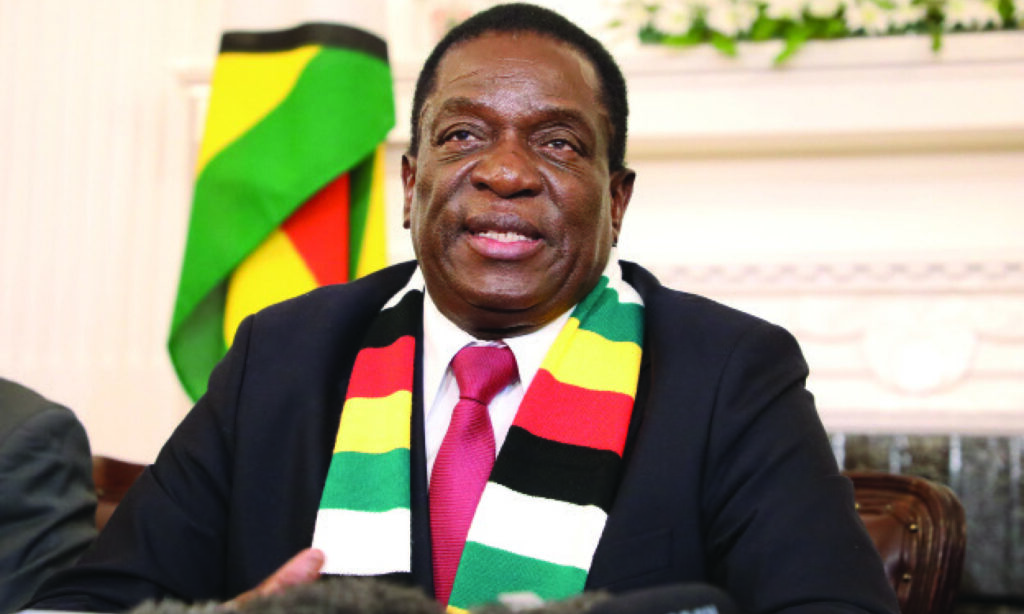
ZIMBABWE remains steadfast in advancing gender equality and women’s empowerment as essential pillars of peace, security and sustainable development, President Mnangagwa has said.
In a speech delivered on his behalf by Foreign Affairs and International Trade Minister Professor Amon Murwira at the United Nations General Assembly High-Level Meeting on the 30th Anniversary of the Fourth World Conference on Women in New York yesterday, the President reaffirmed Zimbabwe’s commitment to the global gender agenda.
“Section 17 of our Constitution mandates full gender balance in society and Government, while Section 80 guarantees the right to equal dignity and opportunities for women in line with the UN Charter,” he said.“Zimbabwe stands in solidarity with the international community in commemorating the 30th anniversary of the Beijing
Declaration and Platform for Action. We commend UN Women and partners for their stewardship of the Beijing plus 30 review process.”
The Fourth World Conference on Women, held in Beijing in 1995, brought together governments from around the globe to adopt the Beijing Declaration — the most comprehensive blueprint for advancing women’s rights.
President Mnangagwa said the landmark document had shaped Zimbabwe’s gender agenda, inspiring progressive legislation, policies and investments that improved the lives of women and girls across all 12 critical areas of concern.
These include women and poverty, education and training, health, violence against women, armed conflict, the economy, power and decision-making, institutional mechanisms, human rights, media, the environment and the girl child.
“While celebrating these achievements, Zimbabwe recognises the need for accelerated action and fully aligns with the Beijing Plus 30 Action Agenda,” he said.
“Zimbabwe’s foreign policy is anchored on the promotion of multilateralism.
“Section 12 subsection 2 of our Constitution mandates participation in international organisations such as the United Nations in pursuit of peace, dignity and prosperity for all humanity.
“In this regard, Zimbabwe advocates for initiatives that foster peace, security and development, including at the core, gender equality.”
Globally, the President noted, the past five years had seen the number of women in Parliament nearly double, while almost 100 discriminatory laws were repealed.
Zimbabwe, he said, was prioritising efforts to eradicate poverty and promote inclusive economic empowerment as part of its Vision 2030 aspirations.
Expanding women’s access to digital technologies was also a key focus, aligning with the Sustainable Development Goals (SDGs).
“Efforts are being underpinned by improved gender data generation, sustainable financing and the mainstreaming of adolescent girls and youth rights,” he added.
“A robust roadmap is accelerating implementation supported by the strengthened coordination mechanism through the Gender Machinery Coordination framework.”
He added that Harare stood ready to work with all partners to ensure that the vision of the Beijing Declaration continues to translate into tangible outcomes for present and future generations.
The high-level commemorative event brought together government representatives, civil society organisations, academics and the private sector to reflect on progress and chart the way forward.
United Nations General Assembly President Annalena Baerbock hailed the courage of those “who fought for every phrase, every word in the Beijing Declaration,” noting that she was only the fifth woman to preside over the UNGA in its 80-year history.
“For so many of us here in this room, we hold positions that when we ourselves were young, seemed unattainable, but are now almost normal for the next generation,” she said.
UN Secretary General António Guterres described the declaration as “the most ambitious global political commitment on women’s rights ever achieved”.
UN Women Executive Director Ms Sima Bahous remarked that considerable progress had been made, albeit at a slow pace.
“Every step forward proved the same truth: gender equality works,” she said.“But progress has not been fast enough.”