daniel chigunwe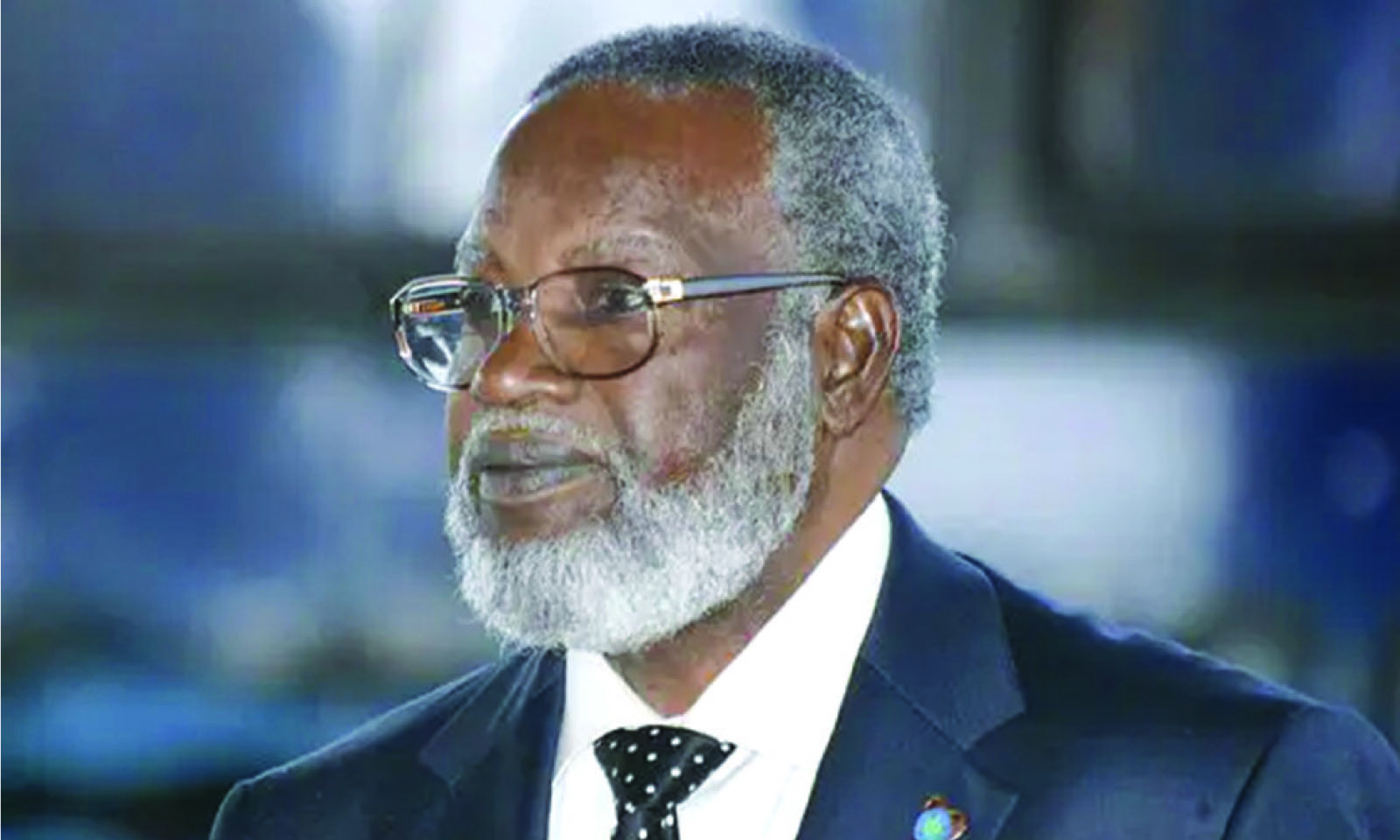
Ambassador Christopher Mutsvangwa
Africa began its continental decline from the time Europe took the lead in the accumulation of capital and emergency of the industrial revolution.
A dark cloud of large scale trans-Atlantic slavery inexorably led to imperial wars of colonial conquest, settler encroachment and the attendant vices of racism and Apartheid.
Even then by dint of the sheer population numbers and their intrinsic organisational stamina spared the Mother Continent of the extermination fate that visited Native Americans (Red Indians) and Native Austral-Asian (Aborigines).
There was thus an inherent bank of energy burst reserved for a resumption of the fight against marauding imperial European occupiers baptised by the 1884 Berlin Conference.
Time did indeed income. Ever prone to internecine wars, competing European powers repeatedly plunged into horrific and debilitating wars.
The Second War was their last act of folly. Whereupon oppressed people from the Global South saw their chance.
A new socio-political consciousness took hold riding upon their numbers and organisation.
Post WWII resurgent and rising African nationalism did not take long to shirk off imperial bondage in fragile European colonies.
Southern Africa proved a different ball game. A sizable European settler population had entrenched itself taking full advantage of racialised allocation of capital.
They invested in strong state apparatus designed to cow the militarily subjugated African majorities in perpetual submission and perpetual servitude.
It quickly dawned upon the oppressed masses that which was lost by force of arms could only be recovered by an offsetting military showdown.
One by one, the subregional national liberation movements embraced the root of the armed struggle as the potent weapon to restore lost freedom, usurped sovereignty and denied democracy.
In South Africa, the ANC charted the course of this new found militancy. Nelson Mandela and Oliver Tambo are among the early luminaries in the restoration of African military virility to confront the well succoured Apartheid militarist state.
ZAPU’s Joshua Nkomo and James Chikerema, as well as ZANU’s Ndabaningi Sithole, Robert Mugabe and Herbert Chitepo took a similar stance against the settler racist regime of Rhodesia’s Ian Smith.
In Mozambique there was FRELIMO’s Eduardo Mondlane and Samora Machel confronting incongruously belligerence of expedition army imperial Portugal.
Sister colony Angola had Agostino Neto and the MPLA.
Namibia, a leased sub-colony of the settler Apartheid South African state gave issue Sam Nujoma and his SWAPO.
Not to forget Amilcar Cabral and his PAIGC in Guinea Bissau and Cape Verde.
The venerable Julius Nyerere of newly independent Tanzania offered indomitable sanctuary to the fledgling new armies that were determined to address and redress the hitherto African military deficit.
In twin collaboration with Kenneth Kaunda of Zambia, they both set out about this noble task under the aegis of the Africa Union.
An Africa Liberation Committee was instituted to marshal military and material support from the sympathetic geo-political blocs of the Union of Soviet Socialist Republic, China, Warsaw Pact socialist nations, Cuba, North Korea and whoever.
There was a populist resonance by the oppressed majorities. The initial trickle of intrepid recruits would eventually morph into thousands avalanche of youths trooping to Tanzania and Zambia.
The new military potency drew first blood in 1974 with the defeat of the farcist Imperial army of Portugal.
This galvanized even further mobilisation into the ranks of the remnant national liberation movements.
Concurrently, the oppressed masses garnered a new defiance and assured confidence of the inevitability of victory.
The 1976 the Soweto Student Uprising was emblematic of the new mood.
Telling blows of the epic battles of Mavonde and Mapai brought to heel Ian Smith.
Britain and its allies swung into action. They strove to stave off military disaster facing their imperial cat’s paw Rhodesian Army. The Lancaster House Armstice of 1979 led to freedom, independence and democracy for Zimbabwe.
In Angola, the beleaguered Apartheid South African army persisted in the folly of aggression aided by a compromised UNITA.
Timely intervention by Fidel Castro’s conventional Cuban Forces thwarted the South African aggressors.
The battle of 1987-8 Kuito Cunavale broke the back of the Apartheid army as FAPLA, SWAPO and ANC forces backstopped by Cuba turned the military tide.
The scared post imperial NATO bloc had no option but to accept the dusk of imperial minority settler Apartheid rule.
As of 1989, the United Nations brokered Peace Process opened the highway to independence for Namibia.
But Apartheid landmines still tried to stem the global push for peace, freedom and democracy for Namibia.
The instrument of evil manifested itself through a dark hand of Koevoet. This was special forces taking from Rhodesian Selous Scouts. It was commanded by Hans Dreyer, a killer of genocidal persuasion.
As the Peace Process unfolded, he launched a last gasp military effort to defeat peace-inclined SWAPO forces.
The South African government and some furtively sympathetic western nations joined the Koevoet bandwagon to try to frustrate and upend the Peace Process.
An alert Harare was not going to let the Apartheid racists get away with murders and massacres. A major diplomatic offensive at the United Nations in New York was launched to thwart the forces of evil.
Dr Stan Mudenge masterminded the diplomatic push in solid defence of SWAPO.
I was in his team. To add potency, I was deployed to Windhoek to deal with the unfolding scenarios. We worked under the auspices of the Frontline States Observer Mission duly accredited to Pretoria.
These efforts took traction when we succeeded to split the then West Germany from those western nations that were prone to geopolitical malfeasance. The goodwill from Bonn, underpinned by its deep pockets proved a boon to Frontline State Diplomacy in Windhoek.
The UN Peace Process was saved.
Harare then re-directed it’s efforts to ground work in Windhoek to make sure SWAPO would harvest deserved victory.
A lot of drive went into coalescing all progressive minded Namibians into a solid electoral front. This was all done with the blessing and guidance of President Sam Nujoma of SWAPO.
President Robert Mugabe concurrently turned to the actual mechanics and processes of elections drawing upon ZANU PF electoral victory in 1979.
He instructed Cde Emmerson Mnangagwa, his ‘fail-safe’ point man to organise a seminar in Harare. Its purpose was to impart electioneering techniques to the home-return SWAPO Campaign Team led by Dr Hage Geingob, the SWAPO electoral work horse.
I was flown in from Windhoek to Harare for this seminar. I had to provide focus on the ground realities and winning strategies.
I was well prepared. I had wise and deep counsel of Namibian fractious politics from Godwin Matatu, the venerated Zimbabwean reporter long based in London.
All said, Harare’s politico-diplomatic initiatives on Namibia were amply rewarded by a solid SWAPO victory in 1989. And Namibia joined the comity of nations as a free sovereign and democratic nation.
President Nujoma never forgot the timely and vigorous support of Zimbabwe as Namibian dusk turned to dawn.
It is this context that explains the bush whacking of war mongering Tony Blair by Sam Nujoma at the Sandton Convention Centre.
“We here in Southern Africa have one big problem created by the British. The honourable Tony Blair is here and he creates the situation in Zimbabwe”
Exposed, the humiliated Tony Blair had to leave the deliberations of the Summit on Sustainable Development in ignominy and shame.
SADC, a subregional bloc has one unique virtue of a ‘shared political soul’ among bonded neighbours. This soul is begot from fighting together in the trenches by the various national liberation movements.
Sam Nujoma is the last to go from that doyen of African luminaries charting the African Renaissance.


 Online Reporter