Online Reporter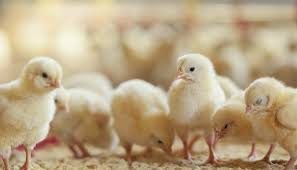
Theseus Shambare
Features Writer
WHEN 33-year-old Talent Sibanda received her first batch of 10 indigenous chicks under the Presidential Poultry Scheme in October last year, she hoped the birds would at least help her buy vegetables or cooking oil during a difficult farming season.
What she did not expect was that, barely a year later, she would be standing before her neighbours in Goromonzi, Mashonaland East Province, handing over chicks of her own — becoming a benefactor in a community-wide chain of empowerment.
“Last year, I was the one being helped,” she said, her hands trembling slightly as she passed a small brown box of three-month-old chicks to Vennah Munyaradzi.
“Today, I am helping someone else. I never thought life would turn like this.”
Her journey from beneficiary to benefactor was echoed by more than 120 villagers who gathered on Wednesday for the second round of handovers under the Presidential Indigenous Poultry Pass-On Scheme.
A total of 1 200 four-week-old Sasol-type improved indigenous chicks — hardy, fast-growing free-range birds known for their heat tolerance and ability to thrive under low-input rural conditions — were distributed to 120 farmers.
The programme is quietly transforming rural livelihoods at a time when drought and climate change have made small livestock one of the most reliable income buffers for households.
Indigenous poultry is increasingly becoming the backbone of resilience farming.
Unlike commercial breeds that demand intensive feed and highly controlled environments, these chickens thrive under harsh weather, require minimal water and reproduce quickly, ideal for farmers facing erratic rainfall and rising temperatures.
Last year’s prolonged dry spell, which ZimStat estimates reduced cereal harvests by over 40 percent in some districts, alongside Zimbabwe Livelihoods Assessment Committee (ZIMLAC) reports showing up to 2,7 million people requiring food assistance, left many Goromonzi households without maize or horticultural income.
In that context, poultry has emerged as a lifeline, providing eggs for nutrition, manure for fields and quick cash for school fees and other pressing needs.
The scheme has also become an unexpected frontline in the fight against Gender-Based Violence, especially economic abuse, the silent form of violence that restricts women’s access to income or resources.
Local social workers and police victim-friendly units say economic stress remains one of the leading triggers of domestic disputes and women without independent income remain most vulnerable.
Programmes that give women control over productive assets, such as poultry, have been linked to improved household decision-making, reduced tension over finances and greater bargaining power for women within families.
District stakeholders said the timing of the programme, coinciding with the ongoing 16 Days of Activism Against Gender-Based Violence, reinforces a national push to link economic empowerment with GBV prevention.
Goromonzi District Development Coordinator, Mrs Prisca Dube, said the poultry scheme is quietly reducing the risk of domestic violence by restoring financial dignity to women.
“Gender-based violence has been our challenge, and it takes collective effort to tackle it, including inclusive empowerment programmes. When a woman is economically active, she is safer,” she said.
Goromonzi’s challenges reflect a wider national crisis, where GBV remains pervasive — with roughly one in three Zimbabwean women aged 15 to 49 having experienced physical violence since age 15, and nearly 70 percent reporting emotional, economic, physical, or sexual abuse at least once in their lifetime.
Beneficiaries described how a selling cycle of birds every three months has allowed them to cushion against drought-related losses, buy groceries, pay school fees and cover medical bills without depending wholly on spouses or extended families.
For many, that cushion has also translated into improved confidence and better negotiating space within households.
While men also participate, most beneficiaries are women, especially widows, single mothers, and elderly caregivers.
But men are also seeing the value.
Tawanda Majuru of Majuru Village said poultry helped him recover from a failed cropping season.
“I lost almost everything when the rains failed,” he said. “But these chickens kept us going. They are small, but they save a family.”
Chain of empowerment takes shape
Every household that receives indigenous birds must pass on a portion of their first hatch to another family.
The result is a community-centred support system turning beneficiaries into contributors.
Officiating at the event, Lands, Agriculture, Fisheries, Water and Rural Development Permanent Secretary, Professor Obert Jiri, said the pass-on concept captures “the true spirit of Vision 2030 — building empowered communities that uplift one another.”
“What is happening here is not just poultry distribution,” he said. “It is a social and economic chain reaction. Rural development succeeds when people are able to receive, multiply and then share. That is how no village is left behind.”
Lives transformed, dignity restored
For many women in Goromonzi, the scheme has become more than an agricultural intervention.
It is a pathway to dignity, financial stability, and safer households.
For Sarudzayi Chibamu, the chicks marked her first real income-generating project.
“When I got my chicks, I didn’t even know how to build a fowl run,” she recalled.
Today she keeps more than 200 birds and sells eggs to meet daily household needs.
“Now I can also give chicks to another family,” she said with pride.
“It feels good to be counted on.”
For Mary Maponde of Tamuka Village, the scheme became a cooperative engine.
A group of 37 farmers began with the same batch.
“It worked like a revolving fund, a mukando,” she said. “Whenever we went to the hatchery, we shared.
“Eventually, each member built up to at least 150 birds. The rest we sold to pay school fees and maintain our fowl runs.”
Their egg-selling initiative generated US$1 920, which they channelled into expanding their Pfumvudza/Intwasa plots — showing how small livestock income strengthens climate-smart agriculture.
At 72, Gogo Mashanganyika found renewed purpose.
“I can’t do much in the fields anymore,” she said. “But chickens — I can manage. And now I am passing chicks to a young widow in my village. It means a lot.”
Climate resilience through indigenous poultry
With erratic rainfall and recurring droughts, indigenous poultry has become a vital climate-resilient venture. University of Zimbabwe lecturer and climate change expert, Dr Walter Svinurai, said indigenous breeds offer a practical buffer against climate shocks.
“These birds tolerate heat better, survive on low-input systems, and thrive where commercial breeds struggle,” he said.
“As rainfall patterns become more unpredictable, small livestock like indigenous chickens will be essential for food security and quick income recovery.”
He added that projections by the Intergovernmental Panel on Climate Change (IPCC) and the Climate Risk and Early Warning Systems (CREWS) modelling consortium show that southern Africa is expected to warm by between 2,9°C and 4,1°C by the end of the century under high-emissions scenarios, with rainfall reliability declining by 10–20 percent across many summer-rainfall zones.
Studies such as the 2023 University of Pretoria research on resettlement farms in Zvimba East illustrate that women’s livelihoods under climate stress are deeply shaped by gender inequalities, and that livelihood diversification, including small livestock, emerges as a critical adaptive strategy that improves resilience. Extension officers support the programme with training in disease control, low-cost feeding, and heat-adaptive poultry housing. The Zimbabwe Free Range Poultry Association (ZFRPA) is also playing a crucial role.
Chief executive officer, Mrs Beauty Jiji, said their free hatchery support has uplifted women, pensioners, and people living with disabilities.
“We offered them free hatchery services and they were consistent,” she said. “Now that many are empowered, we are weaning them while onboarding new farmers.”
Officials note that maintaining long-term sustainability will require continued investment in veterinary services, affordable feed alternatives and monitoring to prevent disease outbreaks as flocks increase.
Economic power, social protection
Goromonzi has recorded high levels of intimate partner violence, with police indicating more than 60 percent of assault cases stem from domestic disputes often linked to financial stress.
Research in rural Zimbabwe by Johanes Belle, Tendai Mapingure, and Solomon Temidayo Owolabi (2024), focused on female-headed households in the drought-prone Chivi District, shows that when women receive training, extension support and livelihood diversification opportunities, they are more likely to adopt adaptive strategies that cushion against climate shocks.
For many women, economic empowerment becomes a protective shield.
Charity Chadonha of Nemhara Village, who looks after three children and seven dependants, said the project gives women both confidence and agency.
“As women, we suffer the most when there is no food,” she said. “This project gives us strength. At home, we are respected more when we also bring something in.”
She is part of a group of 10 farmers who received 100 chicks for collective rearing.
Once each reaches 150 birds, they will pass on to the next family.
Hilton Chikwature, Ward 16 poultry project chairman from Mudzudzu Village, was among the men actively participating, a sign of shifting community attitudes toward inclusive empowerment.
Growing an industry
Prof Jiri said the Presidential Poultry Scheme has expanded rapidly, with 1,8 million indigenous chicks distributed nationwide and decentralised hatcheries operating in every province.
He added that more villagers are venturing into hatchery enterprises, creating potential for downstream industries such as restaurants, egg suppliers and free-range meat processors.
“The President gave the seed. Our communities are multiplying it,” he said.
A future passed on
As the sun dipped behind the Goromonzi hills, the chatter of birds was drowned by ululations as another crate of chicks changed hands.
This was not charity. It was a transformation — shared, multiplied, and sustained. In this community, empowerment is no longer something delivered from above. It is something passed on.