Online Reporter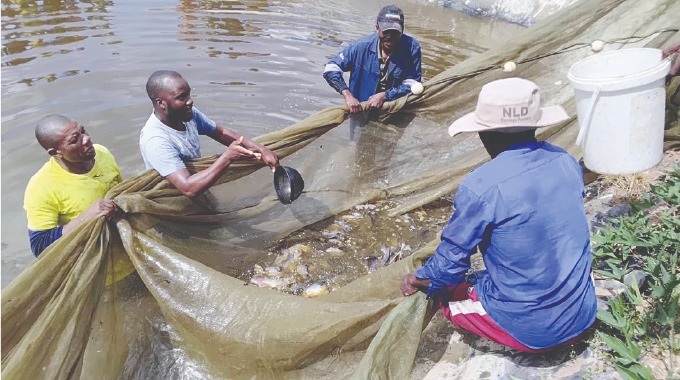
Theseus Shambare, Features Writer
THE atmosphere was electric, with a sense of triumph and renewal seething through.
The sharp aroma of fishpond mud and fresh tilapia stood in stark contrast to the despair that had once enveloped Chinorumba High School in Zaka, Masvingo Province.
It was around midday.
Students, their hands slick with scales, eagerly pulled nets filled with shimmering fish, a powerful emblem of their defiant resurgence from rural adversity.
This day was not merely about harvesting fish; it was a resurrection.
Just seven months ago, the school’s fishponds were empty, mirroring the bleak condition of an institution grappling with challenges.
Theft of promising Nile breams under the cover of darkness had left a devastating void in their budding Presidential Fish4Schools project.
Located in a semi-arid region in Masvingo Province, this fish initiative came as a blessing to the community.
Scarcity of resources, stagnation in academics and a sense of forgotten potential, that usually plagues rural schools across Zimbabwe, had engulfed the school.
“It felt like we were being punished for trying,” recalled Presley Bvakacha (16), a student whose initial enthusiasm had been dampened by the theft.
“But we could not let them win. These fish were more than just food; they were our future. We thank the President for trusting and believing in us and reissuing us with more fingerlings to restart the project,” he said.
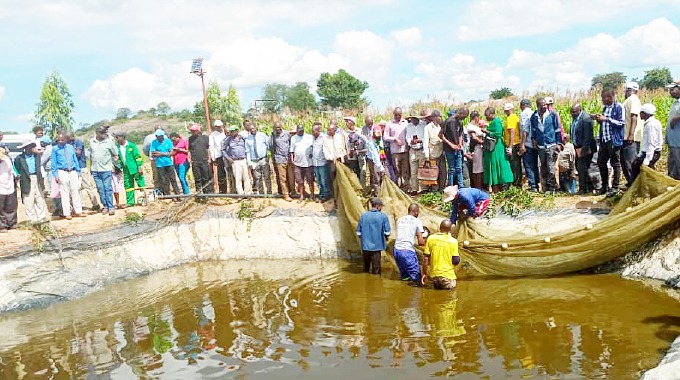
Deputy Minister of Lands, Agriculture, Fisheries, Water, and Rural Development, Davis Marapira, recently joined the school in witnessing the fruits of the Presidential Fish project during the first harvest at Chinorumba High School.
“Resilience is the lesson learnt and passed by this school. Against the odds, they prevailed and we are here to testify,” said Deputy Minister Marapira.
Zimbabwe, he said, has since moved away from theoretical education.
“We now focus on the practical aspects. Zimbabwe is an agro-based economy and we need to cultivate the culture from the school level,” he said, watching as students expertly sorted their harvest.
The Presidential Community Fisheries Scheme, specifically the Fish4Schools project has seen 37 500 tilapia fingerlings distributed to 17 School Business Units since the start of fish stocking season in August last year.
For Chinorumba High School, the SBU had been the catalyst for great transformation.
“The Chinorumba School Business Unit (SBU) received 2 000 tilapia fingerlings from the President, which have thrived despite challenges,” said Deputy Director of the Department of Fisheries and Aquaculture Resources Production (FARD), Mr Admire Mbundure.

The school’s two fishponds, now a vibrant hub of activity, yielded over 100kg of tilapia during the inaugural harvest.
The harvest ceremony, attended by community members and officials, saw 150kg of fish sold at US$4 per kg, with the proceeds fuelling further development.
“The introduction of entrepreneurship projects in schools has been a game-changer,” said the acting schools inspector for Zaka District, Mr David Fusirai, highlighting the alignment of the project with the heritage-based curriculum.
“We have seen significant improvements in attendance, reduced dropouts and enhanced quality of education.”
In July 2023, President Mnangagwa launched a one-hectare School Business Unit (SBU) at the school equipped with a solar-powered borehole, a drip irrigation system and two fish ponds stocked with 2 000 tilapia fingerlings.
“This was a turning point for our school. These innovative Government initiatives have paved the way for a sustainable source of income for the school, enabling it to invest in vital education resources,” said Mr Fusirai.
“One outcome of this initiative is access to potable water, a basic necessity that is often taken for granted.”
With a reliable water supply, he said, beyond fish, Chinorumba’s SBU was a testament to their self-sufficiency.
Over 1 600 heads of cabbage, 1 000 tomato plants, and a half-hectare of green mealies thrived, providing a steady income of approximately US$2 000 per month.
This revenue was reinvested, not just into the school’s infrastructure, but into the students’ futures.
“The income generated from the business unit has had a transformative effect on the school. It has allowed us to purchase stationery, computers and other essentials to ensure that students have the necessary tools for their educational journey.”
Mr Fusirai said before the establishment of the SBU, teachers used to travel long distances in search of potable water, leading to an exodus of competent teachers to better-equipped schools.
Additionally, funds from the unit have been utilised to construct standard water system toilets, thereby creating a clean and conducive environment for learning.
“This investment in infrastructure has had a direct impact on student and teacher retention as the improved facilities attract and retain qualified teachers, leading to a remarkable 100 percent teacher retention rate,” explained Mr Fusirai.
The positive outcomes of these Government initiatives extend beyond material resources.
Mr Fusirai said the continuity of learning had been significantly enhanced as students no longer experience interruptions due to the availability of the necessary resources required for learning.
“With a stable learning environment and improved infrastructure, students can fully engage in their studies and maximise their potential,” he said.
While good results have been a tradition, Mr Fusirai told Zimpapers Features that the recent success was deeply rooted in the Government’s multi-faceted approach to rural development.
In a district with 45 schools, Chinorumba High School proudly claims the title of the best high school and the envy of many learners.
It’s most extraordinary achievements lie in its consistent 100 percent pass rate at Advanced Level, a feat usually achieved by uptown schools.
For the past two years, at least 22 students scored nine points and above.
In 2023, two students from this humble school scored 19 points, one in Science subjects and the other in arts subjects.
Mr Fusirai highlighted that the school garden has become an invaluable asset for practical learning experiences.
“Our daily routine now includes a range of tasks essential for fish health,” said Tariro Magwizi, another student.
“We have learned to clean the pond, observe the fish, remove any dead ones and ensure the water quality is optimal. These are skills we have gained directly through hands-on experience.”
The project is a real-world laboratory, where students are putting their classroom learning into practice under the guidance of their teachers.
“This approach is practical,” Tariro emphasised. “It does not just teach us about fish; it equips us with valuable skills that will serve us well back home and in the future.”
Mr Taungana Ndoro, the director of communications and advocacy in the Ministry of Primary and Secondary Education, said schools must move away from the old way of education and implement a heritage-based curriculum which promotes practical aspects of life.
“As the ministry, we have said each one of our 10 700 schools should have fresh water facilities within the premises of the school,” he said.
“This is one such example; water is now accessible within the premises of the school. This is the strategy that we are using in all our schools in rural and remote areas. We want them to have fresh and clean water within the premises of the school.”
“What impresses me most is its alignment to our vision where we expect communities to be resilient, see agriculture as business while moving away from depending on donor handouts.
“Today we see an empowered community, an industrialised community, that is the Zimbabwe we want,” he said.
Chinorumba High School has established local markets, with the local community now relying on the school for produce.
The school also sends its produce to Jerera Growth Point where there is a bigger market.
To further broaden their income streams and provide additional learning opportunities, the school is rapidly developing poultry and goat projects.
To ensure the smooth transportation of their growing produce, a school truck has been put on a priority acquisition list.
Chinorumba High’s story is a compelling testament to how Government support and community collaboration can drive positive change.
The SBU has not only elevated academic performance but also created a self-sufficient ecosystem for student development.
By directly addressing the needs of its students and providing vital practical skills, the school has become a beacon of innovation and success in rural Zimbabwe.