admin
admin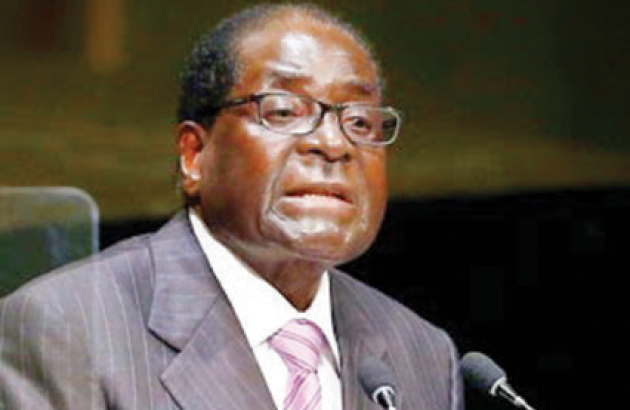
Tendai Mugabe Harare Bureau
President Mugabe concludes his tenure as Sadc chairman next week after a year at the helm of the regional body, which saw it adopting a new economic trajectory underpinned on value addition and mineral beneficiation.
Politically, President Mugabe’s reign managed to contain a number of conflicts threatening regional peace and stability.
In addition, President Mugabe’s stewardship taught Sadc member States to approach world politics as equals.
The Head of State and Government and Commander-in-Chief of the Zimbabwe Defence Forces is expected to hand over the rotational chairmanship to President Seretse Khama Ian Khama of Botswana at a regional summit set for Gaborone, Botswana, next week.
Analysts interviewed by our Harare Bureau, spoke glowingly regarding the way the President steered the Sadc ship.
Former Zimbabwe’s ambassador to China, who is also the Minister for Welfare Services for War Veterans, War Collaborators, Former Political Detainees and Restrictees, Cde Chris Mutsvangwa, lauded President Mugabe’s tenure as Sadc chairman.
“The Sadc chairman was a big, loud diplomatic banner announcing boldly that Zimbabwe and its iconic leader President Mugabe had come out of the woods,” he said.
“His assumption of the Sadc chairmanship sounded the death knell to the regime change agenda and pariah status hounding of Zimbabwe by erstwhile enemies and detractors.
“It also marked a high water mark of that sub-regional solidarity that had its origins in the anti-colonial, anti-racist and anti-apartheid struggles of the Frontline States. The amity of glorious bygone epoch was finding a new expression as Sadc stood up to the perfidy of the post-colonial West.”
Cde Mutsvangwa added: “President Mugabe went on to put a stamp on Africa’s modernisation agenda by successfully forging an industrialisation strategy that vaults the mother continent into an era of catch-up and rapid progress. We finally see African hard work and ingenuity aspire to churn out global class brand products for the world market.”
Harare-based analyst Alexander Rusero said the benefits of President Mugabe’s chairmanship were two-fold.
Rusero said the benefits could be viewed from both the national and regional levels.
“Zimbabwe was topping the Sadc agenda for quite some time, and President Mugabe’s assumption of the Sadc chairmanship ushered in a new diplomatic orientation and that on its own from a foreign policy point of view was a plus for Zimbabwe,” he said.
“During his tenure as Sadc chair, it is important to highlight that President Mugabe was a pacesetter in areas such as industrialisation, resource mobilisation and inclusion of women in key decision-making positions.”
Rusero said at regional level, President Mugabe scored several victories, including containing a potentially explosive crisis in Lesotho and Mozambique.
Another analyst Goodwine Mureriwa said: “President Mugabe’s leadership of the region saw a steady movement towards regional economic integration.
“The Sadc summit held in Zimbabwe on industrialisation recently is a clear indicator of President Mugabe’s advocacy towards self-sustenance in the region.”
“President Mugabe’s push for the withdrawal of Africa from the International Criminal Court of Justice enlightened several African countries that the court is a mere Western tool to meddle in African politics.”
University of Zimbabwe lecturer Professor Charity Manyeruke said during his tenure as Sadc chair, President Mugabe displayed diplomatic leadership of the highest order.
“The way how he dealt with the issue of xenophobic attacks was just excellent,” she said.
“President Mugabe did not allow the issue to go out of hand and that as Sadc chairman was a great achievement because the issue was involving citizens of all Sadc member states and regional peace was at stake.
“Through his reconciliatory stance, President Mugabe in his capacity as Sadc chairman, assisted South Africa to deal with the matter in an amicable manner,” said Prof Manyeruke.



 Online Reporter