

 malvernmugadzikwa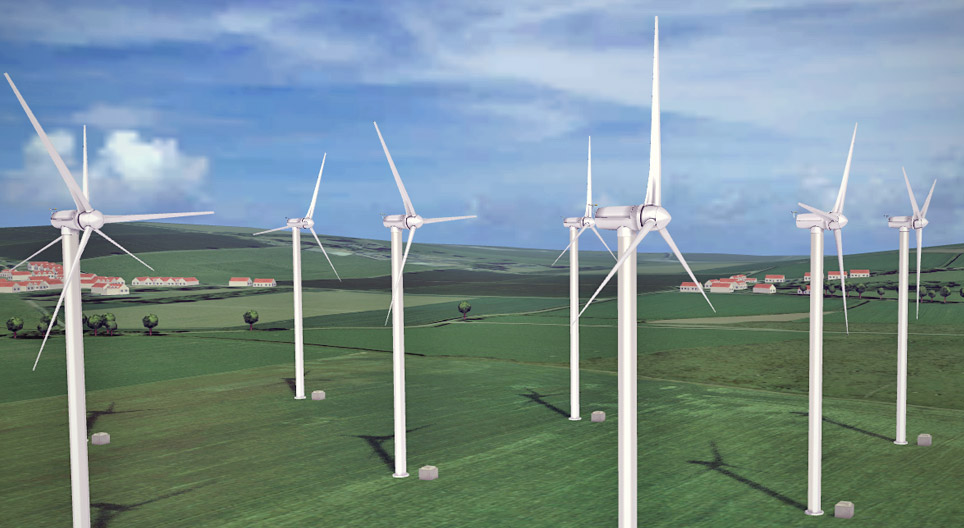
Nqobile Bhebhe
AFRICA GreenCo Group, an energy intermediary, off-taker and service provider, has announced plans to import an initial 20 Megawatts of renewable energy, with intentions to expand imports to 50MW in the first quarter of 2026, depending on demand.
The company is targeting internal generation of 30MW in the second quarter of 2026 to cater for the escalating energy requirements of Zimbabwe’s expanding mining sector.
Africa GreenCo Group via its operating entity, GreenCo Power Services Limited, acts as an intermediary off-taker and service provider, purchasing power from renewable IPPs and selling that electricity to utilities and private sector off-takers, commercial and industrial users and markets of the SAPP.
GreenCo says it will mitigate the risk of purchaser default through an ability to secure alternative buyers or through short-term trading on the SAPP electricity markets.
It notes that its participation in competitive power markets will promote cross-border power transactions and a more dynamic and liquid short-term power market.
At the recently ended 27th edition of Mining, Engineering and Transport Expo (Mine Entra), GreenCo’s director for Zimbabwe, Lion Mashiri, delivered a presentation titled Advancing Beneficiation and Decarbonisation along Africa’s mining value chain.
He noted GreenCo’s critical role in supporting Zimbabwe’s energy needs by importing renewable energy.
He indicated that GreenCo might begin with 20MW of imports available from November 2024, with plans to expand imports to 50MW in Q1 2026, depending on demand.
In a written response, Mashiri said: “The 20MW is earmarked for Zimbabwe. This has not been contracted by any consumer yet. The customer who wishes to have this power has to meet a few technical requirements for easy operation. The customer should be on a dedicated feeder at a voltage level of 66kV or above. However, future supply will be available to customers at voltage levels less than 66kV as well.”
“The initial 20MW will be available till Q1 2026, with an option to renew as GreenCo’s internal generation will be coming online. GreenCo has a pipeline of renewable projects that will be coming online from 2026 going forwards.
“Our grid access agreements, which govern our operations with ZETDC, are currently with ZERA (the regulator) for approval and we are hopeful they will be approved in time for delivery of the power.”
Mashiri noted in his presentation that the country’s peak electricity demand is projected to increase from 1,950 MW in 2022 to 5,177 MW by 2030, driven by rising demand from key sectors such as mining and agriculture.
He pointed out that achieving universal electricity access by 2030 will require significant investments in grid expansion and solar energy.
The annual connection rate will need to jump from 25 000 in 2020 to over 537 000 annually.
The estimated grid network expansion cost by 2030 is US$4.4 billion, with the largest future project being the Batoka Gorge Hydropower Project expected post-2034 completion.
He said private sector investors are urgently needed to finance Zimbabwe’s electricity expansion.
Mashiri stressed the need for mining companies to continue to incorporate renewable energy solutions, particularly solar, into their operations.
“This shift not only reduces carbon emissions but also offers operational efficiency and resilience in the face of grid instability by distributing generation across the grid.”
According to the latest Mining of Industry Prospects for 2025 report findings released on the side-lines of Mine Entra most mining executives indicated that power outages posed challenges to operations.
For instance, ferrochrome producers indicated that they were directed to reduce their power demand from the national grid by 10 megawatts.
“Almost all respondents indicated that power outages were resulting in production stoppages and output loss. Analysis of survey data show that the mining industry is estimated to have lost around US$500 million of potential revenue due to output losses arising from power outages,” reads part of the report.
The report said the mining sector is currently consuming approximately 600 megawatts.
In 2025, survey data shows that the mining industry’s electricity demand is expected to increase by about 18 percent to 700 megawatts while diesel consumption is expected to increase by 12 percent.
Executives underscored the need to prioritise mining companies for available power to minimise production stoppages and output losses.
Large-scale miners have been given up to 2026 to establish their own power generation plants amid projections that sustained economic growth will push demand for power above 3 000 megawatts in two years with mining and smelting taking up the bulk of the extra demand.
Following the establishment of several lithium companies, and the construction of the US$1,5 billion Dinson Iron and Steel Company (Disco) steel plant in Manhize near Mvuma, including other new investments that are high consumers of power, Zimbabwe will need to further boost its energy generation.
The mining sector alone was expected to consume about 2 600MW.
The last few years have seen the Government increasing its attention to boosting power output with the commissioning of Hwange Unit 7 and 8 last year, coming in strongly to inject 600MW, making Hwange Thermal the country’s major supplier of electricity.


 Online Reporter