Online Reporter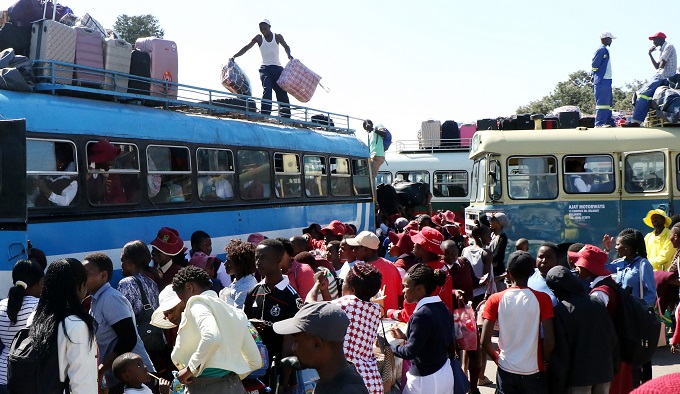
Torerayi Moyo
AS schools open for the third term this week, Zimbabwe’s education sector stands at a defining moment.
Our children are preparing for end-of-year public examinations, but beyond the tests, the broader story is one of transformation.
This year, we rolled out the Heritage-Based Curriculum (HBC), a framework that reshapes education around Zimbabwean identity, practical skills and innovation. The key components of the new curriculum are outlined below.
Primary education now focuses on six core areas: Indigenous Languages, English Language, Science and Technology, Mathematics, Social Science, and Physical Education and Arts.
We now have a two-route secondary system: the academic route, which prepares learners for tertiary education; and the vocational route that focuses on practical trades and skills development.
We have also replaced the continuous assessment learning activities (CALAs).
Learners now complete one project per learning area annually to encourage problem-solving and innovation.
The focus is on learners producing goods and services and solving local problems using local resources
Compulsory subjects at O-Level are now Mathematics, Combined Science and Heritage Studies. The differences from the previous curriculum include reduced overload through fewer learning areas in primary education, stronger emphasis on the Zimbabwean heritage, values and cultural identity, and greater focus on practical skills through school-based projects, unlike the more theoretical CALAs.
Capacitation of teachers
The Ministry of Primary and Secondary Education is prioritising teacher capacity to ensure effective implementation.
Intensive training workshops, mentorship programmes and subject-specific panels are being conducted for professional development.
Updated syllabi and digital resources will be distributed to all schools by the end of 2025; so, by now, every teacher is in sync with the HBC.
There have also been school visits by ministry officials to provide support and ensure compliance, as well as webinars and information-sharing platforms to foster public support for teachers.
Meanwhile, the ministry is engaging the Public Service Commission if there are any additional teachers required.
Hard-hit districts can recruit locally to fill vacancies arising owing to attrition.
Examples include Gokwe North and South, Binga, Bulilima, Mt Darwin, Mwenezi, Nkayi and Hurungwe.
Efforts are also underway to improve infrastructure and provide resources in underserved areas.
Dealing with unsanctioned fees
The ministry has strict measures to prevent overcharging by schools.
For a start, all fees must be approved by the (Permanent) Secretary, having been agreed upon by parents.
Schools must comply with approved structures.
Our enforcement measures include district-level monitoring units to address complaints; penalties include having the school head charged for misconduct, among others; schools must display approved fee breakdowns publicly for parents and guardians, and also display the ZiG account number at the administration block.
PPPs and educational infrastructure
We are collaborating with private partners to build new schools and upgrade facilities in underserved areas.
Several initiatives are being implemented, and these include providing land to private players to construct schools and expediting their registration.
Form One entrance examinations
Form One entrance examinations are outlawed. Offending schools risk deregistration, and private paid-for extra lessons by teachers are prohibited.
Parents are encouraged to report any illegal extra-lesson charges and our command centres established at all levels will address complaints.
Last word
As parents, let us partner with schools, support learners with school-based projects and report fee irregularities. Our learners must embrace the HBC, develop practical skills and take pride in their heritage.
As for our teachers, your commitment is key — use training and resources to inspire learners. The ministry remains dedicated to transforming Zimbabwe’s education system through the HBC, equitable access and strict enforcement of policies.
Together, we can build an education system that honours our heritage while preparing our youth for the future.
Mr Torerayi Moyo is the Minister of Primary and Secondary Education. He was speaking to our reporter Mukudzei Chingwere.