

 Online Reporter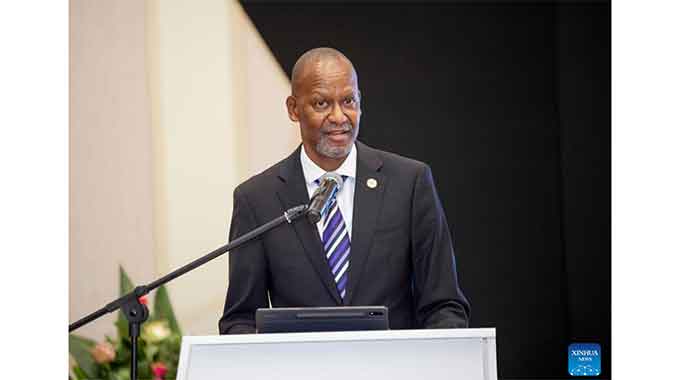
Wallace Ruzvidzo-Herald Reporter
THE African Continental Free Trade Area is a critical resilience strategy and survival instrument for economies in the face of global shocks, and the continent’s private sector must take the lead in driving its implementation, SADC Executive Secretary Mr Elias Magosi has said.
Speaking at a high-level conference in Botswana titled, “Botswana’s Private Sector as an Engine for Growth: Seizing AfCFTA Market Opportunities,” Mr Magosi said global disruptions – including supply chain breakdowns, geopolitical tensions and shifting trade patterns – have eroded Africa’s competitiveness, making intra-African trade more urgent than ever.
“Governments do not do business, the private sector does,” he said, underscoring the need for companies to move beyond policy discussions and actively exploit opportunities created under the AfCFTA framework.
Mr Magosi urged businesses to take advantage of tariff preferences, regulatory reforms and expanded market access offered by the agreement.
In practical terms, this means companies can export goods to other African countries at reduced or zero tariffs, benefit from harmonised customs procedures, and operate within clearer and more predictable trade rules – lowering the cost of doing business across borders.
With 54 signatories and 49 ratifications, the AfCFTA creates a single African market of about 1,3 billion people with a combined GDP of over US$3 trillion, making it the world’s largest free trade area by number of participating countries.
The AfCFTA is one of the flagship projects of the African Union’s Agenda 2063.
It was approved during the 18th Ordinary Session of the Assembly of Heads of State and Government held in Ethiopia in January 2012, which adopted the decision to establish a continental free trade area alongside an Action Plan for Boosting Intra-African Trade.
The agreement seeks to accelerate trade among African countries by progressively eliminating tariffs and non-tariff barriers, promoting industrialisation, strengthening regional value chains and enhancing Africa’s collective bargaining power in global trade negotiations.
By creating a unified continental market, African countries can negotiate as a bloc, thereby strengthening their common voice and expanding policy space in global trade discussions.
In his address, Mr Magosi specifically called on Botswana’s private sector to position itself strategically to supply goods and services across the continent.
He stressed that AfCFTA should not remain a policy aspiration, but must translate into increased production, competitive industries and diversified exports.
According to a communiqué issued by the SADC Secretariat, the forum was attended by high-level participants including the Ambassador of the Federal Republic of Germany to Botswana, Ms Gabriela Bennemann; representatives of the European union Delegation in Botswana; Zambia’s High Commissioner to Botswana, Ms Pamela Chisanga; senior officials from the Government of Botswana; Business Botswana president Mr Neo Nwako; SADC Business Council chairperson Mr Khulekani Mathe; as well as representatives from the African Development Bank, African Export-Import Bank, exporters, manufacturers and development partners.
The conference brought together government officials, financiers, exporters and continental institutions to bridge the gap between policy and implementation.
Discussions focused on building competitive industries, strengthening regional value chains and fostering sustainable businesses capable of competing within the continental market.
The event was supported through the joint SADC-EU-German cooperation project, Cooperation for the Enhancement of SADC Regional Economic Integration (CESARE), implemented by the Deutsche Gesellschaft für Internationale Zusammenarbeit (GIZ).



