Online Reporter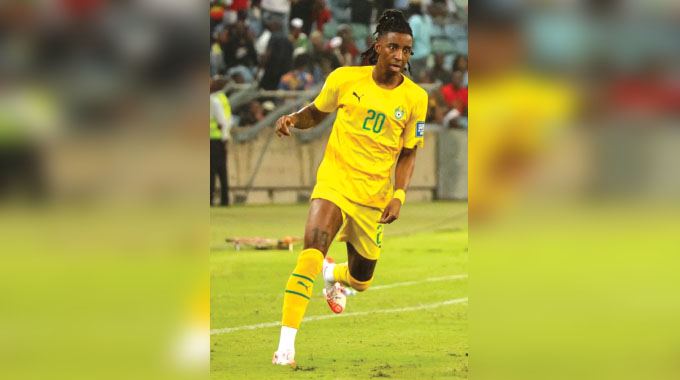
Langton Nyakwenda, Zimpapers Sports Hub
AT 21, Tawanda Chirewa is walking into pre-season with English Premier League side Wolverhampton Wanderers, fresh off a loan spell at Huddersfield.
He is already a Zimbabwe senior international. He plays in front of packed stadiums and signs autographs in two countries.
But here is a thought that slices right to the bone of local football: If Chirewa had grown up in Zimbabwe, would he even be playing in the PSL right now, or still waiting for a 39-year-old to retire?
That’s not just a rhetorical jab. It’s the painful, systemic reality of Zimbabwean football, a country that registers its future, but rarely plays it.
At 14, Awakhiwe Tshalibe dazzled at the Caf Under-15 Schools Tournament in Harare in December 2023. Zimbabwe only claimed bronze, but Tshalibe, El Shaddai Sadomba and Tadiwa Chakuchichi stole hearts with their raw, fearless brilliance.
Today, they are vanishing into football’s forgotten pages.
Chakuchichi, now 16, is at Scottland FC, one of just two Under-19 players registered by the club, and has played only 116 minutes this season. Tshalibe is registered with Chicken Inn but is yet to feature.
They are among the 52 players aged 19 or younger registered with the PSL, part of a policy that mandates each club to register five juniors in its 30-man squad.
But that’s where the commitment ends.
Only 26 of those 52 juniors have played.
Many only saw action for a few minutes: Herentals’ Panashe Kanavheti (18): two minutes. Bikita Minerals’ Royn Nyamono (18): seven minutes. ZPC Kariba’s Edmond Ruwo (19), a rare exception with 1 071 minutes.
Clubs like Chicken Inn are yet to field a single Under-20.
CAPS United, despite registering five juniors, have given them zero game time.
Instead, they signed 34-year-old Congolese striker Chris Mugalu, just two weeks ago.
“The nature of our job is: we are measured by results, sometimes regardless of whom you play,” admitted one PSL coach.
“So, sometimes you go for experienced players, who give you instant results.”
The PSL has become a graveyard of second chances for ageing veterans.
When Saul Chaminuka coached Kwekwe United, he built his team around a quartet of over 30s, Allan Gahadzikwa, Masimba Mambare, Evans Katema and Carlton Munzabwa, dubbed the “four-plate stove” by the now Dynamos coach.
He took three of them from Bikita Minerals to Kwekwe, and now one or two might follow him to Dynamos, where the recycling is set to continue.
“You look at CAPS United’s recruitment under Lloyd Chitembwe, at some point, he brought in three players with a combined age of just over 100 years,” a local football analyst noted.
“Would Chirewa have made it into the local Premiership at such a young age? I doubt it. Coaches here believe too much in experience.”
This culture of caution has bred stagnation. Risk-averse coaching is not just side-lining youth, it’s actively smothering their potential.
In stark contrast, Europe’s top clubs are betting on youth and winning. Barcelona’s Lamine Yamal (17) is being tipped for the Ballon d’Or. Pau Curbasi (17) is already a regular in the Barca defence. Warren Zaire-Emery (19) helped PSG win their first Uefa Champions League.
Dean Huijsen (20) moved from Bournemouth to Real Madrid after a great season.
These players did not just land in Europe’s elite by chance. They were nurtured from as early as 12, signed to professional systems and trusted when they turned 16 or 17. By 18, they’re match winners.
“The most exciting players from all the big European clubs are often the youngest,” says Friendly Academy coach, Farai Dhliwayo.
“Youths get fans excited. Seeing potential develop into a world-class player is something supporters gravitate to.”
“But here? They disappear. They don’t get consistent game time to improve and develop. Right now, sending a young player from an academy into the PSL is detrimental to their development.”
Next month, Zimbabwe will compete in the Cosafa Under-20 tournament in Namibia, hoping to win their first title since 2007.
Drawn alongside Namibia, Malawi and Angola, the Young Warriors carry national pride, and the gaze of scouts from South African PSL clubs.
But where are these players coming from?
Gone are the days of schoolboy internationals. The likes of Peter Ndlovu, Madinda Ndlovu, Innocent Rwodzi and Willard Khumalo became schoolboy internationals and played for the Under-20s for about three years.
What has happened to genuine schoolboy talent, schools have the highest numbers of developing talent.
In 2018, Zimbabwe was rocked by age-cheating allegations at the Cosafa Under-20 tournament in Zambia. In 2020, the national Under-17 side was thrown out of the Cosafa tournament in South Africa after failing MRI age tests and those responsible for selecting or fidgeting with the documents were left to wander in our streets and communities.
“We picked players from the PSL’s Under-20 lists,” lamented coach Bekithemba Ndlovu during the 2018 scandal.
“If they were too old, why were they registered as juniors by their clubs?”
Back in the 1990s and early 2000s, the system worked. Moses Chunga won Soccer Star of the Year at 20. Stewart Murisa lifted the Castle Cup with Darryn T at 17. Memory Mucherahowa debuted for Dynamos at 16, add the likes of Thuthani Moyo grabbing headlines at Highlanders at 17 or the Moyo twins Kuda Mahachi, Elvis and Kevin Moyo or Teenage Hadebe who debuted.
Even Norman Mapeza, one of the PSL’s most respected coaches, bemoaned the lack of quality development and the over-reliance on club-to-club player exchanges.
While local gems rust, Zimbabwean heritage players raised abroad are thriving. Tawanda Chirewa (Wolves) is 21 and already capped for the Warriors. Sean Fusire (Sheffield Wednesday) is commanding minutes in England. Trey Nyoni and Isaac Mabaya (Liverpool) are touted as future stars. Tawanda Masvanhise (Motherwell) is a livewire in Scotland.
They were born with the same raw talent as many boys in Kuwadzana, Dangamvura or Sizinda, but raised in systems that invested in their development.
“Would Chirewa have made it to the PSL if he had stayed here?” one analyst asked. “He’ d probably be behind someone twice his age, still waiting for a debut.”
And that’s the tragedy of Zimbabwean football.