Blessing Chizhande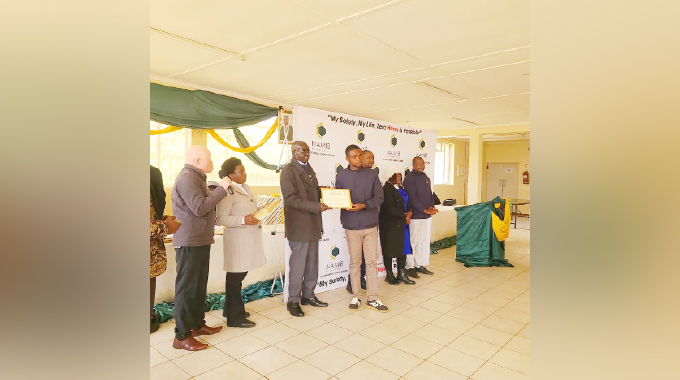
Nothando Zondo, [email protected]
The Government has called for the eradication of unregistered gold mining in Umzingwane District, urging stakeholders to help artisanal miners transition from informal operations to safer, lawful and more productive enterprises.
Speaking during the handover of certificates to artisanal miners who completed a training programme in the district, the Member of Parliament for Umzingwane, who is also the Deputy Minister of Defence, Brigadier General (Rtd) Levi Mayihlome said the formalisation should not be viewed as an attempt to deprive people of their livelihoods, but as a way to improve safety, productivity and access to opportunities in the mining sector.
“Allow me to talk about our long-term objective, which is to eradicate unregistered gold mining in Umzingwane. This does not mean that we want to take away people’s livelihoods, far from it,” he said.
“We want to help people move from informal and unsafe operations towards registered, lawful, safer and more productive mining enterprises,” he said.
The Deputy Minister said the training programme was an important step towards addressing unsafe mining practices, which often result from artisanal miners learning informally from relatives, friends and fellow miners without adequate instruction on ground stability, hazardous materials, occupational safety and the correct use of mining equipment.
“We must change this culture. We should not wait for an accident before we ask whether a mining operation was safe,” said Brig Gen Mayihlome.
“We should not wait for a collapse before we ask whether the ground was properly assessed. We should not wait for somebody to be injured before we ask whether dangerous substances were properly handled. Prevention must become our first line of defence.”
He said mining should be treated as a serious occupation that requires knowledge, discipline, technical competence and adherence to safety procedures.
The training was conducted with technical support from How-Mine and hosted at the Esikhoveni Public Service Training Centre.
It covered proper mining methods and ground support systems, hazard identification, shaft inundation management, emergency response, underground gas testing, regulatory compliance, claim registration, and pathways to blasting certification.
How-Mine representative, Mr Mlondolozi Nkomo, said the initiative was born out of concerns over underground incidents and loss of life in informal and small-scale mining operations in Umzingwane.
Mr Nkomo said the mine had embraced the programme as part of its corporate social responsibility and commitment to community safety.
“Our goal was clear: to bridge the knowledge gap, minimise preventable operational hazards, and empower local miners with the tools and regulatory insights required to operate safely, legally and sustainably,” he said.
He said participants were equipped with practical knowledge on preventing ground falls, identifying and correcting hazards, managing shaft flooding, responding to emergencies and detecting toxic underground gases.
“They were also introduced to legal requirements for registering mining claims, obtaining operational licences and formalising small-scale mining enterprises,” said the mine manager.
He said the programme further guided the requirements for obtaining mine blasting licences and full blasting certificates, opening pathways for participants interested in pursuing professional careers in mining.
The official added that the training should not be viewed as the end of the miners’ learning journey, but as a foundation for further education and professional development.
“Today you received your certificates. This should not be interpreted as saying that the basic training you received is enough,” said the mine manager.
“It is the starting point. Our ambition must be to create a pathway where an artisanal miner can begin with basic safety and mining knowledge, progress to more advanced practical training and eventually access recognised and accredited programmes.”
He said there was scope for the programme to be aligned with the Ministry of Mines and Mining Development’s national training framework and eventually linked to recognised institutions such as the School of Mines.
This, Mr Nkomo added, would allow miners to progress from basic training to advanced and formally accredited courses, ensuring their practical skills are recognised in the formal mining sector.
He also called for responsible mining practices to prevent conflict between miners and farmers, noting that both mining and agriculture are important sources of livelihoods in Umzingwane.
“I urge you, miners, to respect farmers’ land, grazing areas, water sources and livestock. Our resources should unite our communities and create livelihoods rather than become a source of conflict,” said the mine manager.
He said mining operations should benefit communities without destroying the environment, and urged miners to embrace responsible waste management and rehabilitation of mined areas.
Mr Nkomo said the enthusiasm and participation of the trainees contributed to the success of the programme, with participants sharing experiences and actively engaging facilitators throughout.
He challenged the trainees to become ambassadors of safe mining practices and to encourage others to adopt responsible methods.
“If you see an unsafe mining practice, speak up. If dangerous materials are being handled improperly, raise the alarm. If waste is being disposed of irresponsibly, encourage better practices. Be exemplary in your mining operations. Let other miners see the difference that training makes,” he added.
Mr Nkomo said the long-term objective was to build a safer, more professional, formalised and productive mining sector in Umzingwane, while contributing to the broader transformation of artisanal mining across Zimbabwe.


 Bunjiwe Mkwananzi