


 Sundaymail Editor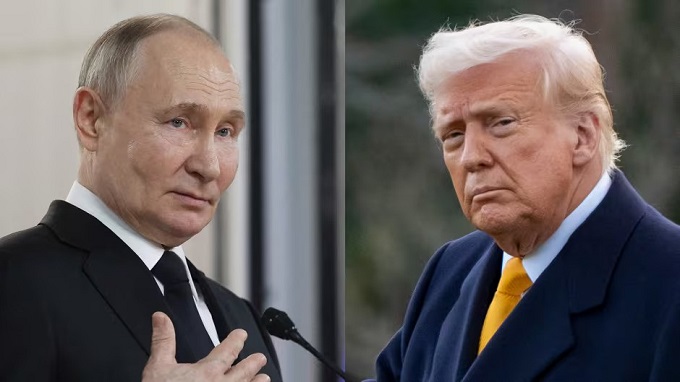
Leonid Ragozin
After the long telephone call between Russian President Vladimir Putin and United States President Donald Trump, which followed on the heels of US-Ukrainian talks in Jeddah recently, the war in Ukraine seems to be entering its final stages.
Both Moscow and Kyiv appear to agree with Trump’s pursuit of a peace settlement, though the details of their positions regarding the specifics remain hazy.
Kyiv has agreed to Washington’s proposal for a 30-day unconditional ceasefire followed by peace talks. Freezing the conflict before starting peace talks was not what Ukraine had wanted, but the prospect of losing more territory, infrastructure, human lives and — very likely — American support has brought it on board. Russia, for its part, has agreed to suspend missile attacks on the Ukrainian energy infrastructure for 30 days, while continuing discussions for a full-fledged ceasefire.
Earlier, Moscow expressed concern not only about the logistics of implementing the ceasefire and guarantees to prevent violations, but also about what comes after.
The caution is due to the fact that Russia has an advantage on the battlefield, which it is not very keen to lose before the framework of a settlement is set in stone.
In any case, Russian officials sounded very upbeat about the prospects of settlement after the Trump-Putin call. If the ceasefire negotiations move forward, the question that arises is whether Putin is likely to get all that he wanted in February 2022 when the war began.
The rough framework of a realistically attainable peace settlement is clear to both sides by now. Moscow has repeatedly stated that the peace deal is to follow the outline of the Istanbul agreements that were developed by the Russian and Ukrainian delegations in the spring of 2022 but were eventually ditched by Ukraine under British and American pressure.These agreements envisaged Ukraine’s military neutrality, a cap on the size of its army and measures to protect Russian speakers living in Ukraine. After three years of war, Moscow now wants Kyiv to recognise the loss of four Ukrainian regions — Donetsk, Luhansk, Kherson and Zaporizhzhia — which Russia formally proclaimed its territory, although it has not fully occupied any of them yet.
It is possible, however, that the Kremlin will walk away from its maximalist demand of Ukraine withdrawing from the unoccupied parts of these regions.
Trump and Ukrainian President Volodymyr Zelenskyy have signalled that territorial talks will include the fate of the Zaporizhzhia Nuclear Power Station, which is currently occupied by Russia and is quite close to the front line. If Russia becomes a part of that conversation, it will mean it is no longer claiming the unoccupied north of Zaporizhzhia and — by extension — the unoccupied territory of the other three regions.The discussions on the nuclear plant are a good sign because they indicate a shift to realistically attainable concessions the West and Ukraine could extract from Russia, as opposed to the entirely unrealistic demands of NATO boots on the ground in the guise of “peacekeepers”, which the United Kingdom and France are pushing for.
The key to understanding Putin’s logic is accepting that he is not fighting for territory.
He sees the war, which has now resulted in the occupation of a fifth of Ukrainian territory, as a punishment for Ukraine derailing the 2015-2016 Minsk agreements, which had envisaged the two breakaway regions, Donetsk and Luhansk, remaining under formal Ukrainian control. Russia’s annexation of these two regions, alongside Kherson and Zaporizhzhia, was punishment for Ukraine walking away from the Istanbul agreements.
While the nuclear power plant could be feasibly swapped for some other territory or — more likely — political concessions pertaining to the rights of Russian speakers and the Moscow-affiliated Ukrainian Orthodox Church, what is non-negotiable for Putin is NATO countries retaining any security infrastructure or influence on Ukrainian security bodies. Rooted in the West’s decision in the 1990s to confront rather than integrate the newly emerged democratic Russia, this conflict is really about drawing a thick red line beyond which the American-led West is not going to expand — at least until the time when the conversation about Russia’s westward integration becomes possible again.
For now, though, Putin will insist not just on Ukraine’s neutrality but also on the removal of what he describes as “NATO infrastructure”, which includes military training and logistical facilities as well as the Central Intelligence Agency (CIA) listening stations along the Russian border.He will also likely demand the de-Westernisation of Ukrainian security structures strongly affiliated with the CIA and MI6 (Military Intelligence, section six), such as the Main Intelligence Directorate (HUR) and some directorates of the Security Service of Ukraine (SBU).
Crucially, he will insist on Kyiv and NATO reneging on the 2008 NATO Bucharest summit promise that Ukraine would become a member of the alliance. That commitment, imposed on European allies by then-US President George W. Bush, triggered tectonic changes in Russian foreign policy, leading to conflict with Georgia and subsequently Ukraine. Judging by signals emanating from Trump’s administration, all of these goals are attainable, along with the lifting of sanctions against Russia — at least by the US itself. The Kremlin, for its part, has signalled that it could agree the US$300 billion in frozen Russian assets in the West could be used for post-war reconstruction in Ukraine.
It sees this money as already lost and perhaps considers that a benevolent gesture like that could help it start mending relations with the now very hostile neighbour.
Besides securing the neutrality of Ukraine and pushing NATO further from Russian borders, Putin also appears bound to fulfil another goal: the restoration of Russia’s superpower status in the eyes of the entire world.
For Western leaders, the failure to rein in Russia will lead to a belated realisation: that a major nuclear power, capable of destroying humanity, cannot be defeated militarily.
They may then consider the fact that Moscow could be very effectively influenced by soft power — something the West wielded with much greater success during the Cold War. Russia will remain culturally and economically dependent on Europe as it has always been. It will keep deeming itself part of the European community no matter what the community itself thinks about Russia. That creates more strategic opportunities for the West to diminish threats emanating from Moscow than engaging in what Western officials are now calling a “proxy war” in Ukraine. — aljazeera.com
Leonid Ragozin is a freelance journalist based in Riga.



 Online Reporter