Chronicle Editor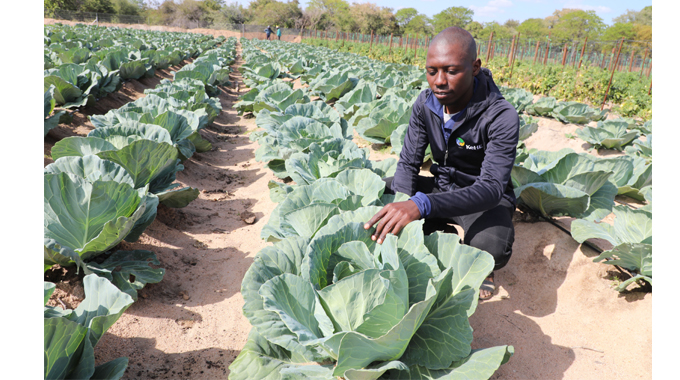
Nqobile Tshili, Chronicle Reporter
THE lives of Makorokoro villagers in Mangwe, Matabeleland South are being transformed through a Presidential nutritional garden which has become self-sustaining and has realised a R41 000 profit after its first harvest.
President Mnangagwa launched Sekusile Nutritional Garden in December last year in the remote Makorokoro Village as part of the rural industrialisation programme.
Rural industrialisation speaks to communities using local resources to uplift their lives.
The scheme has 150 beneficiaries who work once a week at the garden.
The garden is contributing to local food security as the produce is also sold to locals at an affordable price.
At the moment, they have planted chomolia, cabbages, tomatoes which are already being harvested. Next week, they will start harvesting 1 000 fish which will be sold to locals.
The previously marginalised Makorokoro villagers now have access to products such as butternut which they previously accessed in Bulawayo and Plumtree Town.
President Mnangagwa’s visit to the area also brought to light some of their challenges including poor access to telecommunications network. A booster was installed and the area now has access to local telecommunication network as opposed to relying on Botswana networks.
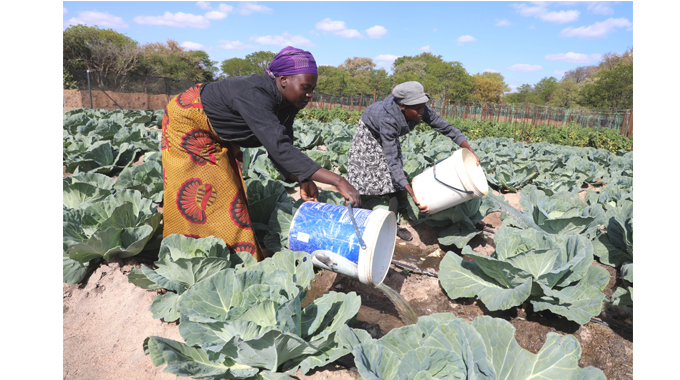
Government also installed two boreholes and solar equipment and through the solar system, the community is able to irrigate their crops while also getting clean water.
A Chronicle news crew yesterday visited the garden and villagers spoke glowingly of how their lives had been transformed since they started harvesting crops.
Ms Fikile Khumalo, a member of Sekusile Nutritional Garden said when the project started, she never thought it was going to be sustained but it has been a success.
“We have not stopped producing since the President launched this scheme. This garden is contributing to food security because as we work, we are also given part of the produce which has improved our nutrition at home. We are also expecting to get money which will enable us to pay our children’s school fees. We are also developing our homes because we have a source of income from this garden, as young women we are even involved in clubs where we contribute money to each other,” said Ms Khumalo.
She said women constitute most of the participants in the garden, which is an empowerment project as they are no longer heavily dependent on men.
Ms Khumalo said the garden is also benefiting local schools as learners visit for practical lessons.
“Some of the learners, when they came to the field, admitted that they didn’t know that butternut is planted just like any other crop. We now know how to crop vegetables such as onions as we are no longer just burying the seed but we leave its head exposed to the sun so that it grows big. This garden is transforming our lives and we are grateful to the President for considering our community when there are so many places that could have benefited from the facilities that were installed here,” said Ms Khumalo.
Another villager Mr Sifiso Ncube said they started working at the garden in September when they were just clearing the fields and were not sure if the project was going to be sustained.
Mr Ncube said as opposed to being idle at home, they are now very productive and contributing towards food security at a local level.
Sekusile Nutritional Garden manager Mr Mlungisi Ncube said in their first collective harvest they made R53 000 which translates to R41 000 profit after calculating all the costs related to the production of crops.
He said the profit could be much higher if they had access to bigger markets.
“Most of our produce is sold to the local market. We are now in the second season for our produce and the vegetables that we have planted are onions, chomolia, cabbages, tomatoes and we have just completed harvesting butternut. In the past season we made R53 000 and after conducting our costs we made a profit of R41 000,” said Mr Mlungisi Ncube.
“The members of this garden benefit as they are also given the produce from this garden so that they feed their families. And after calculating all the costs we share the dividends from the total amounts that we would have made and today we expect to share about R20 000 after calculating the cost that we will incur in this season.”
He said prices for their produce remain very low as a 1KG of tomatoes is sold for R8 while 10kg of butternut is priced at R50.
Mr Mlungisi Ncube said some of the villagers are able to make orders to resell elsewhere.
“I can confidently say that the diet for the community is changing. Our community is now having access to a variety of foods that they previously did not have. So, we are seeing positive developments as a result of this garden,” said Mr Mlungisi Ncube.
He said their main challenge is that changes in weather affects their water pumping capacity as they do not have solar batteries and inverters to store power.
Mr Mlungisi Ncube said the community was also pleased to be accessing local cellphone network. – @nqotshili



 Online Reporter