admin
admin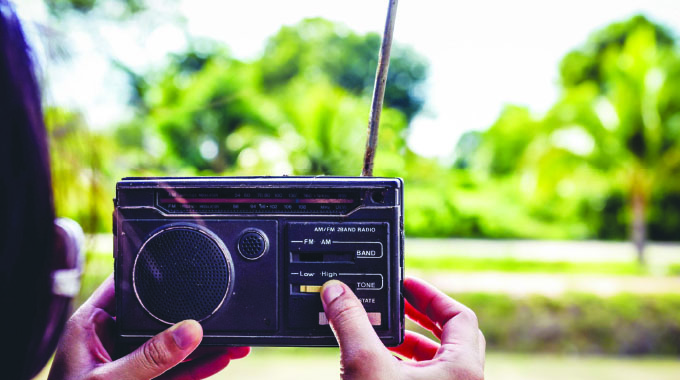
Gibson Nyikadzino Correspondent
Development is the central concept underpinning Zimbabwe’s information strategy and achieving the developmental targets the nation requires a set of capabilities around the creation and delivery of an effectively formulated message at a country-wide level congruently disseminated using the available platforms of communication.
It is my view that the idea of development in Zimbabwe should be the domineering and legitimate concept above all as the quest for state modernity can be sought and achieved through factually disseminating information that makes residents crave to be part of Government programmes.
Food security, infrastructure development, women and youth empowerment, education and health sector reforms, building national identities, among others, are critical indicators that determine how competent and serious a people are on the issue of development.
To achieve development targets in various spheres and sectors, information ought to be gathered, and in its nature be technically organised and presented, such that when it is communicated, it should be aiming to achieve the set targets of positive change, also known as development.
While Government’s targets for its reform policy transitions from the Transitional Stabilisation Programme (TSP) and National Development Strategy (NDS1) in the framework of the 2030 targets are informed by the pronouncements of the executive, the media, in particular radio, ought to help the development thrust by monitoring programmes and being a bridge between the citizens and the policy makers.
Generally, it should not be the business of a journalist, print or electronic, to write and speak plainly without any technical interpretation of information.
Information spoken, as for purposes of development, should be informed by a strong analysis, theory and perspective.
To some extent, the deficiencies to information on national development are a result of unanalytical and uninquisitive minds that find pleasure on merely communicating flat figures and stories without whetting the appetite of the reader or listener and satisfaction of the target audience.
On many occasions, this has been the case with some radio programmes and programming in Zimbabwe at a crucial time when the idea of national development should top the agenda.
Without draining the people’s morale, there has to be a co-relationship between the programme that is on radio, the information the presenter has and the ability by the presenter to create and structure conversations that attract the audience in different spheres.
With Government programmes, what is key is that the policy makers get feedback which they act upon to rectify and improve situations. The same goes for the print journalist, digital story teller and in some cases, bloggers and vloggers.
Today, it is undeniable that technology has changed the way radio stations programme their content and the presence of digital communication platforms and “citizen journalism” is also affecting the ability of media in general to influence audiences as they are playing “content catch-up” with ‘citizen journalists’.
This means even the journalist has to be different in terms of thinking, processing and application of mind to work.
As these changes occur, for mass communication, radio remains the most used medium the world over, Zimbabwe included, as it is ideal in terms of accessibility and that has the widest geographical reach and the greatest audiences compared to television, newspapers and the internet-based platforms.
Applauding educative, informative discussions
The universal reach of radio particularly in the developing world where socio-economic programmes are implemented in search of modernity is one that should be held in sacred esteem.
At a time of intense urbanisation, social change in rural communities, labour and skills movement, radio in Zimbabwe remains a key anchor for development that provides the ideological basis for a state’s information dissemination strategy to legitimise the development call.
Colleague radio journalists have to be applauded for making the media live to fulfil its role to educate, entertain and inform, also when playing the surveillance part.
Those that follow developmental discussions can relate that there have been efforts that have been invested to create linkages and exchange platforms between policy makers, Government bodies, communities, researchers and audiences through radio.
This happens on the basis of understanding that development is a communicative process where radio, television, newspapers and new media technologies are vital instruments for the required dialogue and awareness-raising.
However, educative and informative programmes need to be exhausted without error to achieve national goals.
Zimbabwe is a developing nation which has made significant advancements in many facets of contemporary life. If radio is used to give focus to development programmes, it will be a powerful weapon, absolutely essential for a growing country like ours.
This will also draw active human participation to decent levels and elements of sustainable development.
Is language carrying new ‘obscenities’?
Without distraction, radio remains a key instrument to promote development. Nevertheless, there is an ongoing and growing moral debate regards language use in the form of art on radio and also how Zimbabwe can keep an uncontaminated cultural environment. It is understood that culture as the everydayness of a people, remains dynamic in the form of acts, language and also non-verbal cultural forms.
For critical consideration, the relationship between radio language, audience and programming is now shifting because of adoption of a new lingua-franca which is now creeping into society and used by both artists and presenters as normal.
In the yesteryear there was one artiste who divided opinion in the form of Jacob Moyana. It had become systematic that the lyrics he composed for his songs be presented with a twist of mischief that bordered on obscenity and absurdity.
The same has been for one Boom Betto whose lyrical connotations was regarded to demean the stature and physicality of women in one of his songs that later could not receive the airplay that commensurate of its popularity.
At one point, Kapfupi, real name Freddy Manjalima’s popular track Mai Nga was under scrutiny for use of the word “mutumba” (voluptuous woman) and receiving protests from women groups.
These artistes’ songs find way on local radio platforms as forms of entertainment, perhaps with little consideration of how they damage and twist the thoughts of both young and old who surprisingly use such words on radio.
Artistic creativity is a talent that when used, should thrive to promote national cohesion and should seldom be praised for being divisive. It is therefore without doubt that electronic media as agents of language change can effect some desired and undesirable result in language behaviour.
When radio programmes are anchored in indigenous dialects they enhance the vocabulary, comprehension and the vitality of all 15 spoken languages in Zimbabwe. As entertaining as music should be and is, radio should also be used to raise the prestige of Zimbabwe’s heritage through language.
The excitement that comes with coining new terms is punched back by the failure of those terms to be fully adopted into the language mainstream because its use, artistically or professionally, is regarded with suspicion.
Is censorship ideal?
Zimbabwe’s Censorship and Entertainment Controls Act provides the establishment of a board that gives direction in ensuring that artistic expressions do not infringe on the rights of other people as a measure of equality.
However, it is not the prerogative of that board alone, but media, arts and entertainment stakeholders to deliberate on the urgency of these issues.
Proponent of regulation, self-regulation and co-regulation should also consider this matter with the gravity it has for it will be difficult to achieve national goals with available media platforms if there remains aspects that attack Zimbabwe’s environment.
It is not feasible to let the image of the country and cultural conventions be attacked in the name of art and creativity. An amicable common ground has to be sought.
Zimbabweans, remember we are one. It is homeland!



 Online Reporter