admin
admin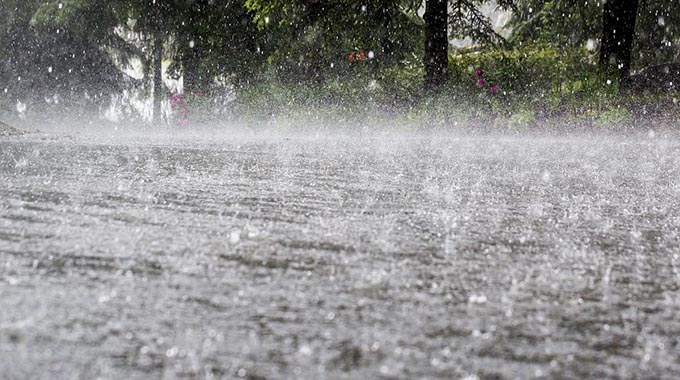
Sifelani Tsiko
Agric, Environment & Innovations Editor
Heavy rainfall has brought relief to Zimbabwe’s main agricultural areas over the past few days interrupting several weeks of dry weather that had seen crops wilting sparking fears of a drought.
Most parts of the country, including the major maize production belts, had experienced long dry spells and crops were moisture-stressed.
The Meteorological Services Department agro-meteorologist Benjamin Kwenda told The Herald on Thursday that the rains were a bonus and could help farmers salvage some of their crops.
“We are moving towards the end of the season. Any rains that come are a bonus,” he said.
The persistent dry spell that hit the country for several weeks had left most farmers in the country fearing the worst as crops they had planted were now showing signs of moisture stress while in some districts crops had wilted.
In Manicaland province, for example, at least 30 percent of the maize crop was written off following a prolonged dry spell while 50 percent of the crop is at the temporary wilting point.
Weather experts had predicted a normal to above normal rainfall season, giving many farmers the hope that they would have another good harvest.
Zimbabwe experienced a late on-set of rains – with rains, which were supposed to start in November, delaying and only starting after mid-December.
Zimbabwe Farmers Union executive director Paul Zakariya was quoted saying that the rainfall distribution pattern this season was uneven pushing up production costs for farmers.
He said although the Meteorological Services Department had predicted a normal-to-above normal rainfall, the distribution of rains was erratic forcing some farmers to replant as the season delayed.
Farmers had to procure more seed, fertilisers and other inputs.
“Farmers may not realise much after incurring these additional costs,” Zakariya said.
The MSD says the country must expect more rains which are likely to be characterised by thunderstorms this week and in the coming days.
Rains were expected to be moderate as the second half of the rainfall season comes to an end.
Farmers heaved sighs of relief when the heavy rains pounded the country this week.
Experts say crops which were at a temporary wilting point are likely to be salvaged while crops that had reached the permanent wilting point were unlikely to be resuscitated even if the rains improve.
The 2022 maize production is forecast to be at an above-average level, but substantially below the exceptional output realised last year.
More than 2,5 million hectares had been put under cropping by February 1 with 1 563 200 hectares planted to maize.
Last season, Zimbabwe produced an estimated 2,8 million tonnes of maize – a record crop in years, tripling the 2020 harvest.
The agricultural sector grew by 34 percent, more than three times the 11 percent projected in the budget given at the end of 2020.



 Online Reporter