admin
admin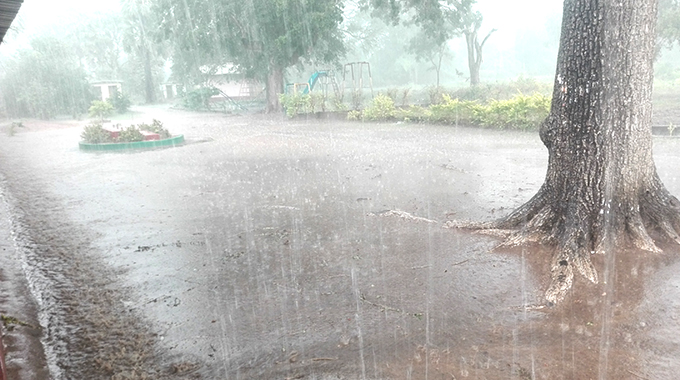
Sifelani Tsiko in Matobo
The hot and dry weather that hit the drought-prone Matobo District for several months was driving Mildred Masena of Gwangwazile Village crazy.
The long dry spell proved unfavourable for both her crops and livestock. She was afraid she would lose her early-planted maize which was wilting due to moisture stress.
In addition, she feared losing more cattle due to lack of pasture. But rains that Matobo District and most other parts of the country received have brought smiles on her face.
“We thank God for the good rains,” she said. “Rains have brought showers of hope. I am excited about the rain. I am encouraged to step up my planting and weeding to improve the condition of my maize crop.”
Other farmers are elated too with the rains.
“We have received good rains in the past few days and we are happy,” said Thokozile Ncube of Gwangazile. “We had lost hope. Our seed was rotting and we now have to replant in some portions of my plot.”
Another farmer, Soneni Ncube of Bunyunyweni Village, said: “Rains are a huge blessing for us. It is now easier to till the land. Our livestock now have water and pasture. I hope the rains won’t be short-lived.”
Rains that pounded Matobo and most other parts of the country have brought relief following a harsh drought that battered the country last season. Hundreds of farmers across the country were left helpless by the drought, leaving millions in need of food aid. Though the rains came late, the sowing of crops has begun in most parts of Matobo and across the country.
However, the sigh of relief breathed by farmers may be short-lived as weather experts predict that the country may be hit by another drought in the 2019-20 cropping season.
Though the rains have proved useful to farmers in terms of sowing activities and improved grazing, development experts say farmers should adopt conservation farming to boost yields.
“Matobo is a very dry area and conservation agriculture can help to boost their chances of having good yields,” said Edwin Mazhawidza, senior programmes manager for Fambidzanayi Permaculture Centre, which is running a conservation agriculture programme in Matobo.
“Yes, the rains received so far are good, but they can disappear any time. Farmers here need to adopt conservation agriculture and use lots of locally available manure to boost crop production.”
Practical Action and Fambidzanayi Permaculture Centre are working with farmers in Matobo and Gwanda to increase the uptake of conservation agriculture, a system that increases yields while protecting fields from erosion, improving soil quality and mitigating the effects of drought.
Under a US$1,3 million project funded by the Isle of Man Government, the two organisations have initiated a programme of training and demonstrations to win over farmers.
“We are using conservation agriculture methods we were taught by Fambidzanayi Permaculture Centre to improve yields,” said Masena.
“We can’t afford to buy fertiliser and other inputs because they are expensive. Conservation agriculture is handy and helps us to use local resources to boost our yields at low cost. We also have been taught water harvesting methods to improve water moisture for our fields.”
The Food and Agriculture Organisation (FAO) estimates that more than 300 000 farmers in Zimbabwe are practising this method and have nearly tripled their crop yields.
Conservation agriculture, if harnessed with other water harvesting techniques, has the potential to double yields, helping to improve livelihoods and contribute to the country’s food basket.



 Online Reporter