admin
admin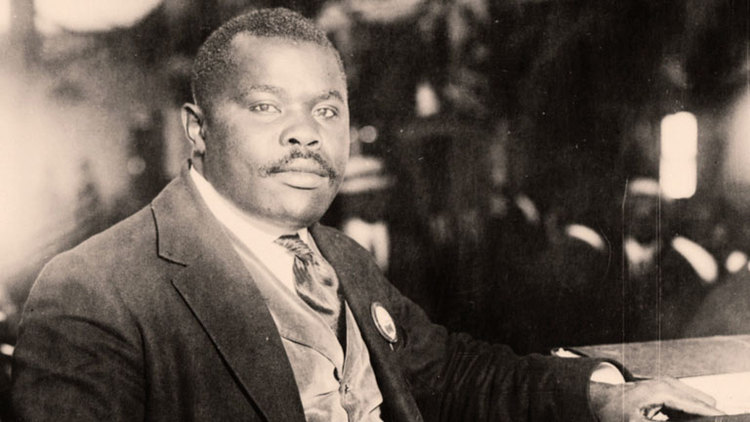

WHEN Marcus Garvey Junior was young and growing into an adult, his father, a stone mason and undertaker took him to his workplace one day and invited him underground.
Ibo Foroma
After a considerable amount of time had lapsed, Garvey yelled but no aid came. No assistance whatsoever entertained his plea. His father then reappeared when the source from whence his hydrological system operated had run dry; he told him that life was exactly like that.
There is no one eloquently designed to solve our problems any much better than ourselves. We are our own heroes.
As it later on proved, a lesson was learnt.
Garvey was born on August 17 1887 in the belly of the beast Saint Ann’s Bay on a small pathetic slave island – Caribbean Jamaica.
Self-educated from especially his father’s library; Garvey equipped himself enough to form the Universal Negro Improvement Association (U.N.I.A) in foreign land America which at that time was definitely under Satan authority.
This was a unique and pioneering organisation founded above all on love and dedicated to promoting African-Americans and resettlement in Africa, especially Liberia. In the United States, he launched several businesses to promote a separate black nation.
For sailing against the grain, he was convicted then deported back to his rightful place and mail fraud was blamed. His spirit did not die.
A prophet is not welcome in his home town and so his gospel did not appeal to its actual audience.
At the age of 25 in 1912, he founded the U.N.I.A. in Jamaica with the goal of uniting all of African diaspora to “establish a country and absolute government of their own.” After corresponding with Booker T Washington, the American educator who founded Tuskegee Institute, Garvey travelled to raise funds for a similar venture in Jamaica.
He settled in New York City and formed a U.N.I.A. chapter in Harlem to promote a separatist philosophy of social, political, and economic freedom for blacks. In 1918, Garvey began publishing the widely distributed newspaper Negro World to convey his message.
By 1919, Garvey and U.N.I.A. had launched the Black Star Line, a shipping company that would establish trade and commerce between Africans in America, the Caribbean, South and Central America, Canada and Africa.
At the same time, Garvey started the Negros Factories Association, a series of companies that would manufacture marketable commodities in every big industrial centre in the Western hemisphere and Africa.
In August 1920, U.N.I.A. claimed four million members and held its first International Convention at Madison Square Garden in New York City. Before a crowd of 25 000 people from all over the world, Garvey spoke of having pride in African history and culture.
Many found his words inspiring. However, some established black leaders found his separatist philosophy ill-conceived. W.E.B. Du Bois, a prominent black leader and officer of the National Association for the Advancement of Colored People (N.A.A.C.P.) called Garvey, “the most dangerous enemy of the Negro race in America.”
In 1922, Garvey and three other U.N.I.A. officials were charged with mail fraud involving the Black Star Line. The trial records indicate several improprieties occurred in the prosecution of the case.
It did not help that the shipping line’s books contained many accounting irregularities. On June 23 1923, Garvey was convicted and sentenced to prison for five years.
Claiming to be a victim of a politically motivated miscarriage of justice, Garvey appealed his conviction, but was denied. In 1927, he was released from prison and deported to the slave island.
Mosiah (locally popularised as Muzaya); a combination of Moses and Messiah, continued his political activism and the work of U.N.I.A. in Jamaica and then moved to London in 1935. At that time, he no longer commanded the same influence as he had earlier.
Perhaps in desperation or maybe in delusion, Garvey collaborated with outspoken segregationist and white supremacist Senator Theodore Bilbo of Mississippi to promote a reparations scheme.
The Greater Liberia Act of 1939 would deport 12 million African-American to Liberia at federal expense to relieve unemployment.
The glorious Act failed in Congress, they would not allow 12 million of their livestock to go for free. This brilliant scheme’s failure led to Garvey losing even more support among the black population.
Honourable Garvey transfigured in London in 1940 after several strokes.
Due to travel restrictions during World War II, his body was interred in London. In 1964, his remains were exhumed and taken to Jamaica where the government proclaimed him Jamaica’s first national hero and re-interred him at a shrine in the National Heroes Park.
But his memory and influence remain. His message of pride and dignity inspired many in the early days of the Civil Rights movement in the 1950s and 1960s. In tribute to his many contributions, Garvey’s bust has been displayed in the Organisation of American States’ Halls of Heroes in Washington D.C.
Ghana has named its shipping line the Black Star Line and the national soccer team the Black Stars, in honour of Garvey.
Father Divines Universal Peace Mission Movement and the Nation of Islam drew members and philosophy from Garvey’s organisation, and the U.N.I.A.’s appeal were felt not only in America but in Canada, the Caribbean, and throughout Africa.



 Online Reporter