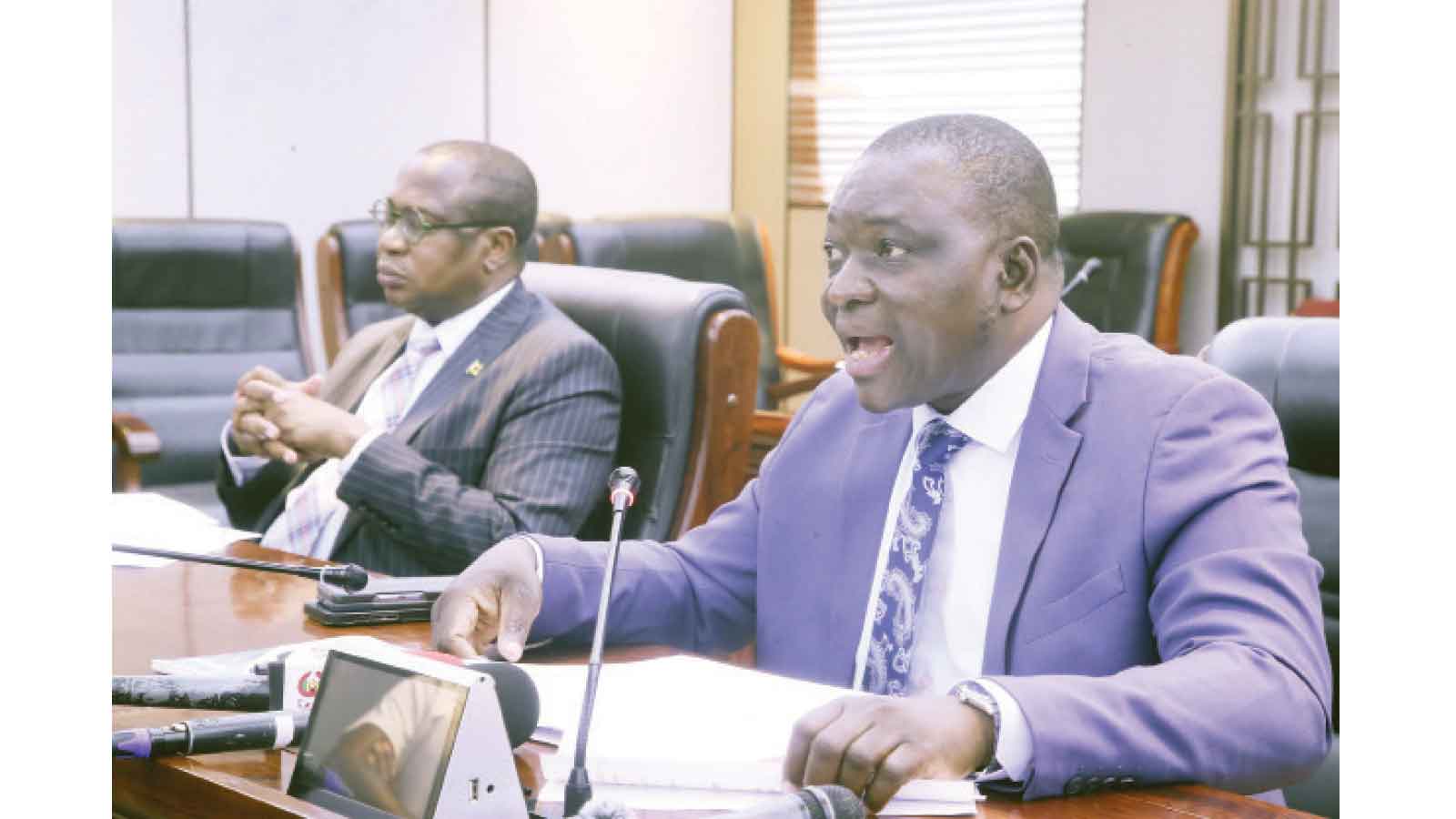
We publish here the fourth post-Cabinet media briefing presented by Information, Publicity and Broadcasting Services Minister, Dr Zhemu Soda, in Harare yesterday.
1.0 FIRST ROUND CROP, LIVESTOCK AND FISHERIES ASSESSMENT REPORT
Cabinet received an update on the First Round of Crop, Livestock and Fisheries Assessment Report, as presented by the Minister of Lands, Agriculture, Fisheries, Water and Rural Development, Honourable Dr Anxious Jongwe Masuka.
The survey was conducted by the Zimbabwe National Statistics Agency, and adopted a Whole-of-Government Approach. The area cultivated under staple cereals including maize and traditional grains expanded from the targeted 2 427 000 hectares to 2 488 449 hectares during the 2025/2026 agricultural season. Horticulture crops such as mango increased by 17 percent, avocado by 11 percent, blueberries by 11 percent, oranges by 10 percent, and pecan nuts by 10 percent.
Regarding livestock, the national beef cattle herd grew marginally by 0.3 percent, from 5 741 397 in 2024 to 5 760 678 in 2025, while the dairy herd increased by 7.5 percent, from 65 659 in 2024 to 70 584 in 2025. The growth contributed to a 6.2 percent rise in commercial raw milk production, from 114 699 440 litres in 2024 to 121 846 916 litres in 2025. The household milk production from dairy cattle was estimated at 33 100 927 litres, resulting in total milk production of approximately 154 947 843 litres.
Based on preliminary findings from the First Round Crop, Livestock, and Fisheries Assessment Report, the following key decisions have been outlined:
i. Government will accelerate climate-proofing agriculture at both household and national levels, through the Pfumvudza/Intwasa initiative;
ii. Government will intensify the development of irrigation infrastructure through encouraging increased private sector participation to expand the functional irrigation areas;
iii. agro-ecological tailoring of crop production, along with soil health and fertility management, will be maintained through enhanced agricultural information management systems;
iv. community gratitude and participation in building the Strategic Grain Reserve will be strengthened; and
v. the Rural Development 8.0 interventions will be accelerated to empower local communities.
2.0 PROPOSED ZIMBABWE PUBLIC PRIVATE PARTNERSHIP GUIDELINES
Cabinet received and approved the Zimbabwe Public Private Partnership Guidelines as presented by the Minister of Finance, Economic Development and Investment Promotion.
The Government of Zimbabwe continues to fine-tune the existing PPP framework aimed at leveraging capital and expertise for all infrastructure projects across the country. In that regard, Government has developed new Guidelines to be followed by Parties (Government and the private sector) during the entire PPP life-cycle, encompassing project identification, approval development, appraisal, implementation, monitoring and evaluation, and termination of PPPs.
In addition to providing a structured framework to attract private investment and partnership into essential sectors such as transport, energy and water, the mandatory Guidelines will serve as an important reference tool to all stakeholders in the implementation of the PPPs in Zimbabwe. The Guidelines will complement the ZIDA Act in the enforcement of policy compliance, ultimately ensuring that Government realises value-for-money through the inclusion of revenue sharing arrangements in Joint Ventures. The Guidelines outline financial, technical and operational risks to be shared between the Government and private partners, ensuring that risks are borne by the party best able to manage them.
Under the PPP Guidelines, Government is entitled to a minimum shareholding of 30% in the Project Joint Venture or Special Purpose Vehicle, with an option of increasing shareholding. Other critical elements of the PPP Guidelines include:
i. thresholds for PPP projects;
ii. classification of PPP projects;
iii. Governance and institutional framework for PPPs;
iv. Processing of PPP Projects; and
v. the PPP Cycle .
3.0 THIRD NATIONAL BIODIVERSITY STRATEGY AND ACTION PLAN
Cabinet considered and approved the Third National Biodiversity Strategy and Action Plan, as presented by the Minister of Local Government and Public Works, Honourable Daniel Garwe, Chairperson of the Cabinet Committee on Environment, Emergency Preparedness, Disaster Prevention and Management.
Biodiversity is vital to Zimbabwe’s social, cultural, and economic development yet it faces significant threats from factors such as unregulated land use change, pollution, climate change, habitat loss, invasive species and resource exploitation. This crisis threatens food and water security and livelihoods. In response, the Government of Zimbabwe has formulated the Third National Biodiversity Strategy and Action Plan for the period 2026–2030, aligning with both national development objectives and international frameworks. The Plan emphasises inclusivity, equity, and inter-generational responsibility. The primary goal is to halt biodiversity loss through strategies focused on conservation, sustainable use, and benefit-sharing, supported by 23 targeted actions and goals.
The implementation of the Plan will adopt a Whole-of-Government and Society approach, supported by a multi-level governance framework led by the Ministry of Environment, Climate and Wildlife, with oversight from high-level authorities. An estimated US$200 million annually is required to finance these efforts, with funding mobilised from various sources, including innovative mechanisms and a dedicated Biodiversity Fund to ensure long-term sustainability.
4.0 UPDATE ON THE INTER-MINISTERIAL COMMITTEE ON THE IMPLEMENTATION OF THE BAN ON ALLUVIAL MINING AND REHABILITATION OF DEGRADED RIVER ECOSYSTEMS
Cabinet received and approved a progress Report on the implementation of the ban on alluvial mining and rehabilitation of degraded river ecosystems as presented by the Minister of Lands, Agriculture, Fisheries, Water and Rural Development, Honourable Anxious Masuka.
The Inter-Ministerial Committee on the Ban on Alluvial Mining and Rehabilitation of Degraded River Ecosystems is implementing a Whole-of–Government compliance, monitoring and evaluation system to ensure sustained enforcement of Statutory Instrument 188 of 2024 on the nation-wide ban on alluvial mining. The strategic intervention has resulted in significant compliance with the Government directive.
Reports indicate that in all the alluvial mining prone provinces, active mechanised alluvial mining has largely been halted. Sustained efforts are currently underway to eliminate the lingering threat of local illegal miners who continue to invade previously mined areas. The deployment of crack teams to combat the destruction of riverine ecosystems is currently ongoing. As such, Cabinet approved that a legislative framework to accelerate the river rehabilitation process be provided.
5.0 BAN ON RAW MINERAL EXPORTS AND LITHIUM CONCENTRATES
Cabinet approved the ban on raw mineral exports and lithium concentrates as presented by the Minister of Mines and Mining Development, Honourable Polite Kambamura.